
 +86 17326062766
Leave Your Message
-
Contact WhatsApp
-
 Contact Phone
-
 Contact Email
Designed to deliver high performance, reliability, and absolute safety for data center UPS systems and critical energy storage configurations.

Designed for precise monitoring and cell balancing in critical data center battery banks.
Learn More →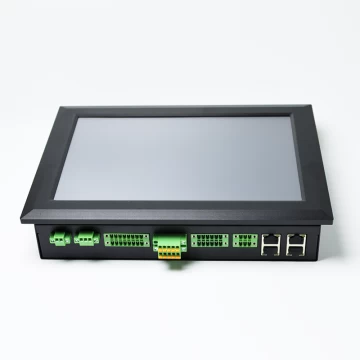
Advanced display and control unit providing master-level orchestration for battery arrays.
Learn More →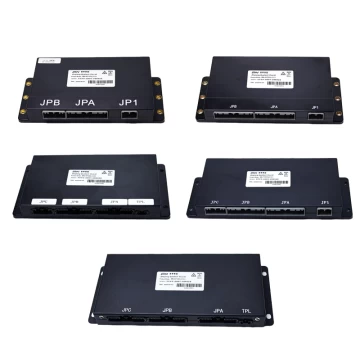
Automotive-grade components ensuring ultimate reliability and safety for critical infrastructure.
Learn More →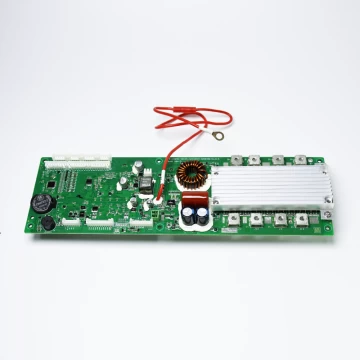
Intelligent management unit optimized for LiFePO4 battery chemistries in standby power.
Learn More →In the digital age, data centers serve as the heartbeat of global commerce, communication, and innovation. From cloud hosting facilities to hyperscale enterprise data nodes, maintaining uninterrupted operations is paramount. A single second of power failure can compromise massive volumes of transactional data, damage sensitive hardware, and result in catastrophic financial losses. This is why uninterruptible power supply (UPS) systems are deployed. However, the heart of any UPS system is its battery bank, and the brain that guarantees its survival is the Battery Management Device (BMD).
Modern critical infrastructures, including hospitals, telecommunication hubs, utility grids, and financial institutions, are transitioning from legacy lead-acid batteries to high-performance Lithium-ion (specifically LiFePO4) energy storage systems. While lithium chemistries offer superior energy density, faster charging times, and longer cycle lives, they demand rigorous control and monitoring. An advanced Battery Management System (BMS) acts as the ultimate safeguard, continuously monitoring parameters such as voltage, current, temperature, and internal resistance to prevent catastrophic thermal runaway events, optimize efficiency, and extend the system's operational lifespan.
"A battery system without a smart management device is a liability. In critical environments, proactive monitoring and active balancing are the key differentiators between continuous uptime and catastrophic failure."
Historically, Valve Regulated Lead-Acid (VRLA) batteries dominated the data center UPS landscape due to their low initial cost. However, their short lifespan, large footprint, heavy weight, and high maintenance overhead have driven a widespread commercial shift towards lithium-ion batteries. According to industry analysts, lithium-ion deployment in data centers is growing at a double-digit compound annual rate. This transition is not merely about replacing one battery chemistry with another; it is a fundamental shift toward software-defined, intelligent energy storage management.
In high-density data centers, space is at a premium. Lithium-ion batteries occupy up to 60% less footprint than their lead-acid counterparts while delivering identical power outputs. However, managing these high-density setups requires complex multi-tier BMS architectures. Industrial operators are now demanding systems that comply with stringent safety certifications, such as UL 1973 and UL 9540A, to mitigate fire hazards. Consequently, Battery Management Devices have evolved from simple voltage-checking tools into comprehensive, cloud-connected diagnostic systems capable of millisecond-level reaction times.
As mission-critical systems become more complex, the demands placed on Battery Management Devices continue to escalate. Several key technological trends are shaping the future of this sector:
To maximize efficiency and reduce cable losses, modern energy storage systems and large-scale data centers are shifting toward higher voltage systems, often reaching up to 1500V. Managing such high voltages requires robust insulation resistance monitoring, advanced safety disconnect mechanisms, and highly reliable master-slave configurations. Control units must process data from hundreds of cells in series without latency or signal degradation.
Traditional passive balancing dissipates excess energy from stronger cells as heat to match the capacity of weaker cells. In high-density data center racks, this heat generation is undesirable. Active balancing, on the other hand, redistributes energy dynamically from stronger cells to weaker ones. While more complex, active balancing maximizes the usable capacity of the entire pack, minimizes thermal stress, and extends battery life, making it the preferred choice for mission-critical applications.
The integration of Artificial Intelligence (AI) and Machine Learning (ML) algorithms into BMS allows for predictive maintenance. By analyzing historical performance data, temperature fluctuations, and charge/discharge curves, the system can predict the State of Health (SOH) and estimate the remaining useful life of individual cells. This enables operators to replace failing cells before they trigger a system-wide outage, turning reactive maintenance into a planned, cost-efficient process.
Modern data center networks are increasingly distributed, with edge computing installations deployed in remote locations. Battery Management Devices must support remote monitoring protocols (such as Modbus TCP, SNMP, and CAN bus) to transmit real-time telemetry data to centralized control rooms or cloud-based monitoring dashboards. This allows operators to maintain complete visibility over their power assets across multiple geographic sites.
Providing robust energy storage and power management architectures tailored for diverse industrial and utility scenarios.

Integrating renewable energy and local storage to guarantee seamless power transition and grid independence.

Synergizing solar power, localized battery storage, and EV charging stations into a unified smart grid node.
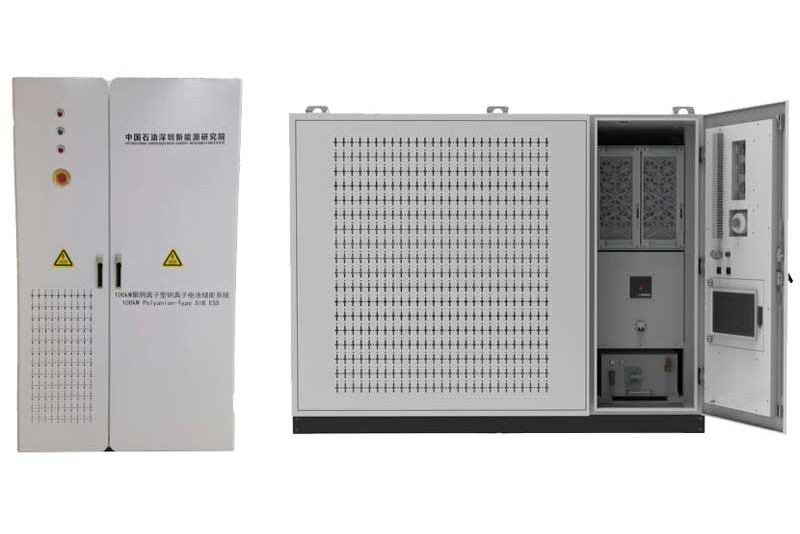
Custom-engineered battery cabinets and management systems optimized for heavy industrial backup power.
Battery Management Devices are not one-size-fits-all solutions. Different critical infrastructures have unique operational demands that dictate the architecture of the BMS:
Hyperscale facilities house tens of thousands of servers running continuously. The backup power system must be capable of delivering megawatts of power in milliseconds. In this environment, a three-tier BMS architecture is standard. At the bottom tier, local slave units (SBMU) monitor individual cell voltages and temperatures. At the middle tier, master control units (SEMU) aggregate data from individual racks. At the top tier, cluster controllers (SBCU) manage the entire battery room, coordinating with the facility's overall building management system (BMS) and power distribution units (PDUs). This multi-tier setup ensures redundancy, precise fault localization, and rapid isolation of abnormal battery strings.
The global rollout of 5G has led to an exponential increase in base station power consumption. 5G equipment requires dense, highly efficient backup power systems installed in compact outdoor cabinets. These systems are exposed to harsh weather conditions, including extreme heat and sub-zero temperatures. A specialized Battery Management Device for telecommunications must feature robust thermal management, built-in heater control for cold climates, and highly efficient passive cooling. It must also support remote diagnostic protocols, allowing telecom operators to monitor battery health across thousands of distributed tower locations without sending technicians on-site.
In hospitals, a power failure is a matter of life and death. Operating rooms, life support systems, and diagnostic equipment rely on instantaneous backup power. The BMS in healthcare settings must guarantee the highest level of reliability. It must incorporate redundant communication channels, continuous insulation monitoring to prevent electrical shocks, and advanced early-warning systems that detect cell degradation long before a critical failure occurs. Qualtech's automotive-grade BMS slave units are frequently deployed in these high-stakes environments due to their rigorous component selection and fail-safe design principles.
In addition to emergency backup, critical infrastructures are increasingly utilizing their energy storage systems for grid interaction. Through peak shaving and load shifting, data centers and industrial plants can charge their batteries when electricity rates are low and discharge them during peak demand periods. This active cycle management puts additional strain on the battery cells. The BMS must dynamically calculate the State of Health and adjust the charge/discharge limits in real-time to maximize economic returns without accelerating battery aging.
We collaborate with global partners to deliver reliable, safe, and efficient battery management solutions across various sectors.












Stay informed with the latest technological developments, strategic partnerships, and award-winning solutions from Zhejiang Qualtech.

As a full-stack digital smart energy system solution provider, Qualtech has always been anchored by independent R&D and in-house manufacturing, enabling the seamless delivery of smart energy solutions.
Read More →
The results of the prestigious energy storage industry Aurora Award have recently been announced, honoring Qualtech's core equipment for key model energy storage projects.
Read More →
Centering on the theme "Building a High-quality Partnership," Qualtech forged a strategic partnership with its Argentinian counterpart to deploy advanced EV charging networks.
Read More →Explore our complete range of high-performance BMS solutions, active/passive balancing controllers, and master-slave management units.
Designed for precise monitoring and cell balancing in critical data center battery banks.
Learn More →
Advanced display and control unit providing master-level orchestration for battery arrays.
Learn More →
Automotive-grade components ensuring ultimate reliability and safety for critical infrastructure.
Learn More →
Intelligent management unit optimized for LiFePO4 battery chemistries in standby power.
Learn More →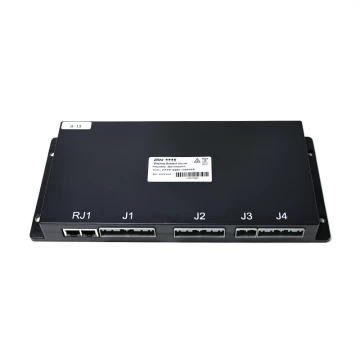
High-voltage cluster controller orchestrating multiple battery racks in large energy storage arrays.
Learn More →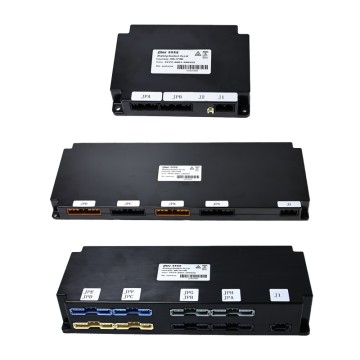
Advanced active balancing module maximizing usable capacity and reducing thermal load.
Learn More →
Highly efficient battery management system designed for residential and light commercial storage.
Learn More →
Reliable slave units providing cell-level voltage and temperature monitoring for safety.
Learn More →