+86 17326062766
Leave Your Message
-
Contact WhatsApp
-
 Contact Phone
-
 Contact Email
Qualtech's core battery management devices designed for energy storage systems — the backbone of reliable power in emergency disaster relief and first responder operations.
When natural disasters strike — hurricanes, earthquakes, wildfires, or floods — the immediate collapse of grid infrastructure leaves communities and emergency teams without power. In these high-stakes scenarios, Battery Management Devices (BMDs) are no longer optional accessories; they are mission-critical systems that determine whether a rescue operation succeeds or fails.
Modern battery management systems deployed for emergency disaster relief and first responders must satisfy extreme requirements: wide operating temperature ranges (−40°C to +85°C), IP67+ ingress protection, rapid-deploy capability within minutes, real-time state-of-charge (SOC) and state-of-health (SOH) monitoring, and seamless integration with solar, wind, and generator inputs. These demands are driving a new generation of ruggedized, AI-enhanced BMS solutions.
The global emergency power market is projected to exceed $8.4 billion by 2028, with intelligent battery management devices accounting for the fastest-growing segment — driven by increasing climate-related disaster frequency and expanding first responder electrification programs worldwide.
Military-grade housing with IP67+ protection for operation in flood, dust, and extreme temperature conditions.
Continuous SOC, SOH, voltage, current, and temperature telemetry via wireless protocols to command centers.
Plug-and-play architecture enables full system activation in under 15 minutes on disaster sites.
Compatible with solar, wind, generator, and grid inputs for maximum flexibility in off-grid emergencies.
Qualtech's battery management devices integrate advanced algorithms and industrial-grade hardware to meet the uncompromising demands of emergency and disaster relief deployments.
Machine learning algorithms continuously calculate SOC, SOH, and State of Power (SOP) with ±1% accuracy, enabling first responders to plan energy usage with confidence during prolonged operations.
Both active (energy-transfer) and passive (dissipative) balancing modes maximize usable capacity and extend battery pack life — critical when replacement parts are unavailable in disaster zones.
Multi-layer thermal management with predictive fault detection prevents catastrophic battery failures — a non-negotiable safety requirement in densely populated evacuation centers and field hospitals.
Supports CAN, RS485, Modbus, and wireless IoT protocols for seamless integration with emergency command systems, SCADA platforms, and satellite communication networks.
Supports battery strings from 48V to 1500V, enabling scalable deployment from handheld first responder tools to large-scale disaster relief microgrids powering entire evacuation zones.
Dual-MCU architecture with ASIL B functional safety certification ensures the BMS continues operating safely even if primary control circuits experience partial failure under extreme conditions.
The intersection of climate urgency, electrification policy, and AI advancement is accelerating the evolution of battery management devices specifically engineered for disaster relief and first responder use cases.
Governments across North America, Europe, and Asia-Pacific are mandating that emergency response infrastructure transitions to clean energy. Battery-backed microgrids with intelligent BMS are replacing diesel generators in FEMA staging areas, EU civil protection centers, and APAC disaster command posts — creating a $2.1B procurement wave through 2027.
Mobile Battery Energy Storage Systems (BESS) mounted on trucks and trailers are becoming standard equipment for first responder fleets. Advanced BMS units manage these mobile packs through vibration, shock, and rapid charge-discharge cycles that stationary systems never encounter, demanding military-grade reliability standards.
Vehicle-to-Grid (V2G) technology, enabled by sophisticated BMS, allows emergency response EVs to discharge stored energy into disaster-stricken communities. A fleet of 50 emergency EVs with V2G-capable BMS can power a 500-person evacuation shelter for over 48 hours — a paradigm shift in disaster energy planning.
Cloud-integrated battery management platforms transmit real-time data from disaster site energy systems to regional emergency management centers. Predictive analytics algorithms forecast battery depletion hours in advance, enabling proactive logistics — dispatching replacement units before power failure occurs at critical medical or communications facilities.
The shift toward modular BMS architecture allows emergency teams to scale power capacity on-site — starting with a 50kWh mobile unit and expanding to 500kWh within hours by adding standardized battery modules managed by cluster controller BMS units. This scalability is transforming how large-scale disaster response operations are powered.
As emergency power systems become networked, cybersecurity has emerged as a critical BMS design requirement. Hardened firmware with encrypted communication protocols prevents hostile interference with critical power infrastructure during disaster scenarios — a growing concern highlighted by recent cybersecurity frameworks for critical infrastructure protection.
From wildfire frontlines to post-earthquake field hospitals, battery management devices are deployed across a spectrum of critical emergency scenarios demanding specialized performance characteristics.
Temporary field hospitals require uninterrupted power for ventilators, surgical lighting, refrigerated vaccines, and diagnostic equipment. BMS units managing these systems must guarantee zero-interruption power transfer (UPS mode), maintain ±0.5% voltage stability for sensitive medical devices, and provide audible/visual alarms with 10+ minute advance warning before depletion — giving medical staff time to switch to backup systems without patient risk.
Wildfire suppression teams and SAR units operate in environments with temperatures exceeding 60°C, heavy smoke contamination, and constant vibration from terrain vehicles. BMS devices in these scenarios must feature hermetically sealed enclosures, high-temperature lithium cell chemistry management (LiFePO4 preferred), and rapid-swap battery pack compatibility allowing teams to exchange depleted packs in under 60 seconds without powering down communication systems.
Flood response operations expose battery systems to moisture, saltwater corrosion, and submersion risks. Marine-grade BMS enclosures with IP68 ratings, corrosion-resistant connectors, and isolated battery architectures prevent catastrophic short circuits in waterlogged environments. BMS units also manage the charging of rescue boat electric motors and drone fleets used for aerial survivor detection in flooded areas.
Post-earthquake urban rescue requires powering hydraulic rescue tools (Jaws of Life), acoustic victim detection equipment, mobile lighting towers, and incident command communications — simultaneously and reliably. BMS cluster controllers managing multi-string battery systems distribute power intelligently across priority loads, automatically shedding non-critical loads when SOC drops below predefined thresholds to preserve power for life-saving equipment.
Evacuation shelters housing thousands of displaced persons require sustained power for 72–168 hours. Container-based battery energy storage systems with advanced BMS manage solar charging during daylight, optimize discharge curves overnight, and coordinate with backup generators during extended cloud cover. The BMS provides shelter managers with a simple dashboard showing projected hours of remaining power — critical for supply chain planning.
When grid power fails, cellular towers, satellite uplinks, and emergency broadcast systems rely entirely on battery backup managed by sophisticated BMS. These systems must maintain communication infrastructure for weeks, not hours — requiring BMS solutions with advanced state-of-health monitoring that predict remaining useful life and trigger automatic alerts for preventive maintenance before communication blackouts occur during active disaster response.
Qualtech delivers comprehensive battery management solutions across emergency response microgrids, integrated light-storage-charging systems, and industrial energy storage infrastructure.





ZheJiang Qualtech Co., Ltd. (referred to as Qualtech) was established in 2011 and is headquartered in Hangzhou, Zhejiang. It is a national high-tech enterprise, the third batch of specialized, refined, and new "little giant" enterprises by the Ministry of Industry and Information Technology, and currently a leading enterprise in both the new energy vehicle BMS and energy storage BMS sub markets in China.
With over a decade of focused R&D in battery management technology, Qualtech has developed a comprehensive portfolio of BMS solutions spanning electric vehicles, utility-scale energy storage, and mission-critical emergency power applications. Our engineering teams hold 130+ intellectual property rights, reflecting our commitment to innovation at the frontier of battery intelligence.
Qualtech's battery management devices for emergency disaster relief and first responders are designed to the highest reliability standards, ensuring that when communities need power most — during earthquakes, hurricanes, wildfires, and floods — our technology performs without compromise.
Learn More About Us →Automotive-grade battery management systems powering the next generation of electric emergency response vehicles, rescue trucks, and mobile command units.

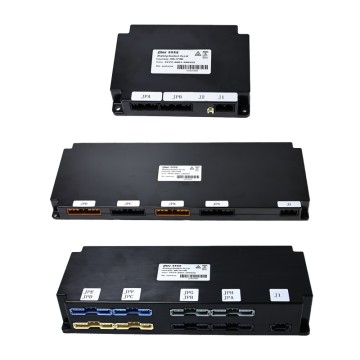
● MCU: S32K312/NXP, 120MHz, 2M Flash, ASIL B ● AFE: High-precision cell monitoring
EV BMS · ASIL B
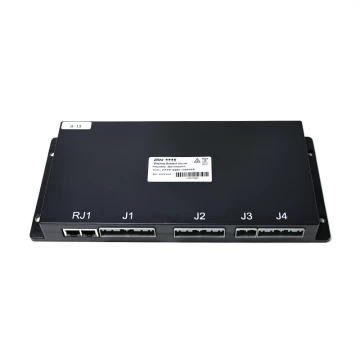
● Supports 1500V total voltage and insulation resistance monitoring ● High-voltage safety architecture
EV BMS · 1500V

Qualtech's battery management devices are deployed by leading enterprises across the energy storage, electric vehicle, and emergency infrastructure sectors worldwide.












Explore the full range of Qualtech BMS solutions — from ESS slave units to automotive-grade master controllers — engineered for the most demanding disaster relief and first responder deployments.
MCU: S32K312/NXP · ASIL B · 120MHz
EV BMSSupports 1500V total voltage · High-voltage safety
EV BMS · 1500V