+86 17326062766
Leave Your Message
-
Contact WhatsApp
-
 Contact Phone
-
 Contact Email
Engineered for residential energy storage, smart home integration, and scalable power backup — Qualtech BMS delivers precision, safety, and intelligence in every module.
A Battery Management Device (BMD), commonly referred to as a Battery Management System (BMS), is the intelligent brain behind every modern energy storage solution. It continuously monitors, protects, and optimizes battery packs — ensuring that your home power backup operates at peak efficiency, maximum safety, and longest possible lifespan.
As residential solar installations surge globally and smart home ecosystems become mainstream, the BMS has evolved from a passive protection circuit into a fully active, AI-driven energy orchestration platform. Whether you are storing solar energy for nighttime use, preparing for grid outages, or managing a whole-home smart energy network, the quality of your battery management device is the single most critical factor in system performance.
Advanced BMS devices monitor individual cell voltage, temperature, and current thousands of times per second — detecting anomalies before they become failures, and keeping your home backup system always ready.
From overcharge and over-discharge protection to short-circuit cutoff and thermal runaway prevention, modern BMS hardware provides layered hardware and software safety that residential users can depend on 24/7.
The global residential battery energy storage system (BESS) market is projected to exceed $25 billion USD by 2030, driven by falling battery costs, rising electricity prices, and growing demand for energy independence. Battery Management Devices are the critical enabling technology at the heart of this transformation — and the sophistication of BMS hardware directly determines how well a home storage system performs over its entire service life.
The battery management device sector has matured rapidly from niche electronics into a multi-billion-dollar global industry. Three converging forces are reshaping the landscape: the residential solar boom, the electric vehicle revolution, and the rise of grid-scale energy storage for utilities and commercial facilities.
Homeowners in North America, Europe, and Asia-Pacific are increasingly pairing rooftop solar with home battery backup systems. The BMS is the core component that allows these systems to safely cycle batteries daily, communicate with solar inverters, and participate in virtual power plant (VPP) programs. Demand for intelligent, compact, and communication-ready BMS units for 48V LiFePO4 home storage has grown more than 60% year-on-year in key markets.
Commercial and industrial (C&I) facilities — from factories and data centers to hospitals and logistics hubs — are deploying containerized battery energy storage systems (BESS) at unprecedented scale. These installations require enterprise-grade BMS solutions capable of managing thousands of cells in parallel strings, providing real-time SOC/SOH reporting, and integrating with SCADA and EMS platforms for automated peak shaving and demand response.
Utility-scale battery storage projects — often 10 MW to 1 GWh in capacity — rely on distributed BMS architectures with master-slave topologies, redundant communication buses (CAN, RS485, Ethernet), and AI-driven predictive maintenance algorithms. The BMS cluster controller is the mission-critical node that aggregates cell-level data and makes real-time dispatch decisions, directly affecting grid stability and energy arbitrage profitability.
The EV sector demands BMS devices that meet ASIL B or higher functional safety standards, support ultra-fast charging profiles up to 1500V, and operate reliably across extreme temperature ranges. Technologies developed for automotive BMS — such as electrochemical impedance spectroscopy (EIS) for real-time battery health diagnosis — are now migrating into premium home storage products, raising the performance bar for the entire industry.
The convergence of solar generation, battery storage, and EV charging into unified systems is creating new BMS requirements. Intelligent BMS devices must now manage bidirectional power flows, coordinate with multiple inverter types, and respond dynamically to electricity tariff signals — all while maintaining safety across the entire integrated energy ecosystem of a smart home or commercial campus.
Machine learning algorithms embedded in next-generation BMS firmware can predict battery degradation curves, optimize charging strategies based on usage patterns, and detect early signs of cell failure weeks before they occur. Cloud-connected BMS platforms enable remote monitoring, over-the-air firmware updates, and fleet-level analytics — transforming the BMS from a standalone device into a node in a global energy intelligence network.
Modern battery management devices serve far more than a simple protection function. In the context of home power backup and smart living, they enable a rich ecosystem of intelligent energy services that were unimaginable just a decade ago.
A BMS-equipped home storage system learns your household's daily energy consumption patterns and pre-charges the battery bank during peak solar production hours. When the grid is expensive or unavailable, the BMS seamlessly switches to battery power — maximizing solar self-consumption rates to over 90% in well-optimized residential installations. This directly reduces electricity bills and carbon footprint while ensuring uninterrupted power for all smart home devices.
When a grid outage occurs, a properly configured BMS transitions the home to battery power in under 20 milliseconds — fast enough that computers, smart home hubs, medical devices, and refrigerators never notice the interruption. The BMS manages load priorities, protecting critical circuits first while shedding non-essential loads to extend backup runtime. For families in outage-prone regions, this capability transforms a home battery system from a luxury into essential infrastructure.
Smart BMS devices with grid communication capabilities can automatically charge batteries during low-tariff nighttime hours and discharge during expensive peak periods — a strategy known as time-of-use (TOU) arbitrage. In markets with dynamic electricity pricing, this alone can generate annual savings of $500–$2,000 for a typical household. Advanced BMS platforms also enable homeowners to participate in utility demand response programs, earning credits for temporarily reducing grid load during peak demand events.
Aggregating hundreds or thousands of home battery systems — each managed by an intelligent BMS — creates a virtual power plant (VPP) capable of providing grid services at utility scale. BMS devices in VPP-enabled systems receive dispatch signals from aggregators and respond within seconds, collectively providing frequency regulation, voltage support, and spinning reserve services. This transforms home battery owners into active participants in the energy market, creating new revenue streams from existing home power backup assets.
Next-generation BMS architectures support bidirectional power flow between electric vehicles and home energy systems. A V2H-capable BMS can use an EV's large battery pack as a supplemental home backup source during extended outages, or charge the EV preferentially when solar production is high. This integration requires sophisticated BMS coordination between the home energy management system, the EV's onboard BMS, and the bidirectional charger — a complex orchestration challenge that leading BMS manufacturers like Qualtech are actively solving.
In remote or off-grid homes, the BMS is not just a convenience feature — it is the difference between a functioning household and a failed energy system. BMS devices for off-grid applications must handle wide temperature extremes (from -20°C Arctic conditions to +55°C desert heat), manage irregular charging from wind and solar sources simultaneously, and provide years of reliable operation without maintenance access. Ruggedized BMS hardware with extended temperature ratings and redundant communication paths is essential for these demanding scenarios.
Active balancing redistributes energy between cells rather than simply dissipating excess charge as heat, extending battery pack lifespan by up to 30% and improving usable capacity — critical for maximizing the value of home storage investments.
Accurate SOC and SOH algorithms give homeowners and energy management systems precise, real-time knowledge of available energy and battery degradation status — enabling confident system sizing and reliable backup duration predictions.
Modern home BMS devices support multiple communication protocols, enabling seamless integration with solar inverters, smart home platforms (Home Assistant, Google Home, Amazon Alexa), energy management systems, and cloud monitoring portals.
Over-voltage, under-voltage, over-current, short-circuit, over-temperature, under-temperature, and insulation fault protection — all implemented in both hardware and software layers for maximum reliability in residential environments.
Cluster controller (master) and slave unit architectures allow home storage systems to scale from a single 5 kWh battery module to multi-rack 100+ kWh installations, with the BMS maintaining cell-level visibility across the entire system.
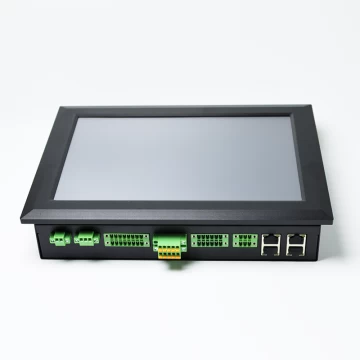
Integrated display and control units provide homeowners with intuitive, real-time visibility into battery status, energy flows, historical performance data, and system alerts — putting professional-grade energy intelligence at their fingertips.



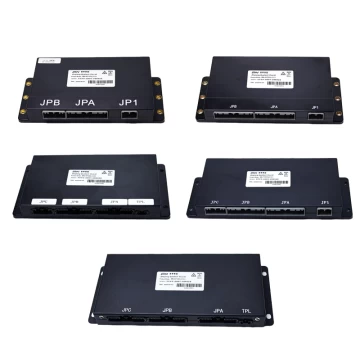
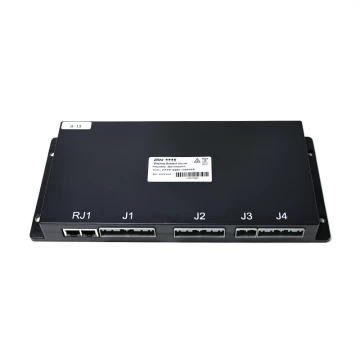
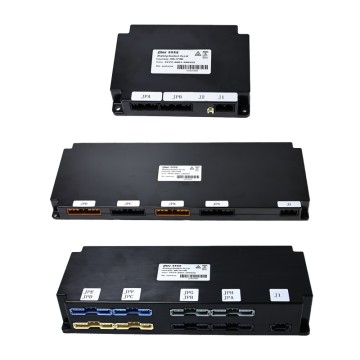
● MCU: S32K312/NXP, 120MHz, 2M Flash, ASIL B ● AFE: Precision cell monitoring for automotive and residential V2H applications
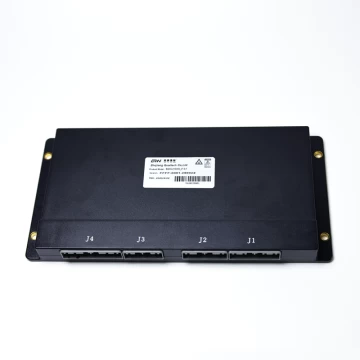
● Supports 1500V total voltage and insulation resistance monitoring for next-generation EV and bidirectional home charging systems

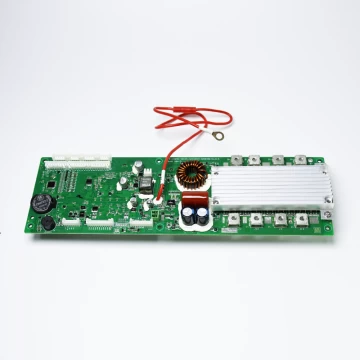
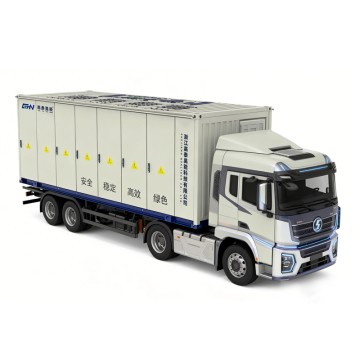
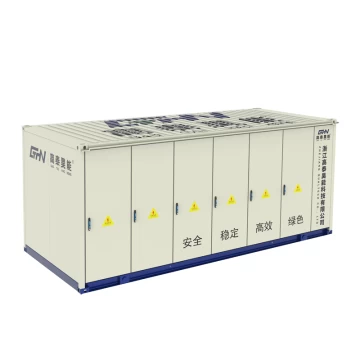
ZheJiang Qualtech Co., Ltd. (referred to as Qualtech) was established in 2011 and is headquartered in Hangzhou, Zhejiang. It is a national high-tech enterprise, the third batch of specialized, refined, and new "little giant" enterprises by the Ministry of Industry and Information Technology, and currently a leading enterprise in both the new energy vehicle BMS and energy storage BMS sub markets in China.
With over a decade of dedicated R&D in battery management technology, Qualtech has built a comprehensive intellectual property portfolio of 130+ patents and serves more than 1,000 customers across the globe — from residential homeowners and smart home integrators to automotive OEMs and grid-scale utility operators. Qualtech's full-stack self-development capabilities — spanning hardware design, firmware engineering, cloud platform development, and system integration — enable delivery of truly end-to-end digital smart energy solutions.
 More about Qualtech












As a full-stack digital smart energy system solution provider, Qualtech has always been anchored by independent R&D and in-house manufacturing. S...

The results of the prestigious industry award, the Energy Storage Industry Aurora Award (hosted by Energy Storage Talk), have recently been announced...

The 2026 BRICS Partnership on New Industrial Revolution (BPNIR) Forum opened recently in Xiamen, Fujian Province. Centered on the theme "Building..."