
 +86 17326062766
Leave Your Message
-
Contact WhatsApp
-
 Contact Phone
-
 Contact Email
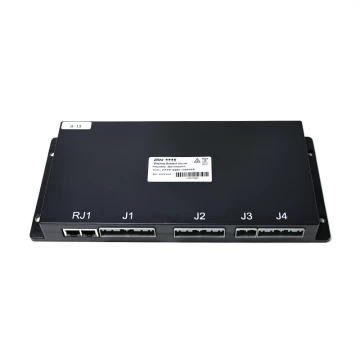
High-performance cluster controller designed for multi-tier large-scale ESS and EV charging station battery banks.
Learn More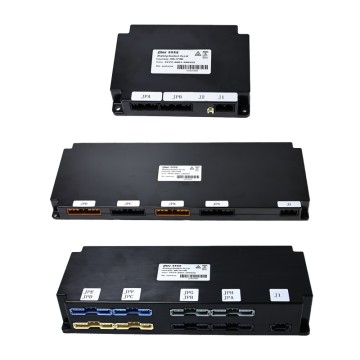
Advanced active balancing slave units optimizing cell consistency and maximizing usable capacity in heavy-duty charging setups.
Learn More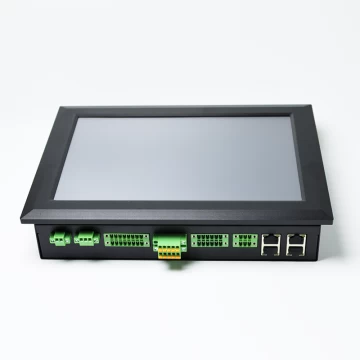
Interactive display and control interface for real-time diagnostics, system monitoring, and user configuration.
Learn More
Cost-effective and highly reliable passive balancing slave units providing precise voltage and temperature monitoring.
Learn MoreThe global transition toward sustainable mobility has triggered an exponential demand for robust Electric Vehicle (EV) charging infrastructures. As fast-charging networks expand to accommodate larger battery capacities and higher charging speeds, the grid faces tremendous stress. To mitigate peak demand charges, ensure operational stability, and provide uninterrupted service, modern charging stations are increasingly integrating localized Battery Energy Storage Systems (BESS). At the core of these advanced charging microgrids is the Battery Management System (BMS) for electric vehicle charging stations.
A BMS acts as the brain of the energy storage reserve within a charging station, continuously monitoring, balancing, and protecting the battery packs. It ensures that the station can store energy during off-peak hours and discharge it rapidly to power EVs during peak charging periods, shielding the municipal grid from excessive load spikes. By incorporating sophisticated algorithms for State of Charge (SoC), State of Health (SoH), and safety protocols, the BMS guarantees operational safety and prolongs the lifespan of the storage assets.
Industry Insight: Without a high-tier BMS, rapid energy transfer within an EV charging station can lead to severe cell imbalances, accelerated degradation, and thermal runaway risks. Implementing an automotive-grade BMS is no longer optional—it is a critical safety and financial safeguard for modern charging infrastructure developers.
From a commercial perspective, the EV charging sector is undergoing a massive transformation. The simple "plug-and-charge" grid-tied model is proving insufficient for Megawatt-level charging plazas. Commercial and Industrial (C&I) operators face high demand charges—tariffs based on the peak electricity usage during a billing cycle. By installing local battery banks managed by a high-voltage BMS, operators can implement "peak shaving," drawing grid power slowly and releasing it quickly to vehicles.
Furthermore, the integration of renewable energy sources, such as photovoltaic (PV) solar canopies on charging stations, requires a dynamic energy management scheme. The BMS facilitates this by acting as the regulatory interface. It decides when to direct solar power to charging vehicles, when to store it in the battery bank, and when to feed surplus energy back into the utility grid. This tri-directional energy flow underpins the viability of modern zero-emission charging hubs.
Managing batteries in a fast-charging station presents distinct challenges compared to standard electric vehicles. The batteries in charging stations experience frequent, deep, and rapid charge-discharge cycles. This accelerated cycling demands a BMS that can handle high currents without overheating or causing cell degradation.
Precision monitoring of cell voltage, temperature, and internal resistance is paramount. A minor variation in cell consistency can escalate into a major capacity loss over hundreds of cycles. Consequently, robust active balancing mechanisms, such as those featured in the Qualtech ABMU series, are deployed to redistribute charge dynamically among cells rather than wasting excess energy as heat.
To reduce cable thickness, minimize copper losses, and boost system efficiency, the industry is transitioning from traditional 400V/800V setups to 1500V battery systems. Operating at such high voltages requires exceptional insulation monitoring and electromagnetic compatibility (EMC) design. Master-slave BMS architectures, incorporating robust isolation barriers and fiber-optic or daisy-chain communications, are crucial to prevent high-voltage faults from damaging control electronics or posing safety hazards to end-users.
In remote areas or locations with weak grid infrastructure, integrated solar-storage-charging microgrids are the only viable solution for high-power EV charging. The BMS manages the local battery bank, coordinating with the solar inverter and the EV charger controller. When a vehicle initiates a charge, the BMS evaluates the battery's current SoC and thermal state, delivering optimal power without overloading the grid connection. During periods of high solar irradiance and low vehicle traffic, the BMS stores clean energy, reducing reliance on fossil-fuel-powered grids.
Ultra-fast charging terminals designed for commercial fleets and highway rest stops require instantaneous power delivery of up to 350kW or more. Drawing this directly from the grid is often economically and technically unfeasible. Localized buffer batteries, managed by a multi-cluster BMS controller like the Qualtech SBCU-3131, act as energy reservoirs. The BMS ensures that these buffer batteries discharge safely at high C-rates while maintaining strict thermal limits, preventing dangerous temperature spikes.
Battery swapping stations represent another high-growth segment, particularly for electric two-wheelers, three-wheelers, and heavy-duty logistics trucks. In a swapping station, dozens of battery packs are charged simultaneously in storage bays. The BMS must communicate with each individual pack, tracking their charging cycles, diagnosing health metrics, and identifying deteriorated packs before they are re-inserted into a vehicle. This scenario requires highly scalable, multi-channel BMS units with robust communication protocols (such as CAN, RS485, or Ethernet).
The future of smart grids relies heavily on V2G technology, where parked EVs act as a distributed battery reserve. The BMS at the charging station coordinates this bidirectional power flow, ensuring that discharging the vehicle battery to support the grid does not compromise the vehicle owner's range requirements or accelerate battery degradation. Through smart communication standard ISO 15118, the station BMS and vehicle BMS work in tandem to optimize this transaction.

Autonomous local energy systems integrating solar, storage, and EV charging nodes for off-grid or grid-resilient operations.

Synergizing solar PV arrays, high-capacity battery storage, and smart charging stations to maximize green energy usage.
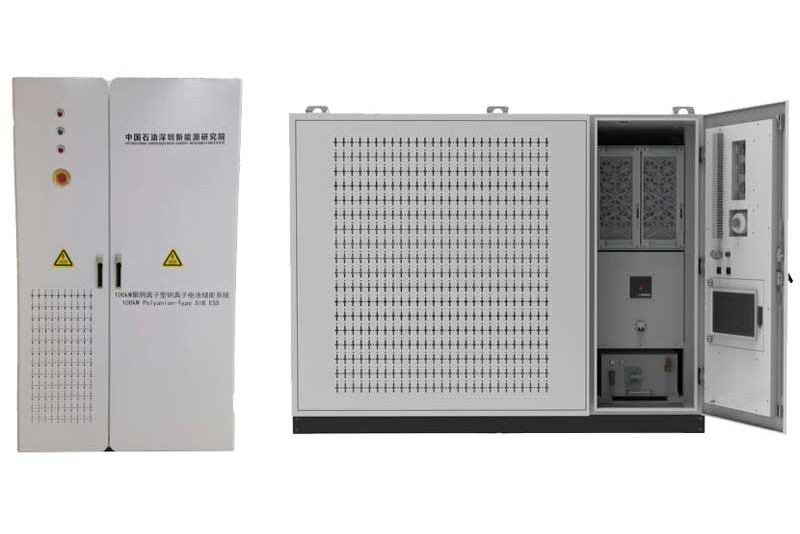
Custom-tailored industrial battery energy storage cabinets engineered for factory peak-shaving and grid ancillary services.
ZheJiang Qualtech Co., Ltd. (referred to as Qualtech) was established in 2011 and is headquartered in Hangzhou, Zhejiang. It is a national high-tech enterprise, the third batch of specialized, refined, and new "little giant" enterprises by the Ministry of Industry and Information Technology, and currently a leading enterprise in both the new energy vehicle BMS and energy storage BMS sub-markets in China.
We specialize in full-stack digital smart energy solutions, including research, development, and manufacturing of state-of-the-art battery management systems for electric vehicles, commercial utility storage, and microgrid stations.
Read More About Us













As a full-stack digital smart energy system solution provider, Qualtech has always been anchored by independent R&D and in-house manufacturing...

The results of the prestigious industry award, the Energy Storage Industry Aurora Award (hosted by Energy Storage Talk), have recently been announced...

The 2026 BRICS Partnership on New Industrial Revolution (BPNIR) Forum opened recently in Xiamen, Fujian Province. Centered on the theme "Building...
Explore our range of high-performance BMS modules, automotive-grade master controllers, and containerized energy storage units designed to power future charging infrastructures.
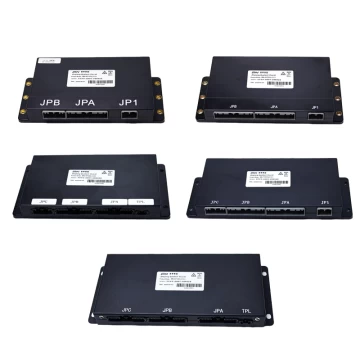
MCU: S32K312/NXP, 120MHz, 2M Flash, ASIL B. Highly reliable slave module for automotive traction batteries.
View Details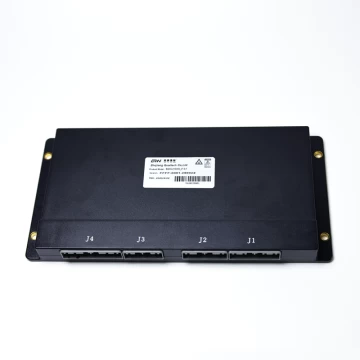
Supports 1500V total voltage and insulation resistance detection for utility-scale battery systems.
View Details
All-in-one BMS with voltage, temp, and current sensing. Supports over-charge, over-discharge, and short circuit protection.
View Details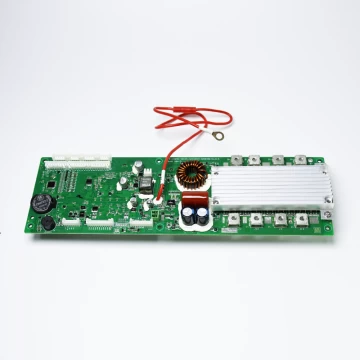
Smart domestic storage BMS designed to optimize home solar battery banks and local mini-grids.
View Details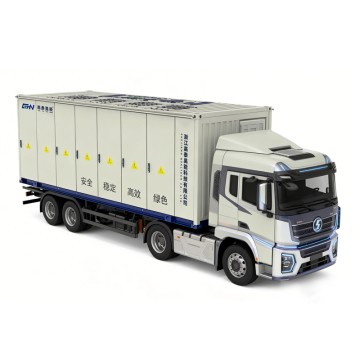
Mobile power solution providing temporary and emergency charging support for events and grid outages.
View Details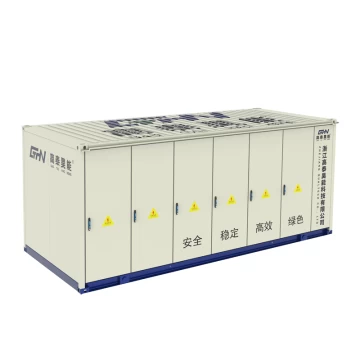
High-density liquid-cooled containerized BESS engineered for grid-scale and commercial load management.
View Details
Advanced HMI unit designed for industrial energy storage cabinets and central system administration.
View Details
Accurate multi-cell voltage acquisition module with reliable passive balancing capabilities.
View Details