+86 17326062766
Leave Your Message
-
Contact WhatsApp
-
 Contact Phone
-
 Contact Email
Deploying robust control, active cell balancing, and cluster-level coordination to maximize the performance of solar farm battery energy storage systems (BESS).
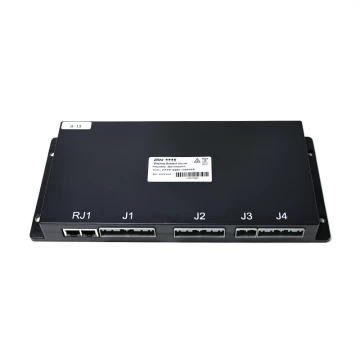
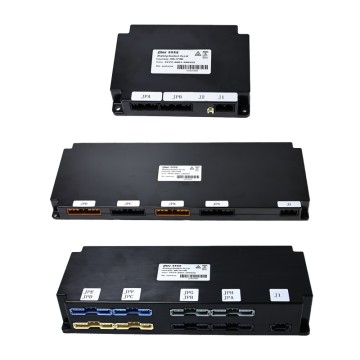
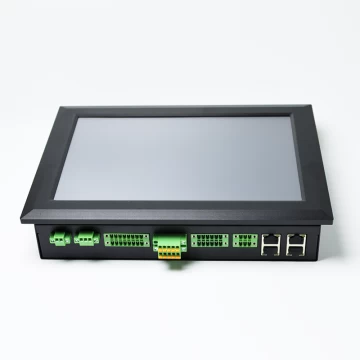

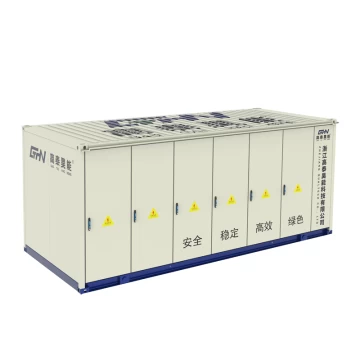
The rapid transition toward decarbonized power grids has accelerated the deployment of utility-scale solar farms globally. However, solar energy is inherently intermittent. To transform solar PV plants into dispatchable baseload assets, Battery Energy Storage Systems (BESS) have become indispensable. At the heart of every BESS is the Battery Management System (BMS), which acts as the critical brain ensuring safety, reliability, and economic viability.
Commercial and industrial developers are increasingly shifting from standard 1000V DC architectures to highly efficient 1500V DC high-voltage systems. This migration reduces system balance-of-plant costs, minimizes cable losses, and increases power density. However, operating at 1500V demands an exceptionally reliable, multi-tier BMS capable of managing hundreds of series-connected lithium-ion cells while maintaining precise insulation monitoring and safety diagnostics.
Qualtech stands at the forefront of this industrial shift, engineering cutting-edge automotive-grade BMS solutions tailored for utility-scale solar farms and microgrids. Our technology directly addresses the primary commercial challenges of battery storage: cell degradation, system downtime, and thermal runaway mitigation.
Enabling smooth integration of solar assets into national grids by managing ramp rates and stabilizing voltage fluctuations.
Built on ASIL-B functional safety architectures, providing unmatched diagnostic coverage for multi-megawatt battery assets.
How intelligent BMS architectures optimize high-capacity battery installations under extreme operating conditions.
In islanded grids or remote industrial operations, solar and wind must supply power without grid backup. A high-performance BMS coordinates seamlessly with microgrid energy management software to ensure immediate black-start capabilities, smooth transition between grid-connected and islanded modes, and sub-millisecond frequency response to load spikes.
Modern service stations and commercial complexes combine rooftop PV arrays, battery storage, and ultra-fast EV charging hubs. The BMS manages the complex bidirectional power flow, prioritizing local solar consumption, buffering high-power EV charging demands to prevent grid demand charges, and using the batteries for peak shaving during high-tariff periods.
During peak solar production, grid operators often curtail power due to transmission limits. Solar farms equipped with high-capacity BESS store this excess "free" energy. An intelligent cluster-level BMS ensures that thousands of cells are uniformly charged, using active or passive balancing to prevent single-cell bottlenecks from limiting the entire system's storage capacity.
As battery chemistry evolves and grid complexity increases, the technology powering Battery Management Systems is undergoing a major paradigm shift. To maintain a competitive edge, developers must understand these emerging trends:
Operating battery packs at 1500V DC increases system capacity while reducing balance-of-system (BOS) costs. However, high-voltage systems demand highly specialized insulation monitoring, robust galvanic isolation, and strict creepage and clearance distances within the BMS hardware. High-voltage master controllers, like Qualtech's automotive-grade 1500V BMS, are specifically engineered to maintain safety and communication integrity under extreme electromagnetic interference.
Traditional BMS relies on basic Coulomb counting, which drifts over time. Modern systems leverage AI and machine learning algorithms on cloud platforms to create digital twins of the batteries. By analyzing historical voltage, temperature, and current data, the BMS can predict State of Charge (SoC) and State of Health (SoH) with an accuracy of >99%, preventing over-discharge and extending the battery asset's operational life by up to 20%.
In large-capacity battery energy storage systems (such as those using 314Ah cells), passive balancing wastes excess energy as heat, causing localized hot spots. Active balancing transfers energy from high-charge cells to low-charge cells, maximizing thermal uniformity and usable energy yield. Qualtech's ABMU series active balance slave units dynamically manage this energy transfer in real-time, which is vital for high-duty-cycle solar farms.
Next-generation BESS containers are transitioning from forced-air cooling to liquid cooling and direct immersion cooling. The BMS must interface directly with advanced thermal management units, monitoring localized temperature variations down to individual cell tabs to prevent thermal runaway before it starts, ensuring compliance with strict safety regulations like UL 9540A.
ZheJiang Qualtech Co., Ltd. (referred to as Qualtech) was established in 2011 and is headquartered in Hangzhou, Zhejiang. It is a national high-tech enterprise, the third batch of specialized, refined, and new "little giant" enterprises by the Ministry of Industry and Information Technology, and currently a leading enterprise in both the new energy vehicle BMS and energy storage BMS sub markets in China.
With a core focus on independent research & development and advanced in-house manufacturing, Qualtech delivers full-stack digital smart energy system solutions. Our products are widely deployed in commercial and industrial energy storage, utility-scale solar farms, smart microgrids, and electric vehicle applications across the globe, ensuring maximum safety, efficiency, and longevity of critical battery assets.

Qualtech's flexible BMS architecture is engineered to excel across multiple industrial and commercial energy storage scenarios.

Delivering resilient, stable, and autonomous power solutions for off-grid operations and remote communities utilizing integrated solar and wind energy.
View More
Combining PV generation, battery energy storage, and smart EV charging infrastructure to reduce grid dependency and peak demand costs.
View More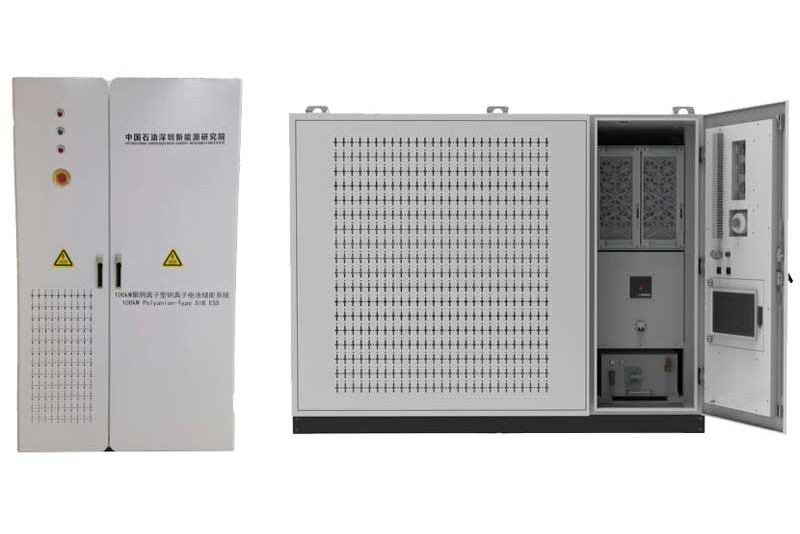
Tailored energy storage cabinet solutions designed for high-density industrial parks and commercial buildings requiring peak shaving and backup power.
View MoreCollaborating with world-class energy and automotive enterprises to drive clean energy innovation forward.












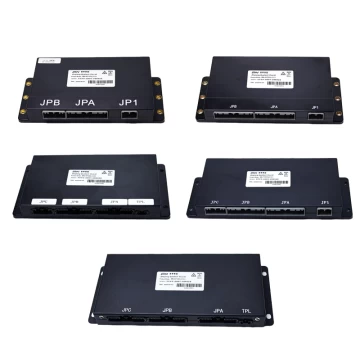
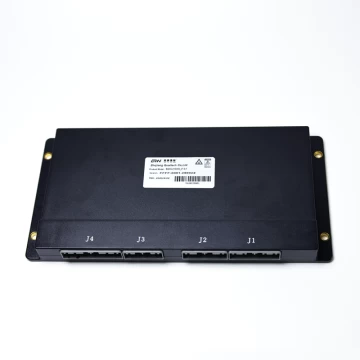
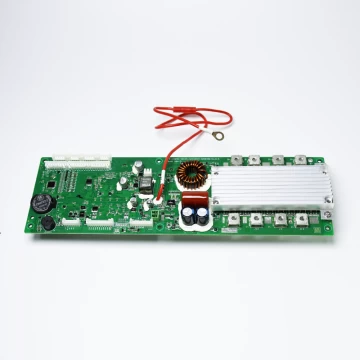
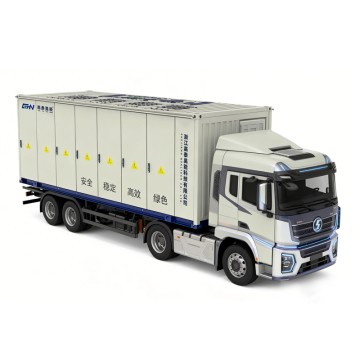
Explore our comprehensive range of high-performance BMS products, from cell monitoring units to containerized utility-scale energy storage systems.