+86 17326062766
Leave Your Message
-
Contact WhatsApp
-
 Contact Phone
-
 Contact Email
Deploying tier-1 energy density, intelligent active/passive cell balancing, and robust thermal containment for reliable commercial duty cycles.
Commercial and industrial enterprises represent over 52% of total global electricity consumption. Navigating volatile tariff structures, capacity penalties, and stringent ESG decarbonization mandates requires modern on-site battery storage energy stations.
Utilities worldwide are aggressively increasing peak demand billing metrics, where short 15-minute load spikes can constitute up to 30% to 50% of a commercial enterprise's total monthly utility expenditure. Modern C&I BESS stations actively suppress these peak anomalies autonomously.
Rooftop solar installations across manufacturing hubs frequently generate surplus power during midday low-tariff windows while feeding back into the grid at zero or negative feed-in compensation. On-site storage captures this green electron flow to maximize internal self-consumption rates beyond 90%.
Unscheduled voltage sags, brownouts, and severe weather interruptions result in massive manufacturing downtime, semiconductor yield loss, and data corruption. Battery energy storage stations provide millisecond uninterruptible power backup to maintain industrial continuity.
From high-capacity 314Ah lithium iron phosphate (LiFePO4) chemistry to multi-tier BMS telemetry and immersion thermal cooling, industrial storage stations represent a synergy of electrical, chemical, and computational engineering.
The transition from 280Ah to 314Ah+ LFP prismatic cells represents a major leap in spatial energy density, allowing containerized systems to exceed 5MWh in a standard 20-foot footprint. Advanced thermal management solutions operate through:
Qualtech's automotive-grade BMS platform leverages 1500V master controllers, active/passive balancing slave modules, and cloud diagnostics to maintain electrochemical health:
Bidirectional PCS units convert DC battery potential to AC utility grid sync with four-quadrant active and reactive power regulation:
The digital brain of the storage station continuously processes factory load forecasts, ambient meteorological data, and dynamic spot pricing:
Tailored system integrations optimized for manufacturing plants, data centers, EV fleet hubs, and remote industrial microgrids.

Self-contained microgrids combining high-voltage energy storage, on-site solar, and wind generation. Enables heavy manufacturing campuses, mines, and isolated industrial zones to operate independently of weak utility grids with robust black-start capabilities.

Solves the challenge of grid transformer capacity limits when installing multi-megawatt ultrafast EV chargers (up to 480kW per gun). The stationary BESS acts as a dynamic energy buffer, discharging rapidly during vehicle charging events without triggering costly grid upgrades.
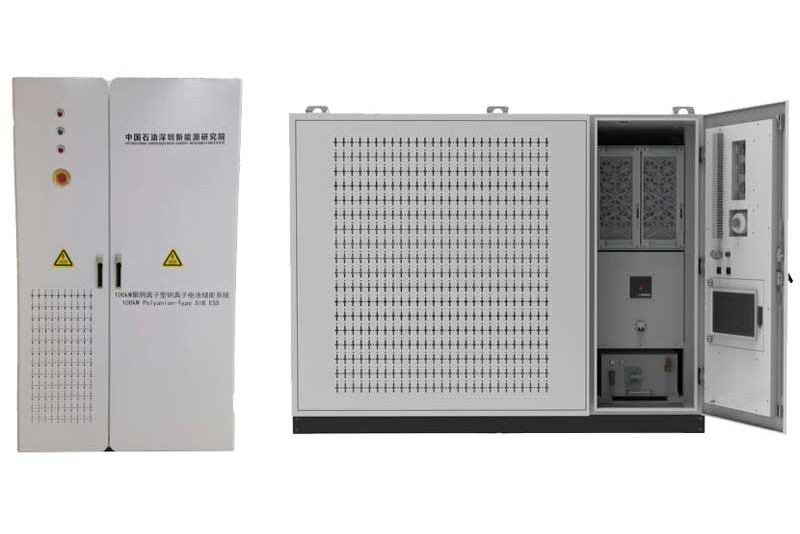
Outdoor all-in-one liquid-cooled cabinets providing modular scalability from 100kWh to multiple MWh. Engineered with multi-stage gas detection, pack-level fire suppression, and redundant BMS controllers for mission-critical industrial manufacturing continuity.
ZheJiang Qualtech Co., Ltd. (referred to as Qualtech) was established in 2011 and is headquartered in Hangzhou, Zhejiang. As a recognized national high-tech enterprise and member of the third batch of specialized, refined, and new "little giant" enterprises by the Ministry of Industry and Information Technology, Qualtech holds a commanding presence in both the new energy vehicle BMS and commercial energy storage BMS sub-markets.
Our dual-base manufacturing capacity safeguards full-stack self-development capabilities, enabling the delivery of digital, cloud-integrated smart energy solutions with uncompromising safety and longevity.
Learn More About Our Technology & Manufacturing
Powering electric mobility, commercial manufacturing, and grid-scale deployments with verified long-term operational integrity.












Tracking breakthrough innovations in solid-state integration, dual-base manufacturing scale, and international EV-BESS charging networks.

As a full-stack digital smart energy system solution provider, Qualtech expands dual-base manufacturing to guarantee precision production for international commercial storage projects.
Read Full Article →
The prestigious Energy Storage Industry Aurora Award recognizes Qualtech's core BMS and thermal master controllers for exemplary model project implementation.
Read Full Article →
Qualtech establishes strategic international agreements to roll out integrated solar-storage EV fast-charging networks across South American commercial corridors.
Read Full Article →From containerized immersion systems and DC-coupled hybrid inverters to active balancing slave hardware, explore our complete commercial energy storage ecosystem.