+86 17326062766
Leave Your Message
-
Contact WhatsApp
-
 Contact Phone
-
 Contact Email
Core products engineered for intelligent battery management and energy storage in electric vehicle charging infrastructure
As global EV adoption accelerates, battery energy storage systems (BESS) have become a critical infrastructure component for modern charging networks
Global EV sales surpassed 14 million units in 2023 and are projected to exceed 45 million by 2030. This exponential growth demands a parallel expansion of intelligent, grid-friendly charging infrastructure supported by reliable battery storage systems.
High-power DC fast chargers (150–350kW) can impose severe strain on local grids. Battery storage systems act as a buffer, absorbing off-peak grid energy and discharging during peak demand periods — reducing grid upgrade costs by up to 60%.
By integrating BESS with EV charging stations, operators can participate in demand response programs, reduce peak electricity tariffs, and generate additional revenue through grid ancillary services — significantly improving station ROI.
Industry analysis indicates that by 2028, over 70% of newly deployed commercial EV charging hubs will integrate on-site battery energy storage systems. The convergence of falling lithium-ion battery costs (now below $100/kWh), advanced BMS technology, and smart grid policies makes BESS-integrated charging stations the dominant commercial model for the next decade.
The intersection of energy storage technology and EV infrastructure is evolving rapidly across four critical dimensions
Next-generation charging stations are deploying high-capacity BESS (500kWh–5MWh) to enable ultra-fast charging at 350kW+ without requiring costly grid upgrades. The battery system charges slowly from the grid and discharges rapidly to the charger, decoupling the charging speed from grid connection capacity. This approach is transforming highway rest stops, logistics hubs, and urban charging plazas into viable ultra-fast charging locations.
The "light-storage-charging" integration model is gaining rapid commercial traction. Rooftop solar PV panels generate clean energy, which is stored in a BESS and then dispatched to EV chargers on demand. This DC-coupled architecture (pioneered by Qualtech's All-in-One PV-BESS solutions) eliminates multiple energy conversion steps, achieving system efficiencies above 92% while enabling self-sufficient, off-grid-capable charging stations.
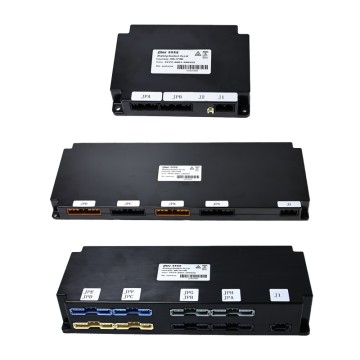
Modern Battery Management Systems have evolved far beyond basic protection circuits. Today's advanced BMS platforms incorporate AI-powered State of Health (SOH) prediction, real-time electrochemical modeling, and cloud-connected fleet analytics. Qualtech's SBCU-3131 cluster controller exemplifies this trend — supporting multi-rack battery management with millisecond-level fault detection, active/passive cell balancing, and remote OTA firmware updates, enabling predictive maintenance that extends battery life by 20–30%.
A rapidly emerging commercial model involves repurposing retired EV battery packs (which typically retain 70–80% capacity) as stationary storage for charging stations. This circular economy approach dramatically reduces BESS capital costs by 40–50% compared to new battery installations. Advanced BMS technology — capable of managing heterogeneous battery cells with varying degradation states — is the key enabling technology making this trend commercially viable at scale.
Battery storage systems for EV charging span diverse commercial and industrial environments — each with unique technical and economic requirements


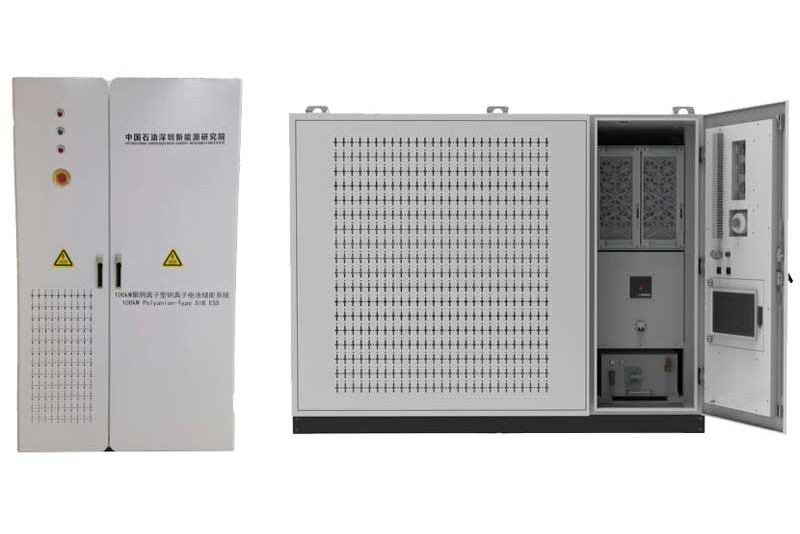
Hospitality venues are deploying BESS-backed charging amenities as a premium guest service, using off-peak stored energy to provide free or low-cost overnight charging while avoiding demand charge penalties.
Electric bus and truck depots require simultaneous overnight charging of 50–500 vehicles. BESS systems with intelligent charge scheduling distribute load across off-peak hours, reducing electricity costs by 35–55% compared to unmanaged charging.
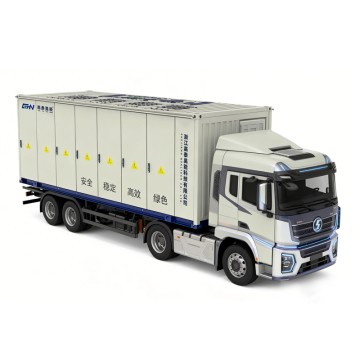
Mobile BESS units (truck-mounted BESS) provide temporary EV charging capability at construction sites, events, and disaster recovery operations where permanent grid connections are unavailable.
Explore our complete range of BMS and energy storage solutions designed for EV charging station applications
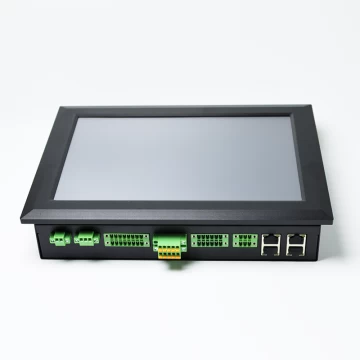

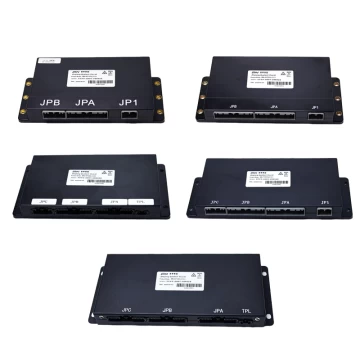
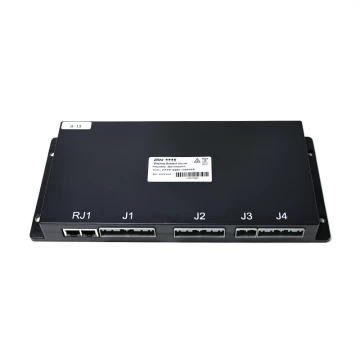
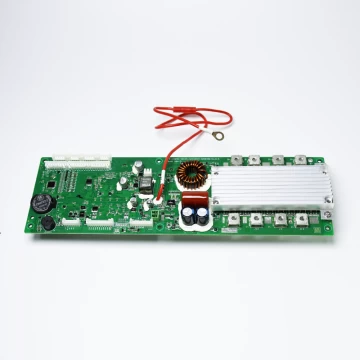
● MCU: S32K312/NXP, 120MHz, 2M Flash, ASIL B ● AFE: Advanced cell monitoring for EV battery packs
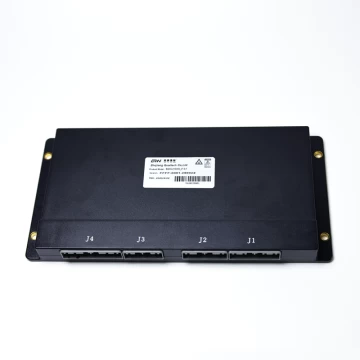
● Supports 1500V total voltage and insulation resistance monitoring for next-gen EV charging systems

ZheJiang Qualtech Co., Ltd. (referred to as Qualtech) was established in 2011 and is headquartered in Hangzhou, Zhejiang. It is a national high-tech enterprise, the third batch of specialized, refined, and new "little giant" enterprises by the Ministry of Industry and Information Technology, and currently a leading enterprise in both the new energy vehicle BMS and energy storage BMS sub markets in China.
With over a decade of focused R&D in battery management systems and energy storage technologies, Qualtech has developed a comprehensive product ecosystem spanning automotive-grade BMS, industrial energy storage systems, and integrated EV charging station battery storage solutions. Our technology is deployed across thousands of installations globally — from residential solar storage to grid-scale BESS projects and EV charging infrastructure.
From microgrid systems to integrated light-storage-charging and industrial energy storage — Qualtech delivers end-to-end battery storage solutions for EV charging station ecosystems
Industry Applications — Total Solution
 View More
Industry Applications — Solar + BESS + Charger
View More
Industry Applications — C&I & Grid Scale
View More
Technical differentiation that drives real-world performance advantages across the entire EV charging station lifecycle
Automotive-grade functional safety certification ensures the highest reliability standards for EV charging station battery systems operating in public environments.
From BMS chips to cloud EMS software, Qualtech's vertically integrated R&D capability ensures seamless system integration and rapid customization for any charging station topology.
Real-time remote monitoring, AI-driven energy optimization, and predictive maintenance via cloud EMS platform — maximizing BESS uptime and charging station profitability.
Liquid-cooled and immersion-cooled BESS options maintain optimal battery temperature across all operating conditions, extending cycle life to 6,000+ cycles for maximum ROI.
Qualtech battery storage systems power EV charging infrastructure for leading automotive and energy companies worldwide














As a full-stack digital smart energy system solution provider, Qualtech has always been anchored by independent R&D and in-house manufacturing...

The results of the prestigious industry award, the Energy Storage Industry Aurora Award (hosted by Energy Storage Talk), have recently been announced...

The 2026 BRICS Partnership on New Industrial Revolution (BPNIR) Forum opened recently in Xiamen, Fujian Province. Centered on the theme "Building..."
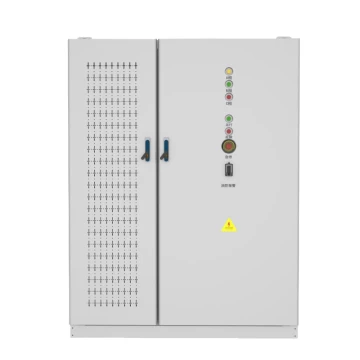
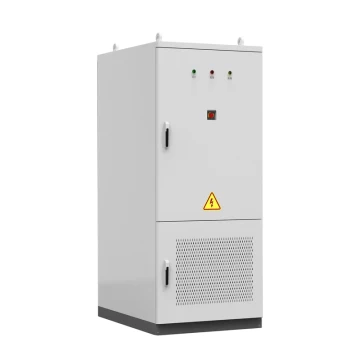
From intelligent BMS controllers to containerized energy storage systems — Qualtech's full product portfolio for EV charging infrastructure