+86 17326062766
Leave Your Message
-
Contact WhatsApp
-
 Contact Phone
-
 Contact Email
Purpose-built energy storage products engineered for rapid deployment in disaster zones, first-responder operations, and off-grid emergency scenarios. Reliable power when it matters most.
When natural disasters strike and power grids collapse, battery energy storage systems (BESS) become the lifeline that keeps rescue operations, medical facilities, and communication networks alive.
Modern emergency disaster relief and first-responder operations are fundamentally dependent on reliable electrical power. From field hospitals and emergency command centers to communication relay stations and water purification units, every critical function demands an uninterrupted, resilient energy supply.
Traditional diesel generators have long served this role, but they come with significant drawbacks: fuel supply chain vulnerabilities, noise pollution that interferes with search operations, exhaust emissions hazardous in enclosed spaces, and maintenance complexity under field conditions. Battery storage systems address every one of these pain points.
Advanced BESS solutions can be deployed within minutes, operate silently, function in extreme temperatures, and integrate seamlessly with solar panels or portable wind turbines to create self-sustaining microgrids — exactly what disaster zones require.
The global market for emergency-grade energy storage is expanding rapidly. Government agencies, NGOs, military organizations, and private emergency contractors are all accelerating their adoption of BESS technology as a core component of disaster preparedness infrastructure.
In disaster scenarios, every second of power outage can cost lives. Modern battery storage systems deliver instant switchover — typically under 20 milliseconds — ensuring medical equipment, communication systems, and emergency lighting never fail during critical operations.
With intelligent Battery Management Systems (BMS) monitoring every cell in real time, emergency operators gain complete visibility into energy reserves, enabling precise mission planning and resource allocation even in the most challenging field environments.
The emergency BESS market is undergoing rapid transformation driven by climate change, geopolitical instability, and technological breakthroughs in lithium-ion chemistry and power electronics.
The global emergency and backup power storage market is projected to surpass $18 billion by 2030, growing at a CAGR exceeding 14%. Government mandates for critical infrastructure resilience and increasing frequency of extreme weather events are the primary growth drivers. Defense and civil protection agencies represent the fastest-growing procurement segment.
National defense agencies and civil protection organizations worldwide are standardizing on mobile BESS platforms for forward operating bases, field hospitals, and disaster relief staging areas. Programs such as FEMA's Strategic National Stockpile and NATO's energy resilience initiatives are creating substantial long-term demand for ruggedized, field-deployable battery systems.
Major humanitarian organizations including the Red Cross, UNHCR, and Médecins Sans Frontières have integrated containerized BESS solutions into their emergency response protocols. Solar-plus-storage systems now power field clinics in remote disaster zones across Africa, Asia, and Latin America, replacing unreliable diesel supply chains with clean, dependable energy.
LiFePO4 (lithium iron phosphate) chemistry has become the dominant technology for emergency applications due to its exceptional thermal stability, 4,000+ cycle life, and inherent non-flammability. Combined with advanced BMS electronics that provide cell-level monitoring and protection, modern BESS platforms achieve reliability levels previously only possible with military-grade equipment.
The shift toward modular BESS architecture enables emergency responders to right-size their power supply to mission requirements. Systems can be configured from portable 5kWh units for individual rescue teams to multi-MWh containerized installations supporting entire disaster relief camps — all using the same core BMS platform for unified monitoring and control.
Innovative financing models including power-as-a-service (PaaS) contracts and pre-positioned equipment leasing are making advanced BESS technology accessible to smaller municipalities and developing-nation emergency agencies. Technology providers are partnering with logistics companies to ensure rapid global deployment capability within 24–72 hours of disaster declaration.
Battery storage systems serve a diverse range of mission-critical functions across the full emergency response lifecycle — from initial disaster impact through long-term recovery operations.

Truck-mounted BESS units power mobile incident command posts with enough energy to run satellite communication systems, tactical displays, server racks, and climate control for 72+ hours without refueling. Silent operation is critical in search-and-rescue environments where noise disrupts acoustic victim detection equipment.

Containerized BESS systems provide the stable, clean power that medical equipment demands. Ventilators, surgical lighting, sterilization equipment, and diagnostic devices require power quality that diesel generators often cannot deliver. Immersion-cooled battery systems maintain optimal operating temperature even in extreme desert or tropical environments.

Temporary refugee and relief camps require reliable power for lighting, water pumping, food refrigeration, and device charging. Solar-plus-BESS microgrids can be established within hours, providing weeks of autonomous operation without fuel resupply — a critical capability when road infrastructure is damaged and supply chains are disrupted.

Integrated solar-storage charging stations deployed at wildfire perimeters keep electric firefighting equipment, drones, and communication devices operational around the clock. During flood response, floating or elevated BESS platforms maintain power to pumping stations and emergency shelters when grid infrastructure is submerged.

Hospitals, water treatment plants, emergency dispatch centers, and telecommunications hubs require uninterruptible power that exceeds what traditional UPS systems can provide. Large-scale BESS installations provide hours to days of backup power, bridging the gap between grid failure and generator startup or extended outage periods.
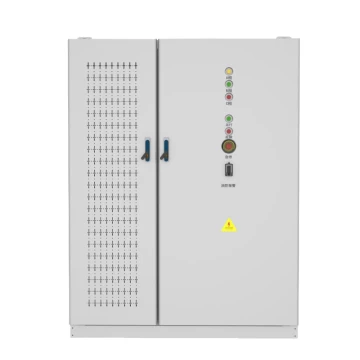
All-in-one DC-coupled PV-BESS systems can be rapidly deployed to restore power to communities isolated by natural disasters. These self-contained units combine solar generation, battery storage, and inverter technology in a single transportable package, enabling non-specialist emergency personnel to establish community power hubs without engineering support.
The intersection of AI, advanced materials science, and connectivity is driving a new generation of emergency battery storage systems with capabilities that were science fiction just five years ago.
Machine learning algorithms embedded in next-generation BMS platforms analyze mission parameters, weather forecasts, and historical consumption data to optimize energy allocation in real time. Emergency commanders receive predictive alerts about energy reserves hours before critical thresholds are reached, enabling proactive mission adjustments rather than reactive crisis management.
Solid-state battery technology promises to deliver 2–3× energy density improvements over current lithium-ion cells while eliminating flammability risks entirely. For emergency applications, this translates to dramatically lighter, more compact BESS units that can be transported by helicopter or small vehicle — opening up deployment scenarios currently impossible with existing technology.
Cloud-connected BESS platforms enable remote monitoring and control of distributed emergency power assets from centralized emergency operations centers. Real-time energy dashboards give disaster coordinators complete situational awareness of power availability across multiple sites simultaneously, enabling dynamic resource reallocation as mission priorities evolve.
Electric emergency vehicles equipped with bidirectional charging capability can serve as mobile BESS units, feeding power back into field infrastructure when parked. A fleet of electric ambulances or fire trucks can collectively provide hundreds of kilowatt-hours of emergency power — transforming every EV in the fleet into a distributed energy resource.
Miniaturized battery storage modules deliverable by heavy-lift drones are emerging as a solution for powering critical equipment in locations inaccessible by ground vehicle. Drone-deployed BESS units can establish temporary power nodes for communication repeaters, sensor networks, and small medical devices in the most remote disaster environments.
Retired EV battery packs with 70–80% remaining capacity are being repurposed into cost-effective emergency backup systems. This circular economy approach dramatically reduces the cost of building national emergency energy reserves, making advanced BESS technology accessible to municipalities and agencies with constrained procurement budgets.
ZheJiang Qualtech Co., Ltd. (referred to as Qualtech) was established in 2011 and is headquartered in Hangzhou, Zhejiang. It is a national high-tech enterprise, the third batch of specialized, refined, and new "little giant" enterprises by the Ministry of Industry and Information Technology, and currently a leading enterprise in both the new energy vehicle BMS and energy storage BMS sub markets in China.
With over a decade of deep expertise in battery management systems and energy storage integration, Qualtech delivers emergency-grade BESS solutions that meet the exacting demands of disaster relief organizations, first-responder agencies, and critical infrastructure operators worldwide. Our full-stack development capability — from BMS electronics to complete containerized energy storage systems — ensures every component is optimized for reliability under the most challenging field conditions.
Learn More About Qualtech
✅ National High-Tech Enterprise Certification
✅ Ministry of Industry & Information Technology Recognition
✅ Leading BMS Provider for EV & Energy Storage Markets
✅ Full-Stack Self-Development Capability
✅ Global Emergency Power Solutions Partner
From microgrid deployments to integrated solar-storage charging infrastructure, Qualtech delivers complete energy system solutions for every emergency and disaster relief scenario.
Collaborating with world-leading organizations to advance emergency energy storage technology and deployment standards across every continent.












Explore our comprehensive range of BMS components, energy storage systems, and mobile power solutions — each engineered for reliability in the most demanding emergency deployment scenarios.