+86 17326062766
Leave Your Message
-
Contact WhatsApp
-
 Contact Phone
-
 Contact Email
Purpose-built energy systems delivering reliable off-grid power for camping, RV travel, and mobile adventures




The era of fossil-fuel dependency in outdoor recreation is over — intelligent battery storage is leading the charge
The outdoor recreation and RV industry has undergone a seismic transformation over the past decade. Where once a camping trip meant accepting limited power access — a gas generator humming through the night, a single lantern, and a cooler full of ice — today's adventurers demand the comforts of modern life wherever the road leads. At the heart of this revolution is the battery storage system: a compact, intelligent, and increasingly powerful energy hub that converts sunlight, shore power, or regenerative braking into clean, silent, on-demand electricity.
According to industry research, the global portable power station market — a subset of the broader battery energy storage segment — was valued at over USD 2.8 billion in 2023 and is projected to exceed USD 8.5 billion by 2030, growing at a CAGR of more than 17%. The RV-specific energy storage segment mirrors this trajectory, driven by surging van-life culture, remote work trends, and a growing appetite for sustainable travel. Battery storage systems for outdoor use are no longer niche accessories — they are central infrastructure for the modern outdoorsman.
What makes today's systems so compelling is the convergence of LiFePO4 chemistry, smart Battery Management Systems (BMS), solar integration, and cloud-connected monitoring. These technologies combine to deliver energy storage solutions that are safer, longer-lasting, lighter, and smarter than anything available just five years ago.
Modern LiFePO4 battery storage systems deliver 3,000–5,000+ charge cycles, 95%+ round-trip efficiency, and intelligent BMS protection — enabling true energy independence for campers, RV travelers, and outdoor professionals worldwide.
Six pillars that define next-generation outdoor energy storage performance
Lithium Iron Phosphate cells offer unmatched thermal stability, zero toxic off-gassing, and 3,000–5,000 deep cycles — making them the gold standard for RV and camping battery systems. Unlike lead-acid, they maintain 80%+ capacity even at 80% depth of discharge.
A smart Battery Management System continuously monitors cell voltage, temperature, current, and state-of-charge. It prevents overcharge, over-discharge, short circuits, and thermal runaway — ensuring your power source is always safe, even in extreme outdoor conditions.
Modern outdoor battery systems integrate seamlessly with rooftop solar panels via MPPT charge controllers, maximizing energy harvest even in partial shade. A 400W solar array can replenish a 1kWh battery pack in under 3 hours under ideal conditions.
Advanced cell engineering and modular architecture reduce weight by 40–60% compared to equivalent lead-acid systems. Purpose-built camping battery packs weigh as little as 15kg for 1kWh capacity, fitting easily under RV seats or in truck bed toolboxes.
Bluetooth and Wi-Fi enabled BMS units provide real-time data on remaining charge, power consumption, charging status, and cell health — all accessible from a smartphone app. Some systems integrate with cloud platforms for remote diagnostics and fleet management.
Purpose-engineered for outdoor environments, premium battery systems operate reliably from -20°C to +60°C, with built-in low-temperature heating pads ensuring safe charging in winter camping conditions and thermal management for desert heat.
Understanding the booming outdoor battery storage industry — numbers, players, and growth drivers
The commercial landscape for outdoor and RV battery storage is rapidly maturing. What began as a fragmented market dominated by generic power banks has evolved into a sophisticated industry with dedicated product categories: portable power stations (100Wh–3kWh), fixed RV lithium battery banks (100Ah–400Ah), expandable modular systems, and truck-mounted mobile BESS units for professional outdoor operators.
On the commercial side, outdoor rental companies, glamping resort operators, film production crews, and event organizers are deploying large-format battery storage systems as primary power infrastructure — replacing diesel generators entirely. This represents a significant B2B opportunity that complements the consumer RV market.
Industrial applications are also emerging: forestry services, geological survey teams, military field operations, and disaster relief organizations are adopting rugged battery storage systems for mission-critical outdoor power needs. The line between consumer outdoor power and industrial mobile energy is blurring rapidly, creating demand for scalable, professional-grade solutions.
Key technological and market forces driving the next generation of camping and RV energy systems
Next-generation solid-state batteries promise energy densities 2–3x higher than current LiFePO4 cells, with near-zero risk of thermal runaway. Early commercial prototypes are entering the premium outdoor power segment, with mass adoption expected by 2027–2028. This will enable sub-10kg battery packs delivering over 2kWh — transforming backpacking and ultralight camping power.
Artificial intelligence is being embedded into BMS firmware to predict energy consumption patterns, optimize solar charging schedules, and pre-condition batteries based on weather forecasts. AI-driven systems can extend usable capacity by 15–25% by learning the user's power habits — knowing, for example, to reserve capacity for overnight heating before a cold front arrives.
Vehicle-to-Load (V2L) and Vehicle-to-Grid (V2G) technologies in modern electric vehicles are creating a new paradigm: the EV itself becomes the campsite battery storage system. Dedicated adapters allow EVs like the Ford F-150 Lightning and Rivian R1T to power entire campsites from their traction battery, blurring the line between transportation and energy storage.
Commercial RV rental fleets and outdoor equipment leasing companies are deploying cloud-connected battery storage systems with remote monitoring, predictive maintenance alerts, and over-the-air firmware updates. This transforms battery storage from a static product into a managed service — enabling subscription-based outdoor power models.
Retired EV battery packs retaining 70–80% capacity are being repurposed into affordable outdoor storage systems. This second-life approach reduces manufacturing costs by 40–60% while diverting battery waste from landfills — creating an accessible entry point for budget-conscious campers and a sustainable supply chain for the industry.
Modular battery systems allow users to start with a base unit and add capacity as needed — a 500Wh core expandable to 5kWh with plug-in expansion packs. This scalability is transforming how RV owners invest in energy infrastructure, enabling incremental upgrades rather than costly full-system replacements.
How battery storage systems perform across diverse outdoor and RV use cases
For weekend warriors and overlanders, a 1–2kWh LiFePO4 battery system paired with 200–400W of portable solar panels provides two to three days of power for lighting, phone charging, a 12V refrigerator (the single largest power draw at 40–60Wh/day), a CPAP machine, and a portable espresso maker. The BMS ensures safe operation even when the system is stored in a hot truck bed between trips. Key requirement: compact form factor, fast charging via solar MPPT, and robust vibration resistance for off-road terrain.
Full-time RVers — a demographic that has grown 300% since 2019 — require battery storage systems capable of supporting a complete household: residential refrigerator (1–1.5kWh/day), induction cooktop (1–2kWh per meal), air conditioning (3–5kWh/day), laptop workstations, and entertainment systems. This demands 10–20kWh of battery capacity with 3–5kW continuous inverter output. Advanced liquid-cooled battery cabinets with integrated BMS, PCS, and EMS provide the reliability and efficiency needed for year-round habitation.
Outdoor film crews and event organizers are replacing diesel generators with large-format battery storage systems — eliminating noise, exhaust fumes, and fuel logistics. A 50–100kWh mobile BESS unit can power LED lighting rigs, camera charging stations, craft services, and production equipment for a full shooting day. Silent operation enables audio recording in noise-sensitive environments, while zero emissions satisfy increasingly strict environmental permits for filming in national parks and protected areas.
Premium glamping operators are deploying distributed battery storage microgrids to power individual tent or cabin units with solar-plus-storage systems. Each accommodation unit features a 5–10kWh battery cabinet providing lighting, climate control, phone charging, and entertainment — all without grid connection. Centralized cloud monitoring allows resort managers to track energy status across all units and dispatch maintenance before guests experience any disruption. This model reduces operating costs by 60–80% versus diesel generation.
Truck-mounted mobile BESS units are becoming essential equipment for disaster response teams, providing immediate power to field hospitals, communications equipment, water purification systems, and emergency lighting. Unlike generators, battery systems operate silently, require zero fuel resupply logistics, and can be rapidly deployed in any orientation. The integration of satellite connectivity enables remote monitoring and coordination with central emergency management systems.
Geological survey teams, wildlife researchers, and environmental monitoring stations in remote locations require months of unattended power supply. Ruggedized battery storage systems with solar charging and low self-discharge rates (less than 3% per month for LiFePO4) enable autonomous operation of sensor arrays, data loggers, weather stations, and satellite uplinks. The BMS provides detailed historical data on energy production and consumption — valuable metadata for research documentation and equipment planning.
Comprehensive energy storage system solutions for outdoor, grid, and commercial environments



Advanced BMS and energy storage systems powering outdoor camping and RV adventures
Smart display and control unit for ESS BMS applications in outdoor and stationary storage systems.

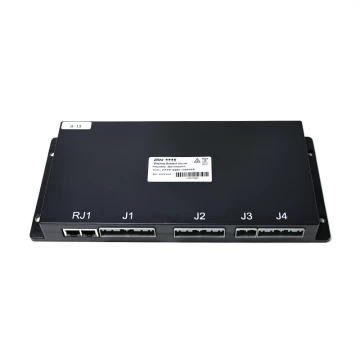
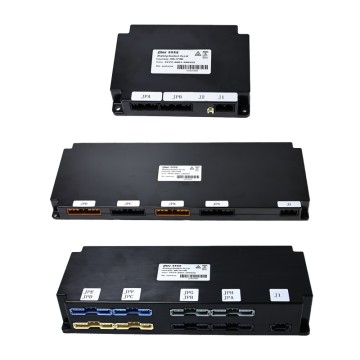
Passive balancing slave units for multi-cell ESS battery management in outdoor storage applications.

MCU: S32K312/NXP, 120MHz, 2M Flash, ASIL B. AFE with precision cell monitoring for automotive and RV battery systems.

Supports 1500V total voltage and insulation resistance monitoring. Ideal for high-voltage RV and mobile energy storage platforms.

All-in-one BMS with voltage, temperature, and current sensing. Supports full protection suite for outdoor light electric vehicles.
Intelligent 16S LiFePO4 BMS designed for home and outdoor storage, with full protection and communication interfaces.
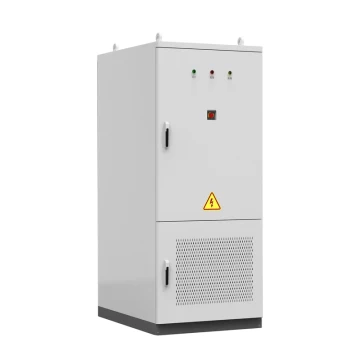
Truck-mounted mobile battery energy storage system for temporary power supply in remote camping, RV sites, and emergency scenarios.
High-capacity immersion-cooled container storage system for grid-scale and commercial outdoor energy needs.
ZheJiang Qualtech Co., Ltd. (referred to as Qualtech) was established in 2011 and is headquartered in Hangzhou, Zhejiang. It is a national high-tech enterprise, the third batch of specialized, refined, and new "little giant" enterprises by the Ministry of Industry and Information Technology, and currently a leading enterprise in both the new energy vehicle BMS and energy storage BMS sub markets in China.
With over 130 intellectual property rights, 300+ dedicated professionals, and more than 1,000 customers served globally, Qualtech delivers full-stack digital smart energy solutions — from automotive-grade BMS to large-scale container energy storage systems — powering outdoor adventures, commercial fleets, and grid-scale applications worldwide.
Quality first, reputation first, management oriented, service sincere.

Collaborating with global industry leaders to power the future of outdoor and mobile energy storage












From intelligent BMS controllers to full-scale mobile energy storage — engineered for outdoor camping and RV adventures