
 +86 17326062766
Leave Your Message
-
Contact WhatsApp
-
 Contact Phone
-
 Contact Email
High-performance control units and active balance systems designed for reliable remote power management.

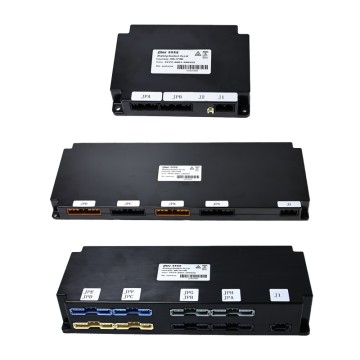
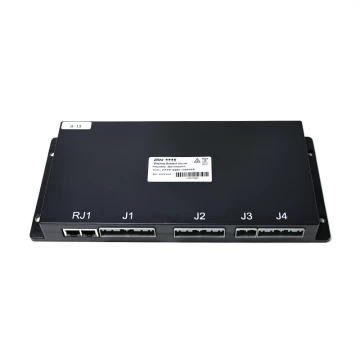
In recent years, the global outdoor recreation market has experienced an unprecedented boom. From rugged overlanding expeditions in custom-built 4x4s to luxury off-grid living in class-A motorhomes, the demand for reliable, high-capacity electrical power has surged. Traditional gas-powered generators are rapidly being phased out due to noise ordinances, environmental concerns, and fuel transportation safety risks. The modern solution lies in high-voltage lithium battery banks—typically utilizing Lithium Iron Phosphate (LiFePO4) chemistry.
However, the transition to lithium-ion technology introduces a critical engineering challenge: safety and efficiency. Unlike traditional lead-acid batteries, which are relatively forgiving of overcharging and deep discharging, lithium cells are highly sensitive. A single cell operating outside its safe voltage or temperature window can degrade the entire pack, cause premature system shutdown, or in worst-case scenarios, lead to thermal runaway. This is where the Battery Supervisor, or Battery Management System (BMS), becomes the indispensable heart of the off-grid power grid.
A battery supervisor does not just monitor voltage. It actively balances cells, communicates with smart alternators, solar charge controllers, and inverters, and acts as a digital safeguard ensuring that off-grid adventurers never face a sudden power blackout in remote wilderness areas.
The commercial landscape for battery supervisors has shifted from simple analog protection circuits to highly complex, digital, network-connected architectures. In the early days of RV house battery upgrades, a basic hardware BMS was sufficient to cut off current during extreme over/under-voltage events. Today, industrial suppliers and engineering firms are integrating automotive-grade microcontrollers (such as NXP's S32K series) and advanced analog front ends (AFE) to provide real-time state-of-charge (SoC) and state-of-health (SoH) metrics.
This industrial maturation is driven by the scaling of battery pack capacities. Modern RVs and overland vehicles are no longer running minor 100Ah 12V systems. Instead, they are moving toward 24V, 48V, and even 400V high-voltage architectures designed to run residential-grade air conditioners, induction cooktops, and high-draw electric water heaters simultaneously. Managing these multi-kilowatt-hour systems requires cluster controllers and master-slave configurations, mirroring the technology used in electric vehicles (EVs) and utility-scale energy storage systems (ESS).
As we look toward the future of off-grid power, several dominant trends are shaping the design and manufacturing of battery supervisors:
One of the greatest enemies of lithium batteries is sub-freezing temperatures. Charging a standard LiFePO4 battery below 0°C (32°F) causes lithium plating on the anode, permanently damaging the battery and rendering it unsafe. A high-tier battery supervisor prevents this by continuously monitoring temperatures via multiple external thermistors. If the temperature drops below freezing, the supervisor immediately blocks incoming charge current from solar panels or the alternator. Concurrently, it can route that power to integrated heating pads within the battery box, warming the cells to a safe temperature before allowing charging to resume. This automated climate control is vital for winter campers and high-altitude adventurers.
An RV or camper van is a complex microgrid on wheels. It charges via multiple inputs: photovoltaic (PV) arrays on the roof, the vehicle alternator while driving, and 120V shore power when parked at a campsite. The battery supervisor acts as the conductor of this orchestra. By communicating via CAN bus or Modbus protocols, the BMS tells the solar charge controller and the smart alternator exactly how much current the battery can safely accept based on its current state of charge and temperature, preventing over-current damage and optimizing charge efficiency.
Starting an air conditioner or running a microwave creates a massive initial current spike. Without a sophisticated battery supervisor, these transient spikes can trip simple hardware protection circuits, plunging the camper into darkness. Advanced supervisors utilize precision shunt resistors and high-speed current monitoring to distinguish between a dangerous short-circuit and a brief, safe startup surge, ensuring uninterrupted power while keeping the system protected.
Select a category to view specialized battery management and energy storage solutions.
Advanced monitoring display offering real-time system metrics, error logs, and parameter configuration for off-grid battery systems.

Reliable cell monitoring and passive balancing units designed to protect multi-cell lithium batteries in stationary ESS setups.

Features MCU: S32K312/NXP, 120MHz, 2M Flash, ASIL B. Highly robust design for electric vehicle battery packs.

Supports 1500V total voltage and insulation resistance monitoring, designed for heavy-duty electric vehicles and utility-scale systems.

All-in-one smart BMS with voltage, temp, and current sensing. Supports over-charge, over-discharge, short-circuit, and temperature protection.

Smart BMS engineered for residential energy storage systems, ensuring long-term battery cell health and home safety.

Mobile battery energy storage system designed for temporary power, emergency relief, and remote campsite microgrids.

High-capacity immersion-cooled containerized BESS optimized for commercial, industrial, and microgrid applications.
ZheJiang Qualtech Co., Ltd. (referred to as Qualtech) was established in 2011 and is headquartered in Hangzhou, Zhejiang. It is a national high-tech enterprise, the third batch of specialized, refined, and new "little giant" enterprises by the Ministry of Industry and Information Technology, and currently a leading enterprise in both the new energy vehicle BMS and energy storage BMS sub markets in China.
More NewsQualtech's advanced power systems are deployed globally, powering critical energy infrastructures.

Smart localized power grids integrating solar, wind, and battery storage for remote communities and commercial operations.

Synergized solar generation, energy storage, and EV charging stations designed for sustainable transport infrastructure.

High-reliability energy storage cabinets engineered to backup industrial plants and balance grid loads.
Collaborating with global leaders in automotive and energy sectors to drive technology forward.












Stay updated with Qualtech's recent breakthroughs, partnerships, and market events.

As a full-stack digital smart energy system solution provider, Qualtech has always been anchored by independent R&D and in-house manufacturing...

The results of the prestigious industry award, the Energy Storage Industry Aurora Award, have recently been announced, honoring Qualtech's core project...

Centered on the theme "Building a Partnership for the Future," Qualtech forged strategic partnerships to deploy EV charging networks...
Explore our complete portfolio of advanced battery supervisor systems, display panels, and cluster controllers.