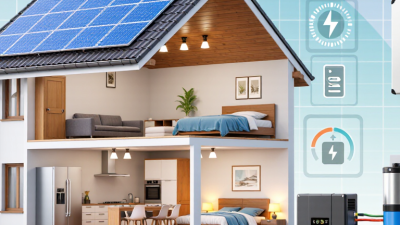
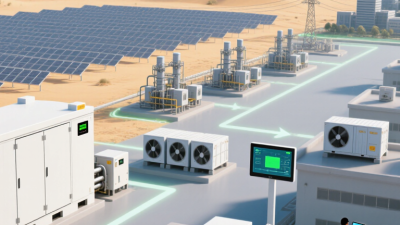
The 2026 market for Energy Storage Devices is getting bigger, faster, and honestly, a lot harder to compare. Battery systems aren't just for niche projects anymore—they're showing up in homes, factories, data centers, and even national grids. According to the International Energy Agency's Batteries and Secure Energy Transitions report, global battery storage additions hit around 42 GW in 2023. That's more than double the year before. BloombergNEF also saw strong growth in stationary storage, helped along by falling lithium-ion prices and the broader push for renewables.
But just because the market is growing doesn't mean every product is good. Buyers still need to look at the stuff that matters: usable capacity, cycle life, thermal management, warranty terms, software control, and local service support. A battery might say 10 MWh on the label, but after reserve margins and efficiency losses, its actual daily usable output could be lower. Little details add up. And climate? Yeah, that matters too.
Dr. Imre Gyuk, a well-respected energy-storage specialist at the U.S. Department of Energy, once put it this way: “Energy storage is the key to a resilient, reliable, and affordable electric grid.” For buyers around the world, that point is still very practical. Energy Storage Devices shouldn't be chosen on price alone. Safety certification, bankability, recycling plans, and grid compatibility deserve just as much attention. This guide looks at leading technologies—lithium-ion, sodium-ion, flow batteries, and thermal systems. It focuses on how they actually perform in real deployments, not just lab claims. No ranking is perfect. Some performance data is still hard to verify across different regions. And that's a limitation worth being honest about.
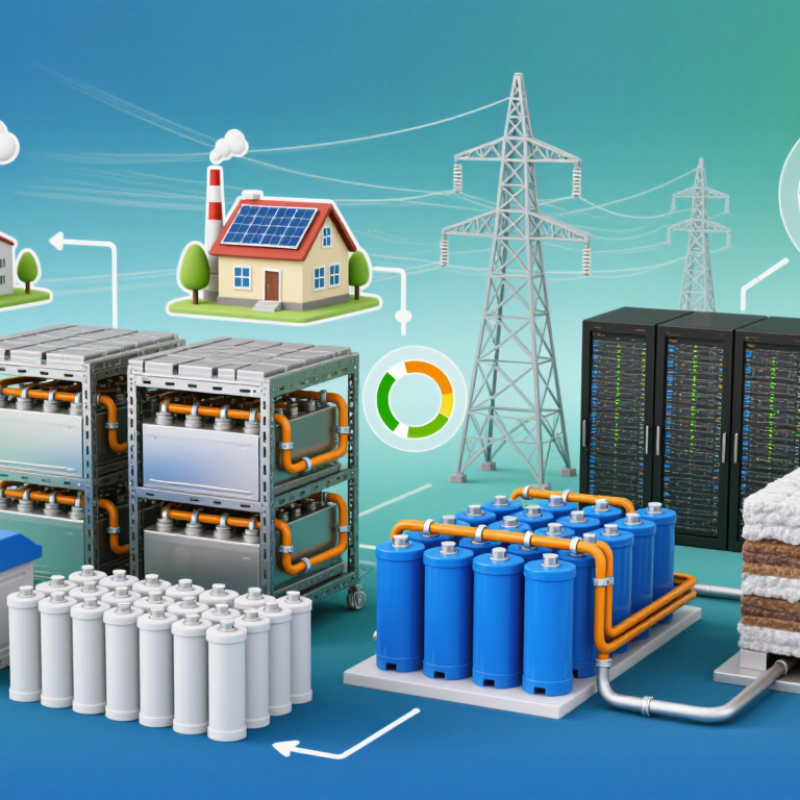
Energy storage devices capture electricity, retain it, and release it when timing or location changes. Their scope includes electrochemical batteries, pumped-storage hydropower, thermal systems, compressed-air units, flywheels, and hydrogen-based storage. The device is not only a battery cabinet. It is a coordinated system of cells, inverters, controls, safety sensors, and thermal management. A household unit may store rooftop electricity at noon, then power lights and refrigeration after sunset. At grid scale, storage can shift renewable output, support frequency, reduce peak demand, and provide backup during outages. Power capacity, measured in megawatts, describes delivery speed. Energy capacity, measured in megawatt-hours, describes duration.
The distinction matters. A 100 MW/400 MWh system can deliver its rated output for four hours, before losses. The IEA’s Batteries and Secure Energy Transitions 2024 reports battery storage in the power sector at about 85–90 GW in 2023. Its net-zero pathway requires roughly 1,200 GW by 2030. That gap signals manufacturing, grid-connection, and recycling pressure. IRENA’s World Energy Transitions Outlook 2024 also identifies storage as essential for integrating variable renewable power. Round-trip efficiency, degradation, response time, fire protection, warranty terms, and service access deserve equal attention. Numbers can mislead. Laboratory efficiency may not match a dusty site, winter temperatures, or frequent cycling. Buyers should request measured field data, not only optimistic brochures. A practical specification records usable energy, emergency loads, installation conditions, and expected cycling patterns.
Lithium-ion batteries dominate new stationary storage projects because they respond within milliseconds. They fit solar farms, factories, and compact Energy Storage Box systems.
The International Energy Agency reports that global battery storage capacity must expand from about 85 GW in 2023 to 1,200 GW by 2030 under its net-zero pathway. This growth reflects real demand, not only optimistic forecasts. Yet lithium-ion systems need thermal control, fire monitoring, and careful end-of-life planning.
Pumped-hydro storage remains the largest established technology. According to the IEA, it represents more than 90% of global electricity storage capacity. It can discharge for many hours, but suitable valleys, reservoirs, and transmission access are limited.
Flow batteries offer longer discharge periods and independent power-energy scaling. They may suit industrial sites requiring repeated cycling. However, their project costs and supply chains still require closer evaluation. The technology looks promising.
Thermal storage captures heat in water, molten salts, or solid materials. It can support district heating and concentrated solar generation. Hydrogen storage targets seasonal balancing, especially where electricity demand changes across months.
The U.S. Department of Energy identifies long-duration storage as important for integrating higher renewable generation. Buyers should compare round-trip efficiency, response time, degradation, safety systems, and local grid rules. A low purchase price can hide replacement costs. This is where many forecasts become too confident.
Energy storage devices capture electricity when supply is available and release it when demand rises. Battery systems use chemical reactions to move ions between electrodes. They respond within milliseconds, making them useful for frequency control and backup power. An Energy Storage Bess usually combines battery racks, inverters, cooling equipment, sensors, and safety controls in one operating system.
Pumped hydro stores energy by lifting water to a higher reservoir. It suits regions with suitable terrain and can provide many hours of output. Flywheels store kinetic energy in a rapidly spinning rotor. They react quickly but usually support shorter events. Thermal storage keeps heat or cold in materials such as molten salts or chilled water. Its value depends strongly on the building or process using that energy.
Comparison requires more than advertised capacity. Buyers should examine round-trip efficiency, response time, discharge duration, cycle life, maintenance access, and local climate. A battery may lose performance in extreme heat without careful cooling. Moisture and dust can also affect equipment rooms. Field data matters.
Real projects rarely match perfect spreadsheets. Demand forecasts change, and connection delays can reduce financial returns. I would test several operating scenarios before selecting equipment. Safety certification, fire protection, monitoring quality, and trained technicians deserve equal attention. The cheapest device may create higher costs after repeated cycling or difficult repairs.
In 2026, the best energy storage device is not always the largest or cheapest. Global buyers should begin with the daily load profile, peak demand, outage duration, and installation space. A clinic may need quiet backup for refrigeration, while a warehouse may prioritize peak shaving. Record these needs for at least seven days. Short trials can mislead.
Compare usable capacity, round-trip efficiency, cycle life, response time, and depth of discharge. Ask how performance changes at 0°C, 40°C, or during repeated partial charging. Review enclosure ratings, fire protection, ventilation needs, and battery management functions. Independent laboratory reports and local compliance documents deserve more weight than polished brochures. Check grid voltage, frequency, communications, shipping rules, and installer qualifications before ordering.
Warranty terms need careful reading. Look for capacity retention thresholds, service response times, spare-part access, and exclusions. A ten-year warranty means little if support is unavailable across borders. Request total cost estimates covering transport, duties, installation, monitoring, maintenance, and end-of-life handling. A qualified electrical engineer should verify the design before purchase. Field assessments often reveal problems that datasheets omit, especially winter derating and commissioning errors. Projected savings may change with tariffs, weather, or operating habits. That uncertainty should be modeled honestly.
Typical utility-scale round-trip efficiency by energy storage technology
Round-trip efficiency indicates how much energy can be recovered after charging and discharging. Lithium-ion systems generally provide the highest efficiency, while pumped hydro, flow batteries, compressed-air storage, and thermal storage may offer advantages in duration, site flexibility, safety, or lifecycle cost. Buyers should also evaluate usable duration, cycle life, operating temperature, safety requirements, grid compatibility, and total cost of ownership.
Data basis: representative midpoint values from commonly reported utility-scale technology ranges in public energy-storage literature; actual performance varies by system design, project conditions, and operating profile.
Homes, businesses, and power grids need different energy storage solutions. A home battery can store rooftop solar during midday and support evening cooking, lighting, and heating. It can also provide backup during short outages. According to the International Energy Agency’s Batteries and Secure Energy Transitions report, global battery storage additions reached about 42 GW in 2023, more than double the previous year. This growth reflects stronger demand for flexible electricity.
For businesses, Bess Energy Storage systems can reduce demand charges and protect sensitive equipment from voltage interruptions. A cold-storage warehouse, for example, may charge batteries before afternoon peaks and discharge them when compressors run heavily. The U.S. National Renewable Energy Laboratory notes that storage value depends on tariffs, load profiles, solar output, and control strategies. Capacity alone is not enough. Site data matters more.
At grid scale, containerized systems can balance wind and solar production, provide frequency response, and shift electricity into evening demand. The International Renewable Energy Agency reports that battery storage is becoming increasingly important for integrating variable renewables. Still, project selection is not simple. A battery designed for frequent short cycling may perform poorly during long outages. Engineers should examine round-trip efficiency, degradation, fire safety, warranty terms, recycling plans, and local grid rules. Some forecasts also appear too confident. Real-world weather, maintenance delays, and changing tariffs can reduce expected savings.
| Storage Device | Typical Chemistry or Medium | Typical System Scale | Storage Duration | Round-Trip Efficiency | Response Time | Service Life | Best Applications | Main Advantages | Key Limitations |
|---|---|---|---|---|---|---|---|---|---|
| Lithium-Ion Battery | Lithium iron phosphate or nickel-manganese-cobalt cells | 5 kWh to 500+ MWh | 1–8 hours | 85–95% | Milliseconds to seconds | 10–20 years; approximately 3,000–10,000 cycles depending on chemistry and operating conditions | Homes, commercial buildings, renewable-energy shifting, frequency regulation, and peak shaving | High efficiency, compact footprint, fast response, mature supply chain, modular installation | Thermal-management and fire-safety requirements; performance declines with heat, high charge rates, and aging |
| Sodium-Ion Battery | Sodium-ion cells using hard-carbon or related anodes | 5 kWh to 100+ MWh | 2–8 hours | 80–92% | Milliseconds to seconds | 10–20 years; cycle life varies by cell design | Cost-sensitive residential systems, commercial backup, and stationary renewable storage | Uses more abundant sodium resources, good low-temperature potential, and lower dependence on certain critical minerals | Lower energy density than many lithium-ion systems; global manufacturing capacity is still developing |
| Vanadium Redox Flow Battery | Vanadium electrolyte in external tanks | 100 kWh to 100+ MWh | 4–12+ hours | 65–85% | Seconds | 15–25+ years; often more than 10,000 deep cycles | Utility-scale renewable integration, microgrids, and long-duration commercial storage | High cycle durability, low degradation, independent sizing of power and energy, low fire risk | Lower energy density, larger site footprint, pumps and auxiliary equipment, higher upfront balance-of-system complexity |
| Pumped-Storage Hydropower | Water moved between upper and lower reservoirs | 100 MW to several GW | 6 hours to multiple days | 70–85% | Seconds to minutes | 50–100+ years with major maintenance | National and regional grids requiring bulk storage, capacity support, and ancillary services | Very large capacity, long operating life, proven technology, and low energy-storage degradation | Requires suitable terrain, extensive permitting, substantial civil works, and significant water and environmental assessment |
| Compressed-Air Energy Storage | Compressed air stored in underground caverns or engineered vessels | 10 MW to several hundred MW | 4 hours to multiple days | 40–70%, depending on system design | Minutes | 25–50+ years for major infrastructure | Long-duration grid storage, renewable curtailment reduction, and capacity firming | Large-scale energy capacity, long service life, and potentially lower cost per stored kWh at suitable sites | Geological or pressure-vessel requirements, lower efficiency than batteries, and limited project-site flexibility |
| Flywheel Energy Storage | High-speed rotating mass in a low-friction enclosure | 100 kW to tens of MW | Seconds to approximately 30 minutes | 80–95% | Milliseconds | 15–25+ years; very high cycle capability | Power-quality control, frequency regulation, transit systems, and short-duration backup | Extremely fast response, high cycle life, low chemical degradation, and strong power output | High self-discharge compared with batteries and limited suitability for multi-hour energy shifting |
| Supercapacitor | Electrostatic charge stored at electrode interfaces | kW to several MW | Milliseconds to several minutes | 90–98% | Milliseconds to microseconds | 10–20+ years; hundreds of thousands to millions of cycles | Voltage stabilization, regenerative braking, power-quality support, and short-duration ride-through | Very high power density, rapid charging, excellent cycle life, and wide operating-temperature tolerance | Low energy density and comparatively high cost when used for long-duration storage |
| Hydrogen Energy Storage | Hydrogen produced by electrolysis and converted back through fuel cells or turbines | 1 MW to several hundred MW | Days to seasonal storage | 25–45% for electricity-to-electricity pathways | Seconds to minutes, depending on the conversion equipment | 20–30+ years for major equipment with component replacement | Seasonal renewable storage, industrial fuel supply, remote energy systems, and grid resilience | Very long storage duration, flexible end uses, and potential integration with industrial decarbonization | Low round-trip efficiency, demanding storage and safety controls, infrastructure needs, and high project complexity |
| Thermal Energy Storage | Chilled water, molten salt, hot water, phase-change materials, or solid media | 10 kWh thermal to multi-GWh thermal | Hours to days; some systems support longer periods | 70–95% for thermal-to-thermal applications; lower when reconverted to electricity | Seconds to minutes | 15–30+ years, depending on materials and equipment | Building cooling and heating, industrial heat, concentrated solar power, and district energy | Can reduce electric peaks, use low-cost or surplus electricity, and often costs less than storing electricity directly | Usually provides heat or cooling rather than electricity; insulation, space, and end-use compatibility are important |
For global buyers, Clean Energy Storage is not judged by capacity alone. Safety begins with chemistry, battery management, enclosure design, and tested failure behavior. Ask for independent test reports, not only sales specifications. Standards such as IEC 62619, IEC 62477-1, UL 9540, and UL 9540A may apply, depending on the market and system type. Local authorities still decide final acceptance.
Installation details can change the project completely. A 100 kWh cabinet may require fire separation, clear service space, controlled temperature, and restricted access. Some systems need ventilation or gas detection. Others depend on sealed enclosures and thermal monitoring. The floor must support the equipment, while grounding, cable protection, and emergency isolation need documented inspection. Do not place batteries beside sleeping areas or unprotected heat sources. Small mistakes become expensive.
Cost estimates should include transport, permits, civil work, commissioning, insurance, maintenance, and eventual replacement. A cheaper unit may need stronger cooling or more frequent inspections. That is not always a bargain. I have seen project spreadsheets ignore installation labor and grid upgrades. The numbers looked excellent. They were incomplete. Buyers should compare usable energy, round-trip efficiency, warranty conditions, spare parts, and response time for technical support. Standards help, but paperwork cannot replace a competent site survey.
High-performance passive balancing BMS slave units are essential for reliable energy storage systems, helping operators monitor battery conditions throughout charging and discharging. Designed for applications such as renewable energy storage, backup power, industrial battery cabinets, and commercial systems, these units provide accurate real-time measurement of individual cell voltage and battery temperature. Passive balancing supports more consistent cell performance by managing voltage differences within the battery pack, contributing to safer and more stable operation.
Manufactured in a professional factory in China, these BMS slave units are developed with dependable components and practical production standards for diverse energy storage requirements. They can identify under-voltage, over-voltage, under-temperature, and over-temperature conditions, while integrated alarm functions help deliver timely warnings when abnormal conditions occur. Advanced CAN communication enables the slave unit to transmit essential battery data to the master controller, supporting centralized monitoring, system coordination, and maintenance decisions. With flexible integration, consistent quality, and reliable data reporting, China-manufactured passive balancing BMS solutions offer an effective choice for modern battery energy storage projects.
They capture electricity when supply is available and release it during higher demand. Battery systems move ions between electrodes through chemical reactions. Response can occur within milliseconds.
A complete system may include battery racks, inverters, cooling equipment, sensors, and safety controls. These parts operate together through monitoring software. The cabinet is not just a battery.
Batteries suit backup power, frequency control, and solar shifting. Pumped hydro supports long output periods where suitable terrain exists. Flywheels respond quickly but usually last for shorter events. Thermal storage works well with chilled water or stored heat.
Compare usable energy, efficiency, response time, discharge duration, cycle life, maintenance access, and climate limits. Field data can reveal problems hidden by brochures. Capacity alone misleads.
A home battery can store midday solar electricity for evening cooking, lighting, and heating. It may support essential loads during short outages. Actual performance depends on household demand and system controls.
A warehouse can charge before afternoon peaks and discharge while compressors run heavily. Storage may reduce demand charges and protect sensitive equipment from brief voltage interruptions. Tariffs and load patterns matter more than cabinet size.
Buyers should check tested failure behavior, monitoring, fire protection, emergency isolation, grounding, and cable protection. Installation may require clear service space, temperature control, and restricted access. Keep batteries away from sleeping areas and unprotected heat sources.
Budget for transport, permits, civil work, commissioning, insurance, maintenance, spare parts, and future replacement. Grid upgrades and installation labor are easy to overlook. My first estimate might be wrong.
Test several demand, weather, tariff, maintenance, and connection-delay scenarios. Repeated cycling can increase degradation and repair costs. The cheapest unit may not be the cheapest project. Real operations are messier.
Energy Storage Devices are systems that capture electricity and release it when needed, helping balance supply, demand, and power quality. In 2026, global buyers can choose among lithium-based batteries, flow batteries, sodium-based systems, thermal storage, hydrogen-related solutions, and mechanical technologies such as pumped hydro or flywheels. Each option differs in energy capacity, power output, response speed, operating life, efficiency, scalability, and environmental requirements. Understanding how these technologies charge, store, convert, and discharge energy is essential for making an effective comparison.
The best choice depends on the application, including home backup, commercial load management, renewable energy integration, microgrids, and utility-scale grid support. Buyers should evaluate safety features, certifications, local standards, climate conditions, installation space, maintenance needs, total lifecycle cost, warranty coverage, and system expandability. Careful planning, professional installation, monitoring, and compliant operation can improve reliability while reducing long-term risks and expenses.