Picking the right C&I Battery Storage system out of the '10 best' isn't just a matter of stacking up capacity and price. Commercial and industrial sites are all over the map—different load profiles, grid rules, climates, and money goals. A cold-storage warehouse might mostly need steady peak shaving. A factory, on the other hand, may need backup power in seconds. That's why C&I battery storage selection ends up being super site-specific.
In this guide, we look at systems from names like Tesla, Fluence, Sungrow, BYD, and Wärtsilä. We'll go through usable energy, power output, battery chemistry, thermal management, fire protection, monitoring software, warranty terms, and local service support. Here's something field engineers learn fast: installation quality can matter just as much as the battery cabinet itself. A solid commissioning plan? It can save you from expensive delays.
Performance claims deserve a close look, too. A datasheet might show great cycle life, but real-world results depend on temperature, depth of discharge, maintenance, and how you operate the system. There's no one-size-fits-all best system. Some buyers care about long-duration storage; others want fast response and compact gear. And costs? They can shift once you factor in shipping, integration, permitting, and replacement planning.
Real projects are rarely perfect. Metering data might be incomplete, and forecasts can be a bit optimistic. So buyers should pressure-test assumptions with independent consultants, verified references, and detailed site studies. That practical approach helps you find reliable Battery Storage solutions that actually fit your operations, your budget, and your long-term energy strategy.
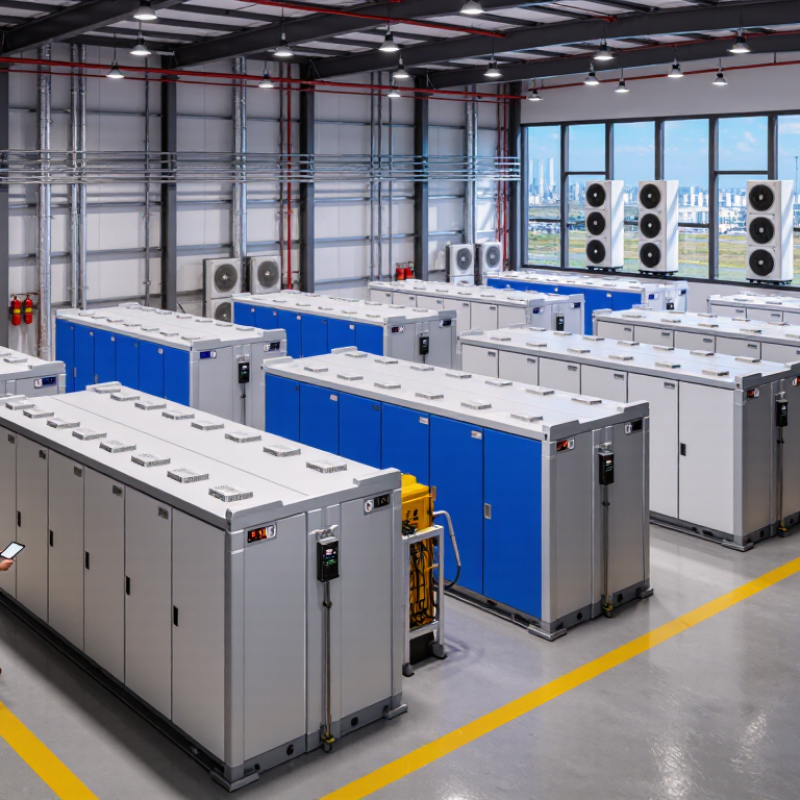
10 Best C&I Battery Storage Systems for Global Buyers
Global C&I Battery Storage: 42 GW Added in 2023, According to the IEA
Commercial and industrial battery storage is moving from pilot projects into daily operations. The IEA’s Batteries and Secure Energy Transitions report estimates that global battery storage additions reached about 42 GW in 2023. However, this figure covers utility-scale and behind-the-meter systems. It is not a C&I-only number. That distinction matters.
For global buyers, the ten strongest system options should be judged by usable capacity, thermal control, round-trip efficiency, cycle life, and software visibility. A warehouse may need peak-demand reduction at noon, while a factory may require backup power within milliseconds. Lithium iron phosphate chemistry remains widely considered for stationary projects because of its safety and cycle-life profile. Yet, chemistry alone cannot guarantee performance.
BloombergNEF’s 2024 Energy Storage System Cost Survey shows continuing cost reductions, but delivered prices still vary by region, project size, logistics, and financing. Wood Mackenzie also highlights rapid growth in global storage deployments, especially where renewable generation and grid constraints overlap. Buyers should verify IEC compliance, local fire requirements, warranty exclusions, degradation assumptions, and after-sales response times. The spreadsheet may look excellent. Field conditions are messier. Some vendors publish efficiency at laboratory conditions, not at a hot industrial site. Independent testing, site measurements, and conservative revenue models remain essential.
For global C&I buyers, the strongest battery system is not always the largest one. This ranking weighs usable power, discharge duration, round-trip efficiency, and cycle life. Rank 1 favors a high-power lithium iron phosphate system delivering 1–2 hours, 92–96% efficiency, and 6,000–10,000 cycles. Rank 2 is a balanced 4-hour system, reaching 88–94% efficiency and about 5,000–8,000 cycles. Rank 3 is a modular 2-hour design, useful where peak demand charges dominate. Ranks 4 and 5 include six-hour and eight-hour configurations, trading power density for longer backup.
NREL’s Storage Futures Study places advanced battery round-trip efficiency broadly near 85–95%, depending on operating conditions and auxiliary loads. The U.S. Department of Energy also reports that cycle life varies sharply with depth of discharge, temperature, and charging speed. That matters in factories. A battery operating beside a hot loading dock may age faster than its brochure suggests. Ranks 6 and 7 therefore favor thermal control and conservative operating windows, even with slightly lower headline efficiency.
Rank 8 covers sodium-ion systems, which may suit colder regions and cost-sensitive projects, although commercial cycle-life evidence remains less mature. Rank 9 represents flow batteries, offering long duration and potentially high cycling endurance, but with lower energy density. Rank 10 is a hybrid system combining short-duration power with longer backup storage. The IEA’s 2024 battery report confirms rapidly falling storage costs, yet project economics still depend on tariffs, interconnection, degradation, and local climate. The uncomfortable truth: no ranking survives every site survey.
Choosing C&I Battery Storage starts with duty cycle, not catalog capacity. LFP suits frequent daily cycling, high thermal stability, and predictable maintenance routines. It often needs more floor area for the same usable energy. NMC can deliver higher energy density where space is expensive. However, tighter thermal monitoring and careful operating limits matter. Flow batteries support long-duration discharge and deep cycling, especially for solar shifting. Their tanks and pumps require different service skills. Performance depends on site reality.
A warehouse may cycle for two hours, while a cold store may need four or six. Peak demand charges, backup expectations, ambient temperature, and fire-safety design can change the chemistry decision. Compare usable kilowatt-hours, round-trip efficiency, degradation assumptions, and replacement access. Do not rely on nameplate energy alone. Ask for tested data at the intended power level. A system that looks cheaper can lose value through auxiliary loads, downtime, or limited expansion. Project reviews often reveal underestimated ventilation and cable routes. That mistake is expensive.
Tips: Map one week of load data in fifteen-minute intervals. Mark peak events. Model summer heat separately. For LFP and NMC, request cell-level monitoring and documented thermal controls. For flow systems, check pump redundancy, electrolyte service, and winter protection. Require clear warranty terms for capacity retention and response time. Leave room for maintenance access. Small details matter. Recheck assumptions before ordering.
Global buyers should treat safety compliance as a design gate, not a procurement checkbox. The IEA’s Batteries and Secure Energy Transitions report recorded more than 40 GW of new battery storage in 2023, roughly 130% annual growth. That acceleration increases the cost of weak documentation. An Ess Battery Storage project needs traceable cell chemistry, enclosure design, software controls, and emergency procedures.
UL 9540A is a test method, not a complete system certification. It evaluates thermal runaway and fire propagation at cell, module, unit, and installation levels. Buyers should request test reports matching the proposed battery configuration. A 20-foot container can look quiet while heat remains hidden inside. Gas detection, remote isolation, alarm audibility, and responder access need physical verification.
NFPA 855 addresses spacing, fire detection, suppression, ventilation, exhaust, and emergency planning. Requirements can change with system size, chemistry, enclosure type, and local fire authority interpretation. IEC 62933-5-2 adds a lifecycle risk framework for grid-integrated electrochemical storage systems. It covers hazard identification, mitigation, operation, and maintenance. No standard removes every uncertainty. A careful tender records the applicable edition, test scale, installation limits, and maintenance duties. Small documentation gaps still matter.
This buyer-screening chart maps the primary relevance of three widely referenced safety frameworks across ten C&I battery-storage evaluation areas. A value of 1 indicates that the framework is directly relevant to that area, while 0 indicates that it is not the framework’s primary focus. UL 9540A is a thermal-runaway and fire-propagation test method, NFPA 855 addresses stationary energy-storage installation and fire-safety practices, and IEC 62933 covers safety and performance principles for electrical energy-storage systems. Applicable editions, local regulations and authority-having-jurisdiction requirements should always be confirmed.
For global buyers, Bess Battery Storage economics changed significantly in 2023. BloombergNEF reported an average battery pack price of $139 per kWh. A 10 MWh project would therefore represent about $1.39 million at pack level. That figure is useful, but incomplete.
Pack pricing excludes power conversion equipment, thermal management, fire protection, civil works, shipping, installation, and grid studies. A container may arrive at the site with an attractive price tag, yet its delivered cost can rise sharply. Local labor rates and interconnection delays often matter more than expected. Procurement teams should request separate line items, warranty terms, degradation assumptions, and replacement conditions.
A practical review should test several operating cases. For example, a system charging during low-price hours and discharging during evening peaks may earn revenue from daily price spreads. Capacity payments, demand-charge reduction, and renewable integration can improve the model. However, cycling losses, maintenance, financing, and weaker-than-expected market spreads can reduce returns. The spreadsheet may look clean.
It should still be challenged. A quoted $139 per kWh is not a guaranteed future price, and regional supply conditions can change quickly. Buyers should compare usable energy, not only nameplate capacity, while checking performance at high temperatures, response time, and end-of-life capacity. These details reveal whether a low initial price is genuinely economical.
For global buyers, a Power Storage Battery should be judged beyond its nameplate capacity. The IEA reported that more than 40 GW of battery storage was added worldwide in 2023. Procurement teams should request warranty curves, not only headline years. A credible warranty states energy throughput, retained capacity, operating temperature, and excluded events. Ten years may sound strong. It may hide a strict cycle limit.
The EMS must record every dispatch, alarm, temperature change, and state-of-charge correction. NREL’s 2024 Annual Technology Baseline places modern battery systems near 85–90% round-trip efficiency, depending on configuration and operating conditions. Buyers should require verified data from the complete system, including transformers and auxiliary loads. A five-minute meter interval can expose losses that a monthly report conceals. Small details matter.
Grid-code compliance requires more than a certificate folder. The system should demonstrate reactive-power control, frequency response, fault ride-through, anti-islanding behavior, and communications testing at the intended connection point. Regional rules differ, and they change. O&M contracts should define response time, spare-part availability, remote diagnostics, and annual availability, with penalties for repeated underperformance. Field inspections should include cable torque, cooling filters, fire detection, and software versions. A spreadsheet can still lie. Some buyers overvalue low purchase price and underestimate degradation, replacement logistics, or EMS integration. That mistake deserves more scrutiny. According to DNV’s Energy Transition Outlook, storage deployment will expand sharply as renewable penetration rises, making operational discipline increasingly important.
Anonymized commercial and industrial battery-storage benchmark profiles for preliminary procurement screening. Values are indicative market ranges and should be verified against the final technical offer, local interconnection study and executed warranty.
| Rank / System Profile | Typical Application | Nominal Energy / Power | Battery Chemistry & Cooling | Round-Trip Efficiency | Warranty Benchmark | EMS / SCADA Connectivity | Grid-Code Readiness | O&M Performance Benchmark | Safety & Environmental Design | Procurement Position |
|---|---|---|---|---|---|---|---|---|---|---|
| 1Profile A — 20 ft liquid-cooled cabinet system | Peak shaving, demand-charge reduction and renewable firming for medium-sized facilities |
2.0 MWh / 1.0 MW Two-hour configuration |
LFP cells Liquid cooling DC operating range typically 600–1,000 V |
88–92% AC round trip at rated conditions | 10 years or 5,500–6,000 equivalent full cycles Capacity retention commonly 70–80%, subject to operating limits |
Modbus TCPIEC 61850 gatewayOPC UA Remote dispatch and alarm historian |
Configurable for frequency response, active/reactive power control and voltage ride-through; local certification required |
≥98% annual technical availability Remote response target: ≤15 minutes Preventive maintenance: twice yearly |
Containerized fire detection, aerosol or water-mist suppression options, HVAC, gas detection and emergency stop circuits | Strong balanced choice where efficiency, compact footprint and serviceability are equally important |
| 2Profile B — modular outdoor cabinet system | Solar self-consumption, backup power and microgrid operation for commercial buildings |
372 kWh / 186 kW per cabinet Scalable to multi-megawatt blocks |
LFP cells Forced-air cooling Modular rack architecture |
86–90% AC round trip at partial-load operation | 8–10 years Throughput limit typically 2.5–3.5 GWh per MWh installed |
Modbus RTU/TCPDNP3IEC 61850 via gateway Compatible with common building-management interfaces |
Suitable for low-voltage and medium-voltage interconnection packages; anti-islanding and protection settings must be site-engineered |
≥97.5% annual availability Critical alarm acknowledgement: ≤30 minutes Field service target: 24–48 hours |
IP54–IP55 outdoor enclosure, cell-level monitoring, smoke and temperature sensing, segregated battery compartments | Good fit for distributed deployments requiring phased capacity expansion |
| 3Profile C — high-power two-hour container | Industrial peak demand management, fast reserve and power-quality support |
4.0 MWh / 2.0 MW Two-hour configuration |
LFP cells Liquid cooling High-rate inverter architecture |
87–91% AC round trip | 10 years or approximately 6,000 cycles Warranty commonly conditioned on temperature, C-rate and state-of-charge window |
Modbus TCPIEC 61850DNP3 Supports plant controller and utility dispatch signals |
Designed for P/Q control, ramp-rate control, droop response and low/high-voltage ride-through; grid study remains mandatory |
≥98% annual availability Inverter start command typically ≤2 seconds Planned maintenance window: 1–2 days annually |
Integrated thermal propagation detection, liquid-cooling leak monitoring, fire panel interface and pressure-relief provisions | Preferred for sites with high demand peaks and frequent short-duration dispatch events |
| 4Profile D — long-duration four-hour system | Renewable shifting, evening peak coverage and diesel-generator displacement |
8.0 MWh / 2.0 MW Four-hour configuration |
LFP cells Liquid cooling Energy-optimized rack design |
84–89% AC round trip | 10–15 years Capacity guarantee commonly 70–80% at the stated end date |
Modbus TCPIEC 60870-5-104OPC UA Energy-management forecasting interface |
Appropriate for renewable ramp control, scheduled dispatch and voltage/reactive-power support where permitted by the utility |
≥97% annual availability State-of-charge accuracy target: ±5% Monthly performance reporting |
Redundant thermal monitoring, compartmentalized racks, fire detection, gas exhaust path and outdoor weather protection | Best suited to buyers prioritizing energy shifting over maximum instantaneous power |
| 5Profile E — indoor modular rack system | Data centers, logistics hubs and critical-load backup applications |
1.0 MWh / 500 kW per module Parallel modular expansion |
LFP cells Rack-level air cooling UPS-compatible DC bus options |
89–93% AC round trip in backup configuration | 10 years Separate performance warranty for capacity, power and availability |
Modbus TCPSNMPIEC 61850 gateway Integration with UPS and facility BMS |
Supports configurable islanding, black start and seamless transfer only when paired with an approved power-conversion system |
≥99% system availability target 24/7 monitoring Critical-site response commonly ≤4 hours |
Room-level fire detection, rack isolation, HVAC coordination, access control and emergency shutdown integration | Strong option for high-availability facilities where service response is more important than lowest capital cost |
| 6Profile F — low-voltage cabinet cluster | Retail portfolios, small factories and multi-site behind-the-meter projects |
215 kWh / 100 kW per cabinet Typical project size: 0.5–3 MWh |
LFP cells Air cooling Low-voltage modular inverter |
84–88% AC round trip | 8–10 years or 4,000–5,000 cycles Capacity retention typically 70–80% |
Modbus TCP/RTUMQTT Cloud fleet monitoring and local controller options |
Most suitable for commercial low-voltage interconnection; country-specific inverter certificates must be confirmed |
≥97% annual availability Remote diagnostics Quarterly preventive inspection |
Indoor or sheltered outdoor use, IP-rated cabinet, smoke/temperature sensors and rack-level disconnects | Cost-effective for standardized rollouts with limited site power and space |
| 7Profile G — medium-voltage integrated station | Utility-facing industrial sites, renewable plants and medium-voltage microgrids |
5.0 MWh / 2.5 MW Integrated MV transformer and switchgear |
LFP cells Liquid cooling Centralized power-conversion system |
86–90% AC round trip including transformer losses | 10 years Availability, response time and capacity normally covered by separate schedules |
IEC 61850DNP3IEC 60870-5-104 Protection-relay and utility-SCADA integration |
Suitable architecture for medium-voltage studies, reactive-power control and utility dispatch; protection coordination is site-specific |
≥98% annual availability Power response typically ≤1 second Annual relay and protection testing |
MV arc-flash design, fire zoning, transformer protection, grounding system and environmental monitoring | Efficient for larger sites seeking a single integrated balance-of-plant package |
| 8Profile H — harsh-climate outdoor system | Mining, remote infrastructure and hot, dusty or high-humidity environments |
3.4 MWh / 1.7 MW Two-hour configuration |
LFP cells Liquid cooling with filtered HVAC Corrosion-resistant enclosure |
85–89% AC round trip under rated conditions | 10 years Performance subject to ambient-temperature derating and maintenance compliance |
Modbus TCPIEC 61850 gatewaySatellite/4G monitoring Local autonomous control available |
Configurable for weak-grid operation, generator synchronization, ramp control and islanded microgrid modes |
≥96.5% annual availability Remote monitoring 24/7 Spare-parts strategy required for remote locations |
IP55 or higher enclosure target, dust filtration, anti-corrosion coating, thermal derating logic and fire isolation | Recommended where environmental resilience and logistics planning outweigh maximum efficiency |
| 9Profile I — fast-response frequency system | Frequency regulation, ancillary services and high-frequency short-duration cycling |
1.0 MWh / 1.0 MW One-hour configuration |
LFP cells Liquid cooling High-cycle power electronics |
86–90% AC round trip | 8–10 years or 7,000–10,000 equivalent full cycles High-cycle warranty requires an approved dispatch profile |
IEC 61850DNP3Modbus TCP Fast automatic-generation-control interface |
Designed for frequency response, fast active-power control and ramp-rate compliance; market participation rules vary by jurisdiction |
≥98% annual availability Command response commonly ≤250 milliseconds Continuous condition monitoring |
High-speed protection, rack isolation, thermal runaway detection and redundant control power | Best for ancillary-service revenue, provided local market rules support battery participation |
| 10Profile J — hybrid solar-plus-storage microgrid | Islanded commercial campuses, resorts and remote industrial microgrids |
2.4 MWh / 1.2 MW Hybrid PV, generator and load controller |
LFP cells Liquid-cooled battery racks Hybrid microgrid controller |
83–88% battery-to-load round trip | 10 years Separate guarantees for battery capacity, inverter power and microgrid controller availability |
Modbus TCP/RTUIEC 61850 gatewayCAN Generator, PV inverter and load-shedding coordination |
Supports islanding, black start, synchronization, load shedding and resynchronization; utility approval depends on local rules |
≥97% annual availability Black-start sequence commonly under 60 seconds Quarterly controls validation |
Integrated fire system, generator interlock, emergency stop, weatherproof enclosure and prioritized-load logic | High-value solution where fuel savings, resilience and autonomous operation are primary objectives |
Procurement note: All warranty durations, cycle limits, efficiency figures, availability targets and grid-code capabilities should be written into the contract with defined test methods, operating windows, ambient conditions, exclusions, liquidated damages and annual reporting requirements. Local requirements may include IEEE 1547, UL 1741, NFPA 855, IEC 62933, IEC 62477-1, IEC 61000, EN 50549 or equivalent national grid codes.
Global battery storage additions reached about 42 GW in 2023. This figure includes utility-scale and behind-the-meter systems. It is not a C&I-only figure. That distinction matters.
Compare usable energy, thermal control, round-trip efficiency, cycle life, and software visibility. Check performance under real site conditions. Nameplate capacity alone is not enough.
LFP chemistry often suits frequent cycling and offers strong thermal stability. It may require more floor space. NMC can save space but needs tighter thermal monitoring.
Flow batteries can suit long-duration discharge and deep cycling. They may support solar shifting over several hours. Tanks, pumps, and winter protection need specialized maintenance.
Map at least one week of load data using fifteen-minute intervals. Mark peak demand events and backup requirements. Model summer heat separately. The estimate may still be imperfect.
Request capacity-retention curves, energy-throughput limits, temperature conditions, and excluded events. Confirm cycle limits and replacement responsibilities. Ten years can sound strong. Read the restrictions.
It should record dispatches, alarms, temperature changes, and state-of-charge corrections. Ask for complete-system efficiency data. Include transformers and auxiliary loads.
Define response times, spare-part availability, remote diagnostics, and annual availability. Include consequences for repeated underperformance. Inspect cooling filters, cable connections, fire detection, and software versions.
Verify reactive-power control, frequency response, fault ride-through, anti-islanding behavior, and communications testing. Requirements vary by region. A certificate folder is not proof of field performance.
Lower prices may hide degradation, auxiliary consumption, downtime, or difficult replacement logistics. Ventilation and cable routes are often underestimated. Small details matter. Recheck the assumptions.
C&I Battery Storage is becoming a critical solution for businesses seeking lower energy costs, improved resilience, and greater renewable-energy integration. With approximately 42 GW added globally in 2023, the market now offers systems that can be compared by power capacity, discharge duration, round-trip efficiency, cycle life, and operational flexibility. This overview ranks ten leading system categories for global buyers while explaining the practical differences between LFP, NMC, and flow battery chemistries for commercial and industrial duty cycles.
Successful procurement requires more than comparing upfront prices. Buyers should evaluate safety compliance, including UL 9540A, NFPA 855, and IEC 62933 requirements, as well as the total cost of ownership. With average battery pack prices reported at about $139/kWh in 2023, economics are improving, but warranty terms, energy-management capabilities, grid-code compatibility, maintenance support, and performance guarantees remain essential. A well-matched system can deliver reliable peak shaving, backup power, demand management, and renewable integration across diverse operating environments.