China’s lithium battery industry has really become a huge player in the global energy storage scene. Companies here are supplying everything from power grids and commercial setups to factories and even residential systems. In this piece, we’re taking a closer look at China’s Top 10 Lithium Battery Energy Storage Manufacturers — digging into what makes them stand out and how they’ve earned their spots in the market.
We consider a lot of factors—like how big their production is, the chemistry of their batteries, safety features, warranty support, how well their systems integrate, and their experience working internationally. We also keep an eye on how each company handles thermal management, their battery management software, and the Lithium Battery Protection Board. These little details really matter, especially when a battery cabinet is out in the open, dealing with everything from blazing summer heat to cold winter days, and the weekly charging cycles.
Names like CATL, BYD, EVE Energy, CALB, Gotion High-Tech, Hithium, REPT Battero, Sunwoda, Great Power, and Pylontech all bring their own strengths to the table. Some are heavy on large grid projects, while others focus on modular setups perfect for homes or commercial buildings. That said, it’s always wise to double-check their product claims—no hype, just real info.
As Robin Zeng, the chairman of CATL, once said, “Energy storage is the next trillion-dollar market.” It’s a bold statement, for sure, but it’s important to remember—big expectations don’t always mean the tech actually performs as hoped. Real-world reliability depends heavily on the quality of installation, ongoing monitoring, maintenance, and the conditions where it’s actually used.
Of course, no ranking is perfect. Battery prices are always changing, and new factories can ramp up capacity pretty quick. Certification results and project histories are worth looking into, too. So, instead of just sizing up companies by how big they are, this overview aims to connect the technical specs with real-world performance and deployment experience. This way, readers can compare manufacturers more confidently. The biggest supplier isn’t always the best fit—sometimes, the right project match makes all the difference.
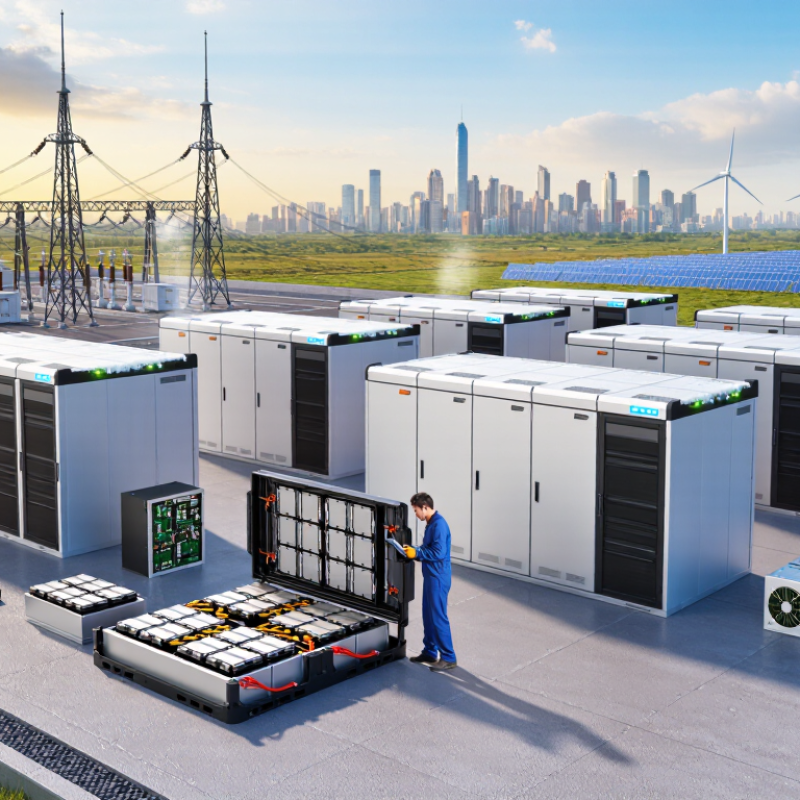
Lithium battery energy storage systems store electricity in rechargeable cells and release it when demand rises. Most modern systems use lithium-ion chemistry, with lithium iron phosphate increasingly selected for thermal stability and long cycle life. A complete system includes battery racks, a battery management system, power conversion equipment, thermal controls, fire protection, and software. It is more than a cabinet of cells.
The International Energy Agency reported that global battery storage additions reached about 42 GW in 2023, nearly doubling from the previous year. This growth reflects higher solar and wind penetration, not simple equipment demand. A storage system can absorb midday solar power, then discharge during an evening peak. Some systems respond within milliseconds. Others provide several hours of backup. Duration matters.
Safety depends on design and operation. Sensors track voltage, temperature, and cell balance continuously. Cooling systems must work during hot weather and repeated cycling. Independent testing remains essential. Standards such as IEC 62619 and UL 9540A help assess battery safety and fire behavior, but certification does not remove every risk. Real projects still need site-specific engineering, maintenance records, and emergency planning. The industry sometimes treats capacity as the main measure of quality. That is incomplete. Round-trip efficiency, degradation, availability, and response time often decide whether an energy storage system performs well in practice.
Representative performance ranges for lithium battery energy storage systems, excluding company and brand-specific data.
Lithium iron phosphate (LFP) is widely selected for stationary energy storage because of its long cycle life and strong thermal stability. Nickel-based chemistries generally provide higher energy density, while lithium titanate (LTO) offers very long cycle life and fast charging at a lower energy density. Actual results vary with temperature, depth of discharge, operating conditions, and system design.
China has become a central force in the global energy storage battery market. Its manufacturers support utility grids, commercial facilities, and renewable power projects across many regions. Large industrial clusters reduce production time and improve supply flexibility. They also connect cell production with battery management, thermal control, and system integration. This practical experience helps Chinese suppliers respond to changing project requirements. Scale matters, but it does not guarantee reliability. Real performance depends on safety testing, service support, and transparent data.
A credible China Top 10 list should examine more than shipment volume. It should compare cycle life, usable capacity, warranty terms, production traceability, and recycling plans. Independent certification can strengthen confidence in technical claims. Project records also reveal how systems behave in heat, dust, and unstable grid conditions. China’s role is powerful, yet not flawless. Supply concentration may create delivery risks during policy changes or material shortages. Some published figures also need closer verification. A careful buyer should question attractive numbers.
Tips: Request third-party test reports. Check safety records. Ask for local maintenance support. Compare usable energy, not only rated capacity. Visit an operating project when possible. Small details matter.
Evaluating China’s leading battery manufacturers requires more than comparing quoted prices. The China Energy Storage Alliance reported about 21.5 GW of new energy-storage capacity additions in 2023, showing a rapidly expanding but uneven market. Buyers should inspect cell chemistry, manufacturing traceability, cycle-life testing, and delivered operating data. A factory tour can reveal more than a polished brochure. Look for clean-room controls, automated welding, sampling procedures, and how rejected cells are handled.
Safety evidence deserves equal weight. Ask whether the system includes a tested Lithium Ion Protection Board, reliable battery-management software, thermal sensors, and independent abuse testing. IEC 62619 and UL 9540A results can clarify performance under overheating or propagation conditions. BloombergNEF reported that average lithium-ion battery pack prices fell to about 115 dollars per kWh in 2024. Lower prices help, but they may also hide thinner margins, weaker service, or reduced component quality.
Warranty language must be measurable. Check permitted depth of discharge, ambient temperature, response time, spare-parts support, and capacity-retention thresholds. Request field records from installations operating in hot, humid, and cold regions. I would not trust a cycle-life claim without its test temperature and discharge rate. Small details matter. A spreadsheet can still lie. Independent inspection before shipment remains useful, although it cannot replace long-term field evidence. Manufacturers with transparent test reports, stable production data, and responsive engineering teams usually deserve closer consideration.
China’s top 10 lithium battery energy storage manufacturers are gaining attention as renewable power expands. The International Energy Agency reported that China produced about 80% of global battery cells in 2023. This manufacturing depth supports large-scale storage projects, grid balancing, and industrial backup systems.
Selection should examine more than factory size. A reliable Storage Energy Battery manufacturer needs proven cycle life, thermal management, quality control, and transparent warranty conditions. The China Energy Storage Alliance reported strong growth in China’s new energy storage market during 2023, with lithium-ion systems representing the dominant technology. Field experience matters. Engineers still inspect cable connections, container ventilation, and battery management software before accepting a project.
Small details matter.
The best Chinese manufacturers usually combine automated production with strict testing records. They also provide monitoring data, failure-response procedures, and local service capacity. However, any “top 10” ranking remains imperfect. Public shipment figures can differ, and some companies disclose limited project performance data. The BloombergNEF battery supply chain assessments also show that cost leadership does not automatically prove long-term reliability. Buyers should compare independent test results, degradation curves, safety certifications, and delivered-project references. A low quotation may hide replacement costs later. That risk deserves careful review.
China’s leading lithium battery manufacturers are advancing energy storage through safer, denser, and more controllable production methods. The Energy Storage Battery now depends on several linked technologies, not one breakthrough.
Cell design begins with lithium iron phosphate or other chemistry selected for cycle life and thermal stability. Manufacturers control electrode coating thickness within narrow tolerances. Drying temperature matters because uneven moisture can increase internal resistance. After stacking or winding, cells undergo formation, aging, and capacity testing. These steps reveal defects before the battery reaches a storage cabinet.
Battery management systems monitor voltage, temperature, current, and state of charge in real time. Advanced systems balance individual cells and identify abnormal heating early. Thermal management may use air channels, liquid plates, or fire-resistant barriers. Pack-level sensors then communicate with energy management software, which adjusts charging according to grid demand and battery condition.
Factory automation improves consistency. Machine vision checks welds, seals, and surface damage under bright inspection lights. Traceability systems record materials, test results, and operator actions. This evidence supports quality control and later maintenance. Safety testing includes overcharge protection, insulation checks, vibration testing, and thermal propagation assessment. Standards vary by market, so certification planning must begin early.
A perfect production line does not exist. Tiny measurement errors still require review. Suppliers must question unexpected data, even when output appears normal. That discipline separates attractive specifications from dependable field performance.
China’s energy storage battery sector is shifting from factory expansion to application-led growth. According to the IEA’s Renewables 2024 report, global battery storage additions nearly tripled in 2023, reaching almost 42 GW. China contributed substantial capacity through renewable integration and grid flexibility projects.
The National Energy Administration reported 31.39 GW of new energy storage capacity in China by the end of 2023, excluding pumped hydro. These systems support solar farms, wind bases, industrial parks, and urban peak shaving. A containerized Ess Battery Energy Storage system can respond within milliseconds, balancing a cloudy afternoon or a sudden factory load. Lithium iron phosphate batteries remain popular because of their safety profile, cycle performance, and competitive cost. However, project results vary with temperature, dispatch rules, and connection limits. One forecast cannot fit every province.
Tips: Buyers should compare usable energy, round-trip efficiency, warranty conditions, and fire-safety design. Ask for measured data, not only laboratory claims. A battery cabinet beside a dusty substation faces different conditions from one inside a climate-controlled facility.
The market outlook remains strong, but profitability is less predictable. Reports from the China Energy Storage Alliance indicate rapid deployment, while falling system prices are increasing competition. Developers now need software, maintenance planning, and recycling pathways, not only larger battery cells. Some projections still look too neat. Grid reform and electricity pricing may change actual returns.
| No. | Anonymized Manufacturer Profile | Primary Product Focus | Typical Cell Chemistry | Typical Cell Energy Density | Typical Cycle Life | Typical System Duration | Main Applications | Key Market Advantage | Market Outlook in China |
|---|---|---|---|---|---|---|---|---|---|
| 1 | Profile A — Utility-Scale Leader | Large-format prismatic cells and containerized battery energy storage systems | Lithium iron phosphate (LFP) | 160–180 Wh/kg | 6,000–10,000 cycles | 2–4 hours | Renewable-energy integration, grid peak shaving, frequency regulation and capacity support | High safety, long service life and competitive levelized storage cost | Very strong growth, supported by renewable-energy deployment and grid flexibility requirements |
| 2 | Profile B — High-Capacity Cell Specialist | Ultra-large-capacity cells for utility-scale storage projects | LFP | 155–175 Wh/kg | 8,000–12,000 cycles | 4–8 hours | Long-duration storage, solar-plus-storage projects and transmission-level applications | Reduced system integration cost and fewer parallel connections | Strong outlook as China expands long-duration and renewable-storage projects |
| 3 | Profile C — Commercial and Industrial Specialist | Modular battery cabinets and indoor or outdoor C&I energy storage systems | LFP | 150–175 Wh/kg | 6,000–10,000 cycles | 2–4 hours | Factory demand management, commercial buildings, industrial parks and microgrids | Flexible modular design, rapid installation and peak-valley tariff optimization | High potential, although project economics vary by electricity tariff and local policy |
| 4 | Profile D — High-Power Storage Specialist | High-rate cells, battery racks and power-oriented storage systems | LFP | 155–180 Wh/kg | 5,000–8,000 cycles | 1–2 hours | Frequency regulation, automatic generation control, fast-response grid services and ancillary services | High charge and discharge power with fast response time | Steady expansion as ancillary-service markets and electricity-market reforms develop |
| 5 | Profile E — High-Energy-Density Manufacturer | Energy-dense cells for mobile, space-constrained and hybrid storage applications | Nickel-manganese-cobalt (NMC) | 200–260 Wh/kg | 3,000–7,000 cycles | 1–4 hours | Portable power, specialty microgrids, hybrid renewable systems and space-constrained installations | Higher gravimetric energy density than conventional LFP solutions | Selective growth where footprint and weight are more important than minimum cost |
| 6 | Profile F — Residential Storage Provider | Wall-mounted batteries, stackable battery modules and residential energy storage systems | LFP | 150–175 Wh/kg | 6,000–10,000 cycles | 2–5 hours | Rooftop solar self-consumption, backup power, household peak shaving and rural microgrids | High safety, compact installation and compatibility with solar inverters | Moderate-to-strong growth, influenced by distributed solar adoption and export demand |
| 7 | Profile G — Integrated System Manufacturer | Battery cells, battery management systems, thermal management and complete ESS integration | LFP | 155–180 Wh/kg | 6,000–10,000 cycles | 2–4 hours | Utility-scale, C&I, renewable integration and turnkey energy storage projects | Vertical integration, standardized deployment and simplified after-sales support | Strong competitive position as buyers increasingly prefer bankable integrated solutions |
| 8 | Profile H — Renewable Storage Specialist | Solar-plus-storage systems and renewable-energy storage packages | LFP | 150–175 Wh/kg | 6,000–10,000 cycles | 2–6 hours | Solar farms, wind farms, renewable curtailment reduction and off-grid power systems | Optimized energy management and strong renewable-power integration capability | Very positive outlook as renewable generation capacity continues to expand |
| 9 | Profile I — Safety and Thermal-Management Specialist | Cells and systems with advanced monitoring, liquid cooling and fire-protection integration | LFP | 145–175 Wh/kg | 6,000–10,000 cycles | 2–4 hours | Urban substations, data centers, critical infrastructure and high-compliance projects | Enhanced thermal uniformity, fault detection and system safety management | Growing demand as safety requirements, testing and insurance standards become stricter |
| 10 | Profile J — Export-Oriented ESS Manufacturer | Modular battery packs, containerized systems and internationally compliant ESS products | LFP | 150–180 Wh/kg | 6,000–10,000 cycles | 2–4 hours | Overseas utility projects, commercial storage, residential backup and microgrids | Scalable manufacturing, broad product configurations and standards adaptability | Positive but exposed to tariffs, local-content rules, certification requirements and logistics costs |
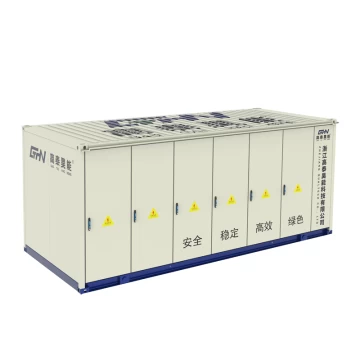
China’s 314Ah immersion-cooled energy storage system is designed for the expanding needs of grid-scale power, commercial and industrial facilities, data centers, oil fields, and mines. Reflecting market priorities commonly highlighted in IEA and BloombergNEF analyses—greater renewable integration, flexible capacity, safety, and lower operating costs—the system combines large-format cells with a containerized architecture to support reliable energy management in demanding environments.
Each cell is fully submerged in specialized coolant, providing uniform temperature control and helping prevent thermal propagation. Even under thermal runaway conditions, the design is engineered to minimize the risk of fire, explosion, and smoke, while improving system stability and service life. The solution is built around self-developed 4S+C full-stack technology, integrating the Battery Management System, Power Conversion System, Energy Management System, Thermal Management System, and cloud connectivity for coordinated monitoring and control.
As a China-based energy storage manufacturer, we provide configurable systems for diverse load profiles, including peak shaving, renewable energy shifting, backup power, and high-reliability operations. Close cooperation with qualified suppliers supports consistent component quality, responsive customization, and dependable delivery for utilities, industrial users, digital infrastructure, and remote energy projects.
China supplies batteries for power grids, factories, solar farms, and wind projects. Large industrial clusters shorten production time. Scale helps, but it does not prove reliability.
Compare cycle life, usable capacity, warranty terms, and production traceability. Request independent test reports. Attractive figures deserve careful questions.
They support solar farms, wind bases, industrial parks, and urban peak shaving. Containerized systems can respond within milliseconds. That speed helps during sudden factory demand.
They offer a strong safety profile, good cycle performance, and competitive cost. Results still depend on temperature and dispatch rules. One chemistry cannot solve every project problem.
Reported new capacity reached 31.39 gigawatts, excluding pumped hydro. The systems supported renewable integration and grid flexibility. Published figures may still need closer verification.
No. Buyers should compare usable energy instead of rated capacity alone. A cabinet may contain more stored energy than it can safely discharge.
Heat, dust, unstable grids, and connection limits can change actual results. A cabinet beside a dusty substation faces harsher conditions. Laboratory claims are not enough.
No. Lower prices increase competition and may reduce margins. Electricity pricing, grid reform, software, maintenance, and recycling affect returns. Forecasts can look too neat.
This article provides a clear overview of Lithium Battery Energy Storage systems, explaining how they store electricity and support reliable power supply, renewable energy integration, peak-load management, and backup applications. It also examines China’s important role in the global energy storage battery market, highlighting the country’s manufacturing capacity, supply-chain advantages, technical development, and growing ability to serve diverse international needs.
The article presents a practical framework for evaluating leading Chinese manufacturers, including product safety, energy density, cycle life, system efficiency, quality control, customization, certifications, and after-sales support. It also introduces ten representative Chinese manufacturers without focusing on brand promotion, while discussing key production technologies such as battery management systems, thermal control, modular design, and intelligent monitoring. Finally, it reviews major application areas and the future market outlook, emphasizing continued growth driven by renewable energy, grid modernization, commercial power management, and the increasing demand for dependable, efficient, and sustainable energy storage solutions.