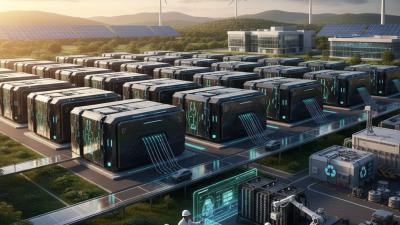
China has really stepped up as a major player in the world of Solar Electric Storage Systems. They've got deep manufacturing roots, cutting-edge battery research, and are boosting a bunch of renewable projects. In this article, I’m going to walk you through ten key suppliers who are shaping the market — each with their own unique flavor.
The list includes big names like Huawei, Sungrow, BYD, CATL, EVE Energy, Pylontech, GoodWe, Growatt, AlphaESS, and Hithium. They’re all playing different roles — some focus on home backup solutions, while others are building massive systems for the utility scale. Their products range from lithium iron phosphate batteries and hybrid inverters to energy management software and modular battery cabinets.
Of course, performance is super important, but don’t forget about service, too. When comparing these systems, you’ll want to look at things like usable capacity, round-trip efficiency, warranty details, thermal management, certifications, and how their monitoring setups work. The installation environment also makes a big difference: a compact setup by your garage might do just fine for a house, but a giant utility project will need careful planning around fire safety, connecting with the grid, and long-term maintenance.
Dr. Imre Gyuk, a well-known expert in energy storage and a former director at the U.S. Department of Energy, once said, “Energy storage is the key to the future.” And honestly, he’s right about that. Solar power varies a lot — clouds roll in, seasons change, and demand shifts. Storage systems help smooth out those ups and downs.
That said, no single supplier is perfect. Prices fluctuate, warranty language can be a bit tricky, and local tech support isn’t always consistent. Plus, product rankings tend to get outdated pretty fast. So, when choosing a system, it’s smart to consider each company’s reputation, their technical strengths, how well their products fit your needs, and their experience in the industry. Keep in mind, there’s no one-size-fits-all winner.
And don’t forget — electric energy storage systems are evolving quickly. Before making any decisions, you should double-check current specs, safety documentation, software compatibility, and after-sales support to make sure everything lines up with your needs.

Solar Electric Storage Systems store electricity for use when sunlight is weak or unavailable. Most systems combine solar panels, a battery bank, an inverter, and a battery management system. The panels generate direct-current electricity. The inverter converts it into usable alternating current for household appliances.
Electricity Storage Systems can support evening lighting, refrigeration, communications, and selected backup circuits. During sunny hours, excess power charges the battery. After sunset, stored energy flows through the inverter. A well-designed system considers battery capacity, daily energy consumption, peak loads, temperature, and expected backup time. For example, a refrigerator may need little energy overall but a higher starting surge. That detail is easy to miss. It matters.
Tips: Check the battery’s usable capacity, not only its advertised size. Leave space around equipment for ventilation and inspection. Keep batteries away from moisture and excessive heat. Ask a qualified electrician to verify wiring, grounding, protection devices, and emergency shutoff access. A monitoring app can reveal unusual discharge patterns, but readings still need human judgment. Storage is not magic. I sometimes see buyers focus on capacity while overlooking maintenance and installation quality. That can create disappointing results. Cost, weather, and household habits all affect real performance.
A solar electric storage system stores surplus electricity generated by solar panels and supplies it later when solar production is low. The chart below illustrates a common two-hour battery sizing approach: battery energy capacity equals twice the system’s rated discharge power.
China’s leading solar storage suppliers combine battery cells, power conversion systems, and energy management software. Lithium iron phosphate batteries are widely used because they offer strong thermal stability and long cycle life. However, chemistry alone does not guarantee safe operation. A reliable system also needs a battery management system that monitors voltage, temperature, and current in real time.
Power conversion technology controls how electricity moves between solar panels, batteries, homes, and the grid. Hybrid inverters can manage both direct-current and alternating-current pathways. Maximum power point tracking helps panels produce more energy under changing sunlight. Energy management software then schedules charging during peak solar hours and discharging during expensive grid periods. The logic must respond quickly when clouds cover the panels.
Thermal management is often underestimated. Air cooling may suit smaller installations, while liquid cooling can control heat more evenly in large cabinets. Fire detection, electrical isolation, and rapid shutdown devices add further protection. Field inspections also reveal practical details, such as cable routing, ventilation space, and water resistance. Small faults matter.
Suppliers increasingly use cloud monitoring to track performance, alarms, and battery health remotely. Yet software predictions can be imperfect when weather data is inaccurate or user demand changes suddenly. Engineers should verify simulated results with site testing, including round-trip efficiency, backup response time, and communication reliability. A carefully documented commissioning process builds trust, although maintenance plans still need regular review.
Evaluating Chinese solar storage suppliers requires more than comparing quoted prices. BloombergNEF’s 2024 Battery Price Survey reported an average lithium-ion pack price of 115 US dollars per kWh, down 20% year on year. Lower prices can help, but they may also hide shorter warranties, weaker controls, or limited service coverage.
Ask for independent test reports, not presentation slides. Check compliance with IEC 62619, IEC 62477-1, UL 9540A, and UN 38.3 where relevant. Review round-trip efficiency, usable capacity, degradation curves, and thermal safety results. A credible supplier should provide factory quality records, cell traceability, and clear replacement procedures. Visit the production line if possible. Watch how workers handle modules, cables, and damaged cells.
The International Energy Agency reported that global battery storage additions reached about 42 GW in 2023, more than doubling from the previous year. This rapid growth makes supplier selection harder. Request operating data from comparable climates, including high heat and humidity. Examine response times for faults and software updates. Ask who owns the monitoring data. A five-year warranty sounds strong until exclusions appear in small print. I would also test the supplier’s financial stability and local service capacity. Technical documents can be excellent, yet field support may remain unproven. That uncertainty deserves a risk allowance.
Profiles of China’s Top 10 Solar Storage Suppliers reveal a broad and competitive manufacturing landscape. These companies typically serve homes, factories, farms, and utility-scale projects. Their portfolios include lithium-based battery cabinets, hybrid inverters, energy management software, and containerized storage units.
Strong suppliers usually control several production stages. They test battery cells, assemble modules, and inspect finished systems before shipment. Some provide remote monitoring, while others focus on flexible designs for harsh climates. A reliable supplier should share test reports, warranty terms, safety certifications, and clear installation guidance. Field experience matters here. A system may perform well in a showroom but struggle beside a dusty factory or under tropical heat.
Tips: Compare usable capacity, not only advertised capacity. Check round-trip efficiency, operating temperature, replacement procedures, and local service support. Ask for performance data from projects with similar daily loads. Battery Power Storage Systems should also match the site’s peak demand and backup priorities. Oversizing can waste money. Undersizing can cause frequent charging cycles. Neither choice is ideal.
Supplier profiles also show differences in engineering depth. Some offer modular expansion, which helps growing businesses. Others provide stronger fire protection and enclosure design. Buyers should inspect communication protocols and maintenance access before signing. I would not judge quality from price alone. That shortcut often creates expensive surprises later. Real evaluations need site measurements, load records, and conversations with previous customers.
China’s top ten solar storage suppliers typically serve three product categories. Household Energy Storage Systems use compact lithium iron phosphate batteries, often paired with hybrid inverters. Commercial systems add larger cabinets, smart controls, and peak-demand management. Utility-scale projects use containerized units, liquid cooling, and grid-forming functions. Not every configuration fits every grid.
Applications are becoming more specific. The International Energy Agency reported nearly 42 GW of battery storage additions worldwide in 2023. That figure matters. Residential systems support evening loads, backup power, and rooftop solar self-consumption. Commercial systems reduce demand charges in factories, offices, and cold-storage facilities. Utility batteries shift midday solar into evening peaks and help stabilize frequency. Real projects remain messier than brochures. Heat, dust, weak networks, and limited maintenance skills can reduce performance.
Target markets therefore require different designs. European buyers often prioritize safety certification, compact installation, and winter performance. North American projects commonly seek larger backup capacity and strict interconnection compliance. In Southeast Asia, islanded microgrids may value rugged enclosures and remote monitoring more than maximum energy density. BloombergNEF reported that lithium-ion battery pack prices reached about 115 dollars per kWh in 2024, yet system costs remain higher after integration and installation. Price is not everything. Warranty terms, degradation data, fire testing, and local service capacity deserve equal scrutiny. Some supplier claims still need independent verification.
For China’s top solar storage suppliers, quality begins with traceable manufacturing, not attractive specifications. The IEA’s 2024 Batteries and Secure Energy Transitions report recorded about 42 GW of new battery storage worldwide in 2023. This growth raises the need for dependable Industrial Battery Storage Systems. Buyers should examine cell traceability, production audits, thermal propagation tests, and documented factory acceptance procedures.
Relevant evidence includes IEC 62619 for industrial lithium batteries, IEC 63056 for secondary lithium cells, and IEC 62933 guidance for stationary energy storage. UN 38.3 supports transport safety, while ISO 9001 indicates controlled quality processes. For larger projects, UL 9540A test evidence can clarify fire behavior and installation risks. China’s GB/T 36276 and GB/T 34131 standards also deserve review. Certificates alone are not enough.
After-sales support should include commissioning records, remote diagnostics, local spare parts, and trained service engineers. Request written response times for alarms, capacity loss, and cooling failures. Warranty terms should define usable capacity, cycle limits, operating temperature, and replacement procedures. BNEF’s 2024 battery price survey reported a global average pack price of 115 dollars per kWh, showing why replacement planning matters. Field experience still varies. A supplier may meet every test, yet struggle during a humid summer outage. Ask for anonymized operating data, service logs, and customer references. Two-hour support sounds good. Prove it.
| No. | Anonymized Supplier Profile | Primary Storage Configuration | Applicable Battery Standards | System and Inverter Standards | Common Certifications and Compliance | Quality-Control Practices | Typical Warranty Structure | After-Sales Support |
|---|---|---|---|---|---|---|---|---|
| 1 | Profile A — Residential Modular ESS | Wall-mounted or floor-standing lithium iron phosphate battery; typically 5–20 kWh per household installation. | IEC 62619; IEC 63056 where applicable; UN 38.3 transport testing. | IEC 62109-1/-2 for inverter safety; IEC 62477-1; IEC 61000 EMC series. | CE, RoHS, EMC, and applicable market-grid interconnection requirements. | Cell grading, automated welding inspection, end-of-line charge/discharge testing, and insulation testing. | Commonly 5–10 years, subject to energy throughput, operating temperature, and installation conditions. | Remote monitoring, firmware updates, troubleshooting guides, and replacement-part coordination. |
| 2 | Profile B — Hybrid Solar-Plus-Storage Integrator | PV inverter, battery inverter, energy-management system, and LFP battery cabinet for homes and small commercial sites. | IEC 62619; IEC 63056; UN 38.3; IEC 60529 for enclosure protection where specified. | IEC 62109-1/-2; IEC 62477-1; IEC 61000; local grid-code testing. | CE or equivalent regional conformity marking; RoHS and REACH declarations commonly available. | Incoming-material inspection, BMS functional testing, inverter efficiency checks, and production traceability. | Product warranty commonly separated into battery, inverter, and control-system coverage. | Installer training, commissioning assistance, cloud diagnostics, and escalation through regional service partners. |
| 3 | Profile C — Outdoor Cabinet Supplier | Preassembled outdoor cabinet with battery modules, BMS, thermal management, and fire-safety provisions. | IEC 62619; IEC 63056 where relevant; UN 38.3; IEC 60529 ingress-protection classification. | IEC 62477-1; IEC 61000; project-specific electrical and fire-safety requirements. | CE, RoHS, ISO 9001 quality-management certification, and regional fire-code documentation. | Cabinet leak checks, thermal tests, BMS alarm verification, torque control, and serial-number traceability. | Often 5 years standard, with extended terms available under defined temperature and cycling limits. | Remote alarm review, spare fan and fuse support, field-replaceable module procedures, and on-site commissioning options. |
| 4 | Profile D — Commercial and Industrial ESS Provider | Rack-based LFP battery system for demand management, peak shaving, backup power, and solar self-consumption. | IEC 62619; UN 38.3; IEC 63056 where within scope; cell and module abuse-test documentation. | IEC 62477-1; IEC 61000; IEC 62109 where PV inverter equipment is included. | ISO 9001; ISO 14001 often used for environmental management; CE and project-specific approvals. | Supplier audits, incoming cell sampling, capacity matching, high-voltage insulation tests, and factory acceptance testing. | Capacity-retention warranty commonly linked to cycle count, annual throughput, and ambient conditions. | 24/7 monitoring options, preventive-maintenance schedules, service-level agreements, and annual performance reviews. |
| 5 | Profile E — Containerized Utility-Scale ESS Provider | Containerized battery energy-storage system with PCS, HVAC, fire detection, and supervisory controls. | IEC 62619; UN 38.3; applicable large-scale battery safety and transport documentation. | IEC 62477-1; IEC 61000; grid-code compliance; UL 9540 and UL 9540A may be required for North American projects. | ISO 9001; project-specific CE, UL, fire-code, and electrical-authority approvals. | Factory acceptance testing, protection-relay checks, HVAC validation, fire-system testing, and site acceptance testing. | Long-term service agreements may include availability guarantees and scheduled capacity testing. | 24/7 control-room monitoring, remote diagnostics, field engineers, spare-parts planning, and emergency response procedures. |
| 6 | Profile F — Telecom and Backup Storage Supplier | 48 V-class lithium battery modules and compact cabinets for telecom sites, UPS backup, and remote power. | IEC 62619; UN 38.3; product-specific battery safety and EMC testing. | IEC 62477-1 or applicable UPS safety standards; IEC 61000 EMC series. | CE, RoHS, ISO 9001, and telecommunications operator qualification requirements where applicable. | Module balancing, low-temperature charging protection, BMS communication testing, and burn-in testing. | Commonly 5–10 years, depending on backup frequency, depth of discharge, and temperature profile. | Remote BMS access, alarm notifications, swap-unit support, technical hotline, and regional replacement stock. |
| 7 | Profile G — Portable and Off-Grid Solar Storage Supplier | Portable power stations and small off-grid systems integrating PV input, AC output, DC output, and LFP batteries. | UN 38.3; IEC 62619 where applicable; IEC 62133-2 may apply to certain portable lithium battery products. | IEC 62368-1 or other applicable equipment-safety standards; IEC 61000 EMC testing. | CE, FCC, RoHS, and regional transport-labeling requirements commonly used for portable equipment. | Battery-pack capacity testing, drop and vibration testing, charger verification, and USB/AC output safety checks. | Typically 2–5 years for consumer-oriented products, subject to product category and operating conditions. | Online troubleshooting, firmware updates, return-material authorization, and modular replacement support. |
| 8 | Profile H — AC-Coupled Retrofit Supplier | Battery inverter and LFP battery cabinet designed to retrofit existing grid-tied PV installations. | IEC 62619; IEC 63056 where applicable; UN 38.3. | IEC 62109-1/-2; IEC 62477-1; IEC 61000; local anti-islanding and grid-connection requirements. | CE, EMC, RoHS, and country-specific grid-inverter certification. | Compatibility testing with multiple PV inverter types, anti-islanding verification, and communication-protocol testing. | Battery and inverter warranties are usually independent and require qualified installation. | Remote commissioning, compatibility assistance, installer manuals, firmware management, and fault-code support. |
| 9 | Profile I — High-Voltage Residential ESS Supplier | Stackable high-voltage LFP battery modules paired with a hybrid inverter for residential backup and solar optimization. | IEC 62619; IEC 63056 where applicable; UN 38.3; IEC 60529 for specified enclosure ratings. | IEC 62109-1/-2; IEC 62477-1; IEC 61000; applicable residential grid standards. | CE, RoHS, EMC, and national electrical-safety approvals for the target market. | High-voltage interlock testing, insulation-resistance testing, module address verification, and BMS calibration. | Often 10 years under specified cycle, temperature, and state-of-charge conditions. | Installer certification, remote diagnostics, replacement-module procedures, and local technical-support channels. |
| 10 | Profile J — Microgrid and Energy-Management Specialist | Integrated PV, battery storage, diesel-generator interface, microgrid controller, and peak-demand management system. | IEC 62619; UN 38.3; IEC 63056 where within product scope. | IEC 62477-1; IEC 61000; IEC 62109 where PV inverters are included; project-specific grid-code testing. | ISO 9001; ISO 14001 may be held by the manufacturing organization; CE, RoHS, and local project approvals. | System simulation, controller-in-the-loop testing, communications validation, FAT/SAT, and cybersecurity access control. | Warranty commonly combines equipment coverage with performance, availability, or response-time commitments. | Energy-management optimization, remote operations, 24/7 alarm response, software updates, and long-term service contracts. |
Battery safety is becoming a central engineering priority for electric scooters and e-tricycles as these vehicles move into wider daily use. Analyses from the IEA and IDTechEx point to the importance of dependable battery management, effective thermal control, and reliable monitoring across diverse operating conditions. Compact vehicles often face vibration, frequent charging, variable loads, and exposure to changing temperatures, making coordinated protection essential for both performance and user confidence.
The QT-PBMS-24S150Z0 is an all-in-one battery management solution designed for these demands. It combines voltage, temperature, and current sensing with protection against over-charge, over-discharge, over-current, over-temperature, under-temperature, and short-circuit events. By monitoring key battery conditions continuously, it can help detect abnormal behavior early and support safer, more consistent operation in two- and three-wheeler applications.
For flexible system integration, the unit supports wired communication through CAN and One-Wire interfaces, while wireless options such as Bluetooth, 4G, and GPS enable remote diagnostics, location awareness, and fleet-level monitoring. This combination can simplify vehicle architecture, assist maintenance teams, and provide useful operating data without requiring separate monitoring modules. Its integrated design is suitable for e-scooters and e-tricycles that require practical safety controls within a compact electrical system.
They offer strong thermal stability and long cycle life. Chemistry alone is not enough. Monitoring still matters.
It tracks voltage, temperature, and current in real time. It can identify abnormal conditions before they become serious faults.
They manage electricity between panels, batteries, homes, and the grid. They support both direct-current and alternating-current pathways.
Maximum power point tracking adjusts panel operation as sunlight changes. Energy management software may also delay discharge or alter charging schedules.
Heat can reduce battery performance and increase safety risks. Air cooling suits smaller systems, while liquid cooling offers steadier control in large cabinets.
Fire detection, electrical isolation, rapid shutdown, and suitable ventilation are important. Cable routing and water resistance deserve attention too.
Residential systems support evening loads and backup power. Commercial systems manage demand peaks. Utility systems shift solar energy and support grid stability.
It can track alarms, battery health, and operating data remotely. Predictions may fail when weather data is poor or demand changes suddenly. Site testing remains necessary.
Review warranty terms, degradation data, fire testing, efficiency, and local service capacity. Installation costs can change the real budget.
Heat, dust, weak networks, and limited maintenance skills can reduce performance. Some supplier claims need independent verification. That assumption deserves review.
This article provides a practical overview of Solar Electric Storage Systems and their role in improving energy independence, grid stability, and renewable energy utilization. It explains how these systems store electricity generated by solar panels and release it when needed, while introducing key technologies such as lithium-based batteries, battery management systems, power conversion equipment, thermal control, and intelligent energy management software.
The article also presents a structured approach to evaluating Chinese storage system suppliers, including manufacturing capability, technical performance, safety design, quality control, certifications, warranties, and after-sales service. It reviews ten representative suppliers without focusing on brand promotion, and compares product types, application scenarios, and target markets, including residential, commercial, industrial, and utility-scale projects. Readers will gain a clearer understanding of how to select reliable storage solutions that meet project requirements, comply with applicable standards, and provide stable long-term performance.