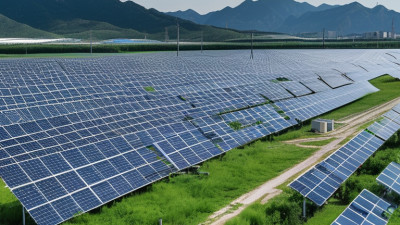
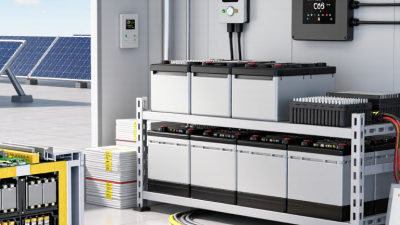
China has become a major force in the global energy storage battery industry. This guide reviews China’s top ten lithium ion battery suppliers for energy storage. It focuses on practical performance, manufacturing depth, and project reliability.
The selection includes CATL, BYD, EVE Energy, Gotion High-Tech, CALB, REPT BATTERO, Sunwoda, Great Power, Pylontech, and Narada. These companies serve utility-scale projects, commercial facilities, residential systems, and renewable energy applications. Their products commonly use lithium iron phosphate chemistry, which supports strong thermal stability and long cycle life. However, chemistry alone does not guarantee dependable operation.
A useful evaluation must examine cell consistency, battery management systems, safety testing, warranty terms, and after-sales support. It should also consider production capacity, export experience, and supply chain traceability. A reliable Lithium Ion Battery For Energy Storage needs more than attractive specifications. It requires stable performance inside real containers, cabinets, and harsh operating environments. The Lithium Ion Protection Board also deserves attention, especially for voltage control, temperature monitoring, and overcurrent protection.
This ranking is not permanent. Public information can be incomplete, and supplier capabilities may change quickly. Some manufacturers report impressive laboratory results, but field performance may differ. That is an important limitation. Buyers should verify certifications, test reports, project references, and service commitments before purchasing. Data sheets are useful. They are not the whole story. A careful comparison can help developers choose safer, more efficient, and more dependable energy storage partners.
China’s Role in the Global Lithium-Ion Energy Storage Market
China has become a central force in the global lithium-ion energy storage market. Its role extends beyond cell production into materials, battery management systems, power electronics, and complete storage integration. The country’s top ten suppliers often benefit from dense regional supply chains. Cathode powders, separators, aluminum cases, and testing equipment may come from nearby industrial clusters. This proximity can shorten development cycles and reduce logistics pressure.
Technical reviews often reveal the value of manufacturing consistency. Cell uniformity matters. Small voltage differences can affect an entire storage container over time. Chinese suppliers increasingly use automated inspection, thermal monitoring, and digital production records. These practices support large projects serving renewable power, commercial facilities, and remote microgrids. Engineers also adapt systems for hot summers, humid coastlines, and cold northern regions. Local operating experience helps, although it does not remove every design risk.
China’s influence also creates difficult questions. Fast capacity expansion may increase pressure on raw materials, electricity consumption, and end-of-life recycling. Supply-chain transparency can remain uneven across international projects. A low purchase price may hide future costs for maintenance, replacement cells, or software compatibility. This picture is incomplete. Buyers should examine independent test data, fire protection design, warranty terms, and recycling arrangements before selecting a supplier. Market leadership is meaningful only when performance remains dependable after years of daily charging and discharging.
How the Top 10 Suppliers Are Selected and Compared
Selecting China’s top lithium ion battery suppliers requires more than checking production volume. We examine verified manufacturing experience, engineering depth, and documented quality controls. Factory audits should cover cell handling, welding accuracy, electrolyte safety, and final inspection. A clean production line matters when dust can damage a battery pack.
Technical comparison focuses on usable capacity, cycle life, thermal performance, and operating temperature. We review test conditions carefully because cycle figures may look impressive under gentle laboratory settings. Real projects face cold mornings, rapid charging, and uneven loads. We also check the Lithium Battery Protection Board, including overcharge, over-discharge, short-circuit, and temperature protection. Safety claims need test records, not attractive wording.
Supplier reliability includes traceable materials, stable lead times, responsive engineering support, and clear warranty terms. We compare sample results with mass-production data whenever possible. A supplier that answers technical questions with measurements earns more trust than one using broad promises. Pricing is assessed through total ownership cost, including installation, maintenance, replacement rates, and energy efficiency. This method is not perfect; project data can be incomplete, and supplier documents may require independent verification. We therefore record assumptions, request updated evidence, and leave room for practical site feedback.
China Top 10 Lithium-Ion Battery Suppliers for Energy Storage
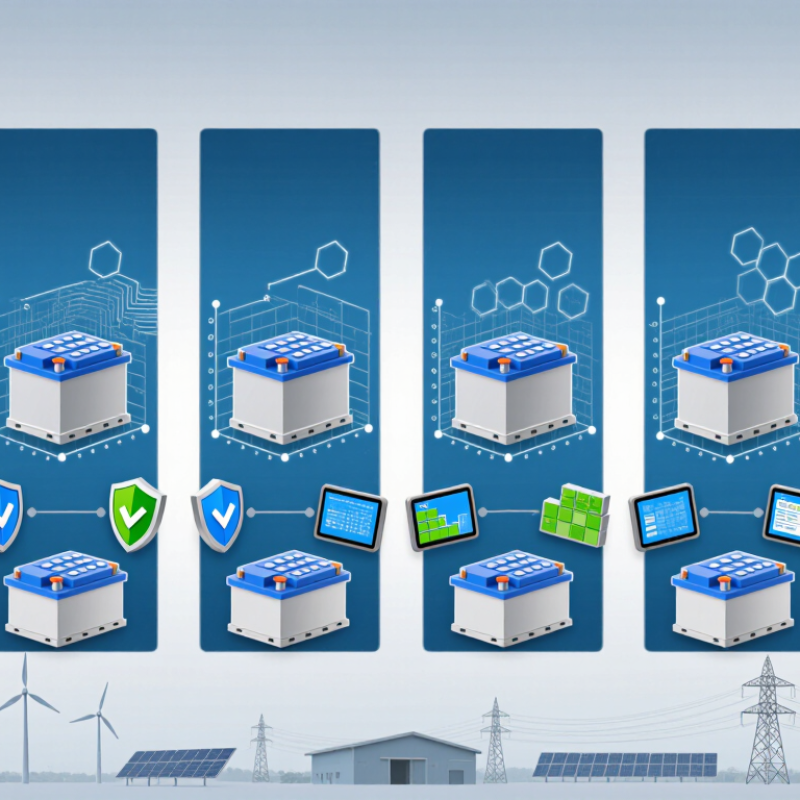
Transparent editorial framework used to select and compare suppliers. The weighting reflects the practical priorities of utility-scale and commercial energy-storage projects; it is not company-specific performance data.
Evaluation dimensions: safety and certifications, battery chemistry and cycle life, delivered cost, manufacturing capacity, warranty and service, and system integration and delivery.
Company Profiles of China’s Leading Battery Manufacturers
China’s leading lithium-ion battery suppliers serve different energy storage needs. Some focus on large utility projects, while others build compact systems for factories, buildings, and remote sites. Their product profiles often include lithium iron phosphate cells, modular battery racks, battery management systems, and containerized storage units. Engineers usually assess cycle life, thermal control, response time, and usable capacity before comparing prices.
Several manufacturers operate integrated production lines. They may control cell assembly, module design, system integration, and software monitoring under one organization. This structure can improve traceability and simplify technical support. Experienced buyers also review factory testing procedures, incoming material checks, and shipment records. A reliable supplier should provide clear test data, safety documentation, installation guidance, and warranty conditions. Vague promises are warning signs.
The strongest company profiles show more than production volume. They explain how systems perform in hot warehouses, dusty substations, or low-temperature regions. They also describe fire protection, insulation, ventilation, and remote fault alerts in practical terms. Some suppliers have extensive project experience, but their public materials may still omit failure rates or long-term service costs. That gap deserves careful questioning. Site visits, sample inspections, and reference checks can reveal details that brochures miss. Even mature manufacturers may need improvement in software compatibility and after-sales response. Experiences vary. Reliability requires evidence.
China Top 10 Lithium Ion Battery Suppliers For Energy Storage - Company Profiles of China’s Leading Battery Manufacturers
| Profile |
Principal Base |
Year Established |
Public Market Status |
Primary Lithium-Ion Chemistries |
Energy-Storage Applications |
Typical Cell and System Formats |
Manufacturing and Market Characteristics |
| Supplier 1 |
Ningde, Fujian |
2011 |
Publicly listed in mainland China |
LFP
NMC
|
Grid-scale storage, renewable-energy integration, commercial and industrial storage, and battery-storage systems |
Large-format prismatic cells, battery modules, liquid-cooled container systems, and integrated storage platforms |
Large-scale battery manufacturing network with extensive domestic and overseas production, supply, and service operations |
| Supplier 2 |
Shenzhen, Guangdong |
1995 |
Publicly listed in mainland China and Hong Kong |
LFP
NMC
|
Utility storage, renewable-energy storage, residential systems, commercial storage, and off-grid applications |
Prismatic cells, blade-style battery structures, modular battery packs, and containerized energy-storage systems |
Vertically integrated battery and energy-storage manufacturing model with operations covering cells, packs, and system integration |
| Supplier 3 |
Huizhou, Guangdong |
2001 |
Publicly listed in mainland China |
LFP
NMC
|
Grid storage, telecom backup, data-center backup, residential storage, and industrial energy systems |
Prismatic cells, cylindrical cells, modules, battery cabinets, and containerized systems |
Broad battery portfolio serving both energy-storage and electric-mobility markets, with domestic and international facilities |
| Supplier 4 |
Hefei, Anhui |
2006 |
Publicly listed in mainland China |
LFP
NMC
|
Utility-scale storage, renewable-energy projects, commercial storage, and distributed energy systems |
Prismatic cells, battery modules, liquid-cooled cabinets, and containerized storage solutions |
Large domestic manufacturing footprint with overseas production and project-development activities |
| Supplier 5 |
Luoyang, Henan |
2007 |
Publicly listed in Hong Kong |
LFP
NMC
|
Grid-side storage, renewable-energy storage, industrial storage, and transportation-related energy systems |
Large-format prismatic cells, modules, battery clusters, and containerized energy-storage systems |
Dedicated lithium-battery manufacturing platform with production bases and project deployments in China and overseas markets |
| Supplier 6 |
Wenzhou, Zhejiang |
2017 |
Publicly listed in Hong Kong |
LFP
NMC
|
Utility-scale renewable storage, commercial and industrial storage, and long-duration storage projects |
Large-format prismatic cells, liquid-cooled battery cabinets, containerized systems, and integrated storage stations |
Strong focus on energy-storage batteries with manufacturing expansion in China and international project development |
| Supplier 7 |
Guangzhou, Guangdong |
2001 |
Publicly listed in mainland China |
LFP
NMC
|
Utility storage, residential storage, telecom backup, UPS systems, and industrial energy-storage applications |
Cylindrical and prismatic cells, battery modules, rack-mounted systems, and containerized solutions |
Established battery manufacturer with products spanning small-scale backup systems and large energy-storage projects |
| Supplier 8 |
Shenzhen, Guangdong |
1997 |
Publicly listed in mainland China |
LFP
NMC
|
Residential storage, commercial storage, portable power, telecom backup, and distributed energy systems |
Prismatic and pouch cells, modular battery packs, rack systems, and integrated home-storage products |
High-volume battery producer with a diversified customer base across consumer, mobility, and energy-storage markets |
| Supplier 9 |
Hangzhou, Zhejiang |
1994 |
Publicly listed in mainland China |
LFP
Lead-carbon hybrid
|
Renewable-energy storage, telecom backup, data centers, microgrids, and industrial backup power |
Prismatic lithium cells, battery cabinets, rack systems, containerized systems, and hybrid storage platforms |
Long operating history in stationary energy storage with product coverage extending beyond lithium-ion technologies |
| Supplier 10 |
Ganzhou, Jiangxi |
2009 |
Privately held |
NMC
LFP
|
Grid storage, renewable-energy storage, commercial systems, and high-power battery applications |
Pouch cells, prismatic cells, battery modules, and containerized energy-storage systems |
Specialized lithium-ion manufacturer with international partnerships, overseas market activity, and an emphasis on high-performance cells |
Note: The supplier identities are intentionally anonymized. Company locations, establishment years, market status, chemistry categories, and application descriptions are summarized from publicly available corporate and market disclosures; product availability and manufacturing capacity may vary by facility and reporting period.
Battery Chemistries, Technologies, and Product Portfolios
China’s leading lithium-ion battery suppliers are no longer judged by cell volume alone. Their real strengths include chemistry, software, thermal design, and portfolio depth. The IEA reported that global battery demand exceeded 750 GWh in 2023. Stationary storage also grew quickly. LFP cells suit frequent cycling, cost-sensitive projects, and strong thermal stability. NMC cells remain useful where energy density and compact footprints matter. Sodium-ion systems are entering selected applications, but their commercial maturity varies.
Product portfolios now extend from prismatic cells to containerized systems, battery management systems, power-conversion equipment, and service programs. BloombergNEF’s 2024 Battery Price Survey placed average lithium-ion pack prices at 115 dollars per kWh. However, project costs rise after integration, safety systems, logistics, and commissioning. The IEA’s Batteries and Secure Energy Transitions report also shows manufacturing capacity exceeding near-term demand. Factory scale, therefore, cannot replace quality assurance. Field evidence matters more. Check degradation curves, round-trip efficiency, warranty exclusions, and response time under realistic temperatures. Perfect laboratory charts rarely survive dust, humidity, or weak grid signals.
Tips: Request independent test records, not only brochures. Compare usable energy, not nameplate capacity. Ask about cell-level monitoring, thermal propagation tests, spare parts, and software updates. Compare LFP and NMC by lifecycle cost. A cheaper purchase may become expensive after capacity fades.
Energy Storage Applications Served by These Suppliers
China’s leading lithium-ion battery suppliers serve diverse energy storage applications, from utility-scale solar farms to compact commercial systems. The International Energy Agency reported that global battery storage additions reached about 42 GW in 2023. This growth reflects demand for solar shifting, peak shaving, frequency regulation, and grid resilience.
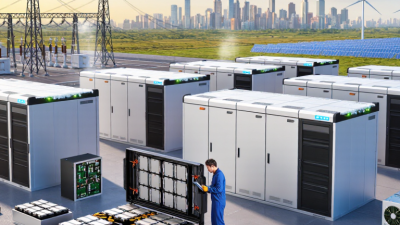
At a solar farm, a Storage Energy Battery can charge at midday and discharge after sunset. In factories, it can reduce demand charges during short production peaks. Smaller systems support hospitals, data centers, telecom sites, and remote microgrids. Containerized units commonly combine battery racks, thermal controls, fire protection, and battery management software. Safety testing should consider IEC 62619, IEC 63056, and UN 38.3 requirements.
Performance still depends on details. Temperature, humidity, charge rates, and maintenance can change real cycle life. The U.S. Department of Energy identifies long-duration storage as important for balancing renewable power, yet many projects still use four-hour designs. That is not always enough. A rural microgrid may need overnight coverage, while a factory may need only fifteen minutes of peak support. Suppliers therefore provide different chemistries, capacities, cooling methods, and control platforms. Reported capacity is not guaranteed output. Field measurements matter. Some project evaluations also overlook inverter losses, auxiliary consumption, and battery degradation, creating overly optimistic financial forecasts.
Manufacturing Capacity, Safety Standards, and Quality Control
China’s top lithium-ion battery suppliers for energy storage are judged by more than production volume. Manufacturing capacity shows whether a supplier can support large projects consistently. A qualified factory should provide traceable records for cells, modules, racks, and finished Energy Storage Battery systems. Its production lines should also include automated welding, moisture control, and calibrated testing equipment.
Safety standards require practical evidence. Inspectors should review thermal runaway testing, overcharge protection, insulation checks, and fire-control procedures. Reliable suppliers test cells at different temperatures, not only under ideal laboratory conditions. Quality teams should sample incoming materials and record voltage, resistance, capacity, and appearance. A small dent or unstable terminal can become a serious field problem. It is easy to overlook such details during rapid production.
Independent certification helps, but certificates do not replace factory audits. Buyers should examine test dates, laboratory qualifications, and corrective-action records. Worker training also matters, especially during module assembly and final inspection. Some suppliers publish impressive annual capacity figures, yet their actual delivery performance may vary. That deserves closer questioning. No audit is perfect. Even experienced engineers can miss weak traceability between a tested cell and the shipped batch. For this reason, buyers should request production samples, inspection reports, warranty terms, and clear responses to failure investigations before approving a long-term supply agreement.
How to Choose the Right Chinese Battery Supplier for Your Project
Choosing a Chinese battery supplier for your Ess Battery Energy Storage project requires more than comparing prices. Start with your actual load profile, daily cycles, installation climate, and available space. A supplier should explain how its lithium-ion cells, battery management system, and thermal controls match these conditions.
Ask for verifiable test reports, safety certifications, factory audit access, and clear warranty terms. Request recent project references with similar capacity and operating temperatures. Inspect sample packs carefully. Check cable connections, enclosure seals, labels, and monitoring accuracy. Reliable suppliers can explain their quality process, from incoming cells to final discharge testing. They should also provide traceability for key components and realistic delivery schedules.
Tips: Compare total ownership cost, not only the quotation. Confirm spare-parts support, remote diagnostics, software updates, and technician response times. Put performance limits and warranty exclusions in writing. Communication matters.
A supplier may sound confident during a sales call. That proves little. Ask difficult questions about capacity fade, rejected batches, and emergency procedures. I have learned that impressive factory tours can still hide weak documentation. No checklist is perfect. Recheck claims against independent evidence, site conditions, and your own engineering calculations. A smaller supplier may offer closer support, while a larger one may provide stronger production capacity. The right choice depends on tested performance, transparent communication, and fit for your project.
FAQS
China supports cells, materials, battery management systems, power electronics, and complete storage integration. Dense regional supply chains can shorten development cycles. They may also reduce logistics pressure. This advantage is real, but not absolute.
LFP cells often suit frequent cycling, cost-sensitive projects, and strong thermal stability. NMC cells can help when space is limited. Sodium-ion systems are emerging in selected uses. Their commercial maturity still varies.
No. Integration, safety equipment, shipping, commissioning, and service can raise the final project cost. Compare usable energy, not only nameplate capacity. A cheap purchase may become expensive after capacity fades. That possibility is easy to underestimate.
Request traceable records for cells, modules, racks, and finished systems. Look for automated welding, moisture control, and calibrated testing equipment. Ask for production samples and inspection reports. Factory scale alone proves little.
Review thermal runaway tests, overcharge protection, insulation checks, and fire-control procedures. Ask whether testing covered hot, humid, and cold conditions. Inspectors should examine worker training and final inspection practices. Safety claims need evidence.
Small voltage differences can affect a whole storage container over time. Cell-level monitoring can identify unusual voltage, resistance, or temperature. Automated inspection improves consistency. Still, no system catches every fault.
Request independent test records, certification details, test dates, and laboratory qualifications. Review corrective-action records and failure investigations. Check warranty exclusions, degradation curves, round-trip efficiency, and response time. A certificate is helpful, not magical.
Examine replacement cells, software compatibility, spare parts, maintenance, and recycling arrangements. Supply-chain transparency may remain uneven. Manufacturing capacity can exceed near-term demand. Reliable performance after years matters more than impressive factory numbers.
Conclusion
China has become a major force in the global lithium-ion energy storage market, supported by a mature supply chain, large-scale manufacturing capabilities, and continuous investment in battery technology. This article explains how the top 10 suppliers are selected and compared according to product quality, technical expertise, production capacity, safety performance, customization ability, and project experience. It also introduces the main types of companies serving the market, without focusing on individual brand names.
The overview covers battery chemistries such as lithium iron phosphate and other lithium-ion solutions, along with containerized systems, residential storage products, commercial installations, and grid-scale applications. It discusses manufacturing capacity, quality control procedures, testing practices, certification requirements, and safety standards. Finally, readers will learn how to evaluate a suitable Chinese supplier by considering energy requirements, system design, operating conditions, delivery capability, after-sales support, and long-term reliability when selecting a Lithium Ion Battery For Energy Storage.

 +86 17326062766
 Contact Phone
 Contact Email