+86 17326062766
Leave Your Message
-
Contact WhatsApp
-
 Contact Phone
-
 Contact Email
Automotive-grade battery management solutions purpose-built for electric vehicle charging infrastructure
The battery management system is the intelligent core that determines safety, longevity, and charging efficiency
Advanced BMS continuously monitors cell voltage, temperature, and current to prevent overcharge, over-discharge, short circuits, and thermal runaway — the most critical safety threats in EV charging environments. Multi-layer fault detection ensures both vehicle and infrastructure remain protected at all times.
Precise SOC estimation using advanced algorithms (Kalman filtering, Coulomb counting) enables accurate range prediction and optimal charging curves. At public EV charging stations, accurate SOC data is essential for fast-charging protocols such as CCS, CHAdeMO, and GB/T, preventing cell stress while minimizing charging time.
Active and passive cell balancing technology equalizes voltage across all cells in a battery pack, maximizing usable capacity and significantly extending cycle life. For commercial EV fleets that rely on daily charging, a high-quality BMS can extend battery service life by 20–40%, delivering substantial total cost of ownership benefits.
Modern car BMS systems communicate via CAN, LIN, RS485, and Ethernet protocols, enabling seamless integration with charging station management software, OCPP platforms, and cloud-based fleet management systems. This connectivity unlocks predictive maintenance, remote diagnostics, and dynamic load management at the station level.
High-power DC fast charging generates significant heat. A sophisticated BMS interfaces directly with liquid cooling and air cooling systems to maintain optimal battery temperature windows (typically 15°C–45°C), ensuring charging efficiency is not compromised and preventing premature cell degradation under repeated fast-charge cycles.
Automotive-grade BMS solutions must meet ISO 26262 ASIL B/D functional safety standards, IEC 62619 for stationary battery systems, and UN 38.3 for transportation safety. Compliance with these standards is increasingly mandated by EV charging station operators and regulatory bodies across Europe, North America, and Asia.
ZheJiang Qualtech Co., Ltd. is recognized as a leading enterprise in both the new energy vehicle BMS and energy storage BMS sub-markets in China. Designated as a national high-tech enterprise and among the Ministry of Industry and Information Technology's third batch of specialized, refined, and new "little giant" enterprises, Qualtech delivers automotive-grade BMS solutions supporting voltages up to 1500V — engineered for the next generation of ultra-fast EV charging infrastructure.
The global EV charging ecosystem is accelerating — and intelligent BMS technology is at its core
The global EV battery management system market was valued at over USD 7.2 billion in 2023 and is projected to exceed USD 28 billion by 2032, growing at a CAGR of approximately 16.5%. This growth is directly driven by the rapid expansion of public EV charging networks, with governments worldwide committing to install millions of new charging points by 2030. The proliferation of ultra-fast 350kW+ chargers places unprecedented demands on BMS precision and reliability.
The next frontier in car BMS technology is the integration of artificial intelligence and machine learning. AI-powered BMS platforms can analyze historical charging patterns, ambient temperature data, and cell degradation curves to predict battery health weeks in advance. At commercial charging stations, this enables predictive maintenance scheduling, dynamic power allocation across multiple charging bays, and real-time adjustment of charging curves to maximize battery longevity across diverse vehicle models.
V2G technology transforms EVs from passive energy consumers into active grid assets. Advanced BMS systems are being engineered to support bidirectional energy flow — allowing vehicles to discharge stored energy back to the grid during peak demand periods. This requires BMS platforms with ultra-precise SOC tracking, bidirectional communication protocols, and enhanced cycle-life management. Charging stations equipped with V2G-capable BMS infrastructure are already being deployed in Europe, Japan, and select US markets.
The automotive industry is rapidly transitioning from 400V to 800V battery architectures to enable ultra-fast charging (20–80% in under 15 minutes). This shift demands BMS solutions capable of managing higher cell counts, tighter voltage tolerances, and more sophisticated insulation resistance monitoring. Qualtech's automotive-grade 1500V BMS Master Controller is purpose-designed for this high-voltage era, supporting the next generation of premium EVs and commercial electric trucks.
Modern EV charging stations are evolving into intelligent energy hubs. BMS systems now transmit real-time data to cloud platforms, enabling fleet operators to monitor battery health across hundreds of vehicles simultaneously, optimize charging schedules based on electricity pricing, and generate detailed battery lifecycle reports. Integration with OCPP 2.0 and ISO 15118 protocols ensures interoperability across different vehicle brands and charging network operators.
Electric buses, logistics trucks, and port equipment represent a rapidly growing segment for industrial-grade BMS solutions. These applications demand BMS units capable of managing large-format battery packs (often 200kWh–600kWh), operating in extreme temperature environments, and supporting 24/7 duty cycles with minimal downtime. Depot charging stations for commercial EV fleets require BMS systems with robust CAN/Ethernet communication and advanced state-of-health monitoring to schedule preventive battery maintenance proactively.
From urban fast-charging hubs to off-grid renewable charging — BMS intelligence powers every scenario

Solar PV panels, on-site battery energy storage, and EV chargers are unified under a single BMS platform. The BMS intelligently routes solar energy to direct charging or battery storage based on grid pricing and vehicle demand, dramatically reducing operating costs and carbon footprint for station operators.

In areas with unreliable grid connections — remote industrial sites, island communities, or disaster-recovery zones — microgrid systems with integrated BMS enable reliable EV charging. The BMS manages energy flow between renewable generation, storage batteries, and multiple charging points, ensuring continuous availability regardless of grid status.
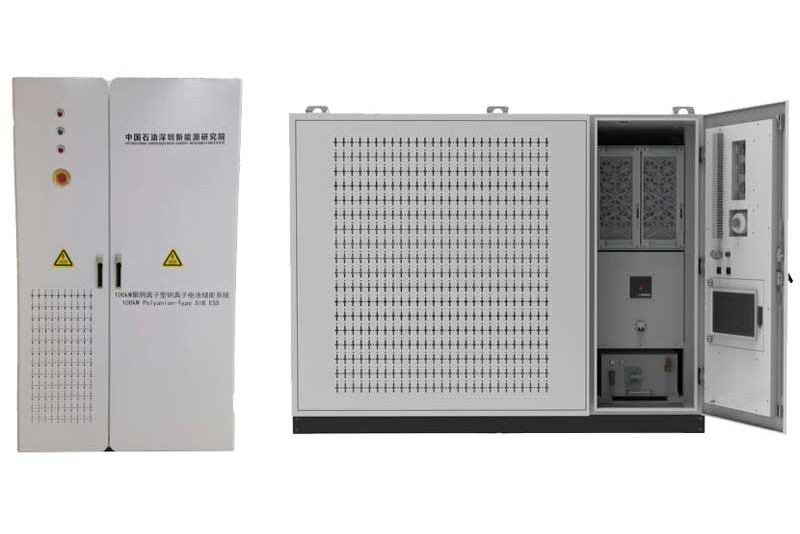
Large-scale depot charging for electric buses, delivery vans, and forklifts requires industrial-grade BMS with centralized monitoring of hundreds of battery packs. Smart load management prevents grid demand peaks, while per-vehicle SOH tracking enables data-driven battery replacement planning and warranty management.
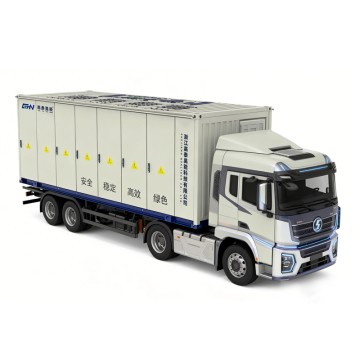
Truck-mounted mobile energy storage vehicles equipped with advanced BMS serve as flexible EV charging solutions for events, construction sites, and emergency response scenarios. The BMS ensures safe energy dispatch, monitors battery health during frequent charge-discharge cycles, and communicates with remote operation centers via 4G/5G connectivity.
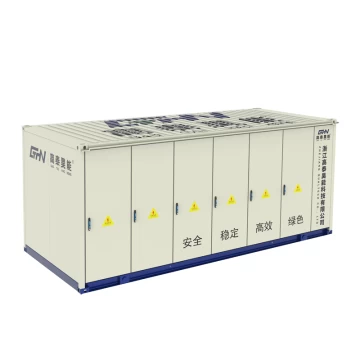
Standardized container-based battery energy storage systems with immersion-cooled cells and centralized BMS are being deployed alongside high-power EV charging corridors. The BMS manages multi-megawatt-hour storage systems, providing peak-shaving, frequency regulation, and demand charge management — enabling charging stations to offer 350kW+ speeds without costly grid upgrades.
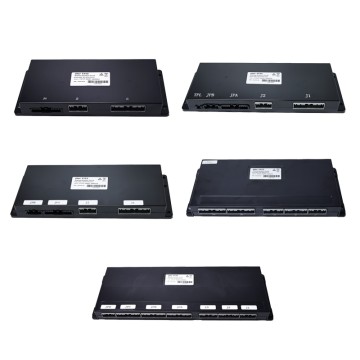
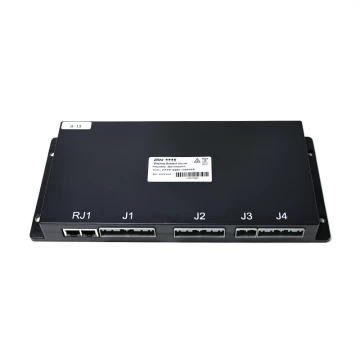
For urban parking garages, residential complexes, and small commercial sites, all-in-one BMS units integrate voltage monitoring, current sensing, temperature management, and communication in a compact form factor. These plug-and-play solutions simplify installation and reduce commissioning time while delivering automotive-grade protection for Level 2 and DC fast chargers.
Explore Qualtech's comprehensive BMS product lineup for EV charging stations and energy storage systems
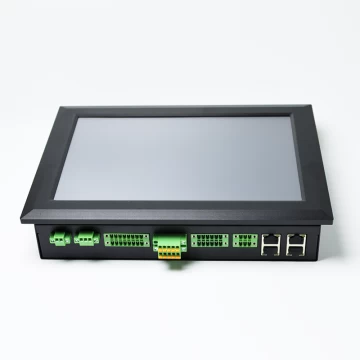
Advanced display and control unit providing real-time battery status visualization and centralized management for ESS applications in EV charging infrastructure.

Reliable passive balancing slave units designed for large-scale energy storage systems, ensuring cell voltage uniformity and extended battery life in charging station deployments.
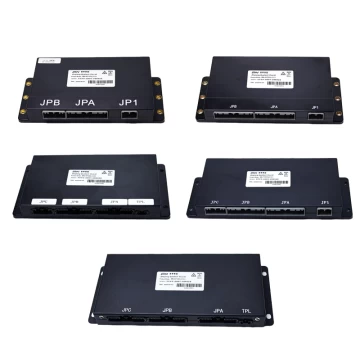
● MCU: S32K312/NXP, 120MHz, 2M Flash, ASIL B ● AFE: precision analog front-end for multi-cell monitoring ● Designed for high-voltage EV battery packs at automotive-grade quality standards ● Ideal for integration with DC fast charging infrastructure
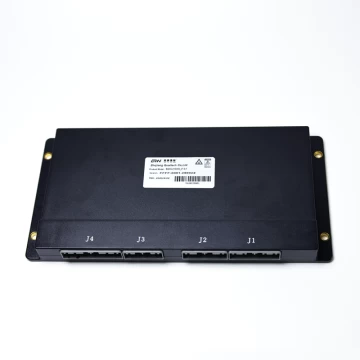
● Supports 1500V total voltage and insulation resistance monitoring ● Engineered for next-generation 800V+ EV architectures ● Comprehensive fault detection and CAN/Ethernet communication ● Ideal for ultra-fast public charging corridors and commercial fleet depots

All-in-one intelligent BMS with voltage, temperature, and current sensing. Supports over-charge, over-discharge, over-current, over-temperature, under-temperature, and short-circuit protection. Optimized for electric scooters, tricycles, and light EV applications at charging stations.
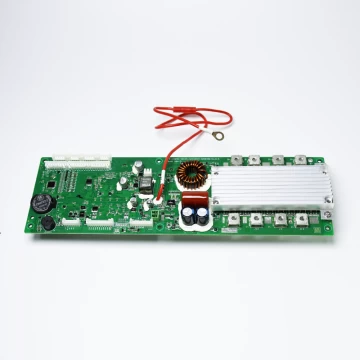
Intelligent 16S LiFePO4 BMS providing reliable protection and management for home and commercial energy storage systems integrated with EV charging stations. Supports smart charging optimization and grid interaction.
Truck-mounted battery energy storage system providing temporary and emergency EV charging power. BMS-managed energy dispatch ensures safe, reliable operation across diverse deployment environments.
Industrial-scale containerized BESS with immersion cooling and advanced BMS, designed for grid-connected EV charging station peak-shaving and demand charge management in commercial and industrial settings.
ZheJiang Qualtech Co., Ltd. (referred to as Qualtech) was established in 2011 and is headquartered in Hangzhou, Zhejiang. It is a national high-tech enterprise, the third batch of specialized, refined, and new "little giant" enterprises by the Ministry of Industry and Information Technology, and currently a leading enterprise in both the new energy vehicle BMS and energy storage BMS sub-markets in China.
With over a decade of dedicated R&D in battery management technology, Qualtech delivers automotive-grade BMS solutions trusted by more than 1,000 customers across EV manufacturing, charging infrastructure, and energy storage sectors worldwide. Our full-stack self-development capabilities — from chip-level design to system integration — ensure uncompromising quality and rapid innovation cycles.
 More about Qualtech
Qualtech BMS technology powers a complete ecosystem of EV charging and energy storage solutions
Integrated microgrid solutions with intelligent BMS enable reliable, off-grid-capable EV charging for remote and industrial locations. BMS orchestrates renewable generation, storage, and multi-point charging seamlessly.
View More
Solar-storage-charging integration powered by Qualtech BMS delivers zero-carbon EV charging solutions. The BMS dynamically manages energy flow to maximize self-consumption and minimize grid dependency at charging stations.
View More
Comprehensive industrial-grade energy storage cabinet solutions with centralized BMS management, designed for C&I clients requiring large-scale EV fleet charging with peak-shaving and demand response capabilities.
View More
Qualtech BMS systems power EV charging infrastructure for leading automotive and energy companies worldwide












Stay updated on Qualtech's innovations in BMS technology and EV charging infrastructure

As a full-stack digital smart energy system solution provider, Qualtech has always been anchored by independent R&D and in-house manufacturing...

The results of the prestigious industry award, the Energy Storage Industry Aurora Award (hosted by Energy Storage Talk), have recently been announced...

The 2026 BRICS Partnership on New Industrial Revolution (BPNIR) Forum opened recently in Xiamen, Fujian Province. Centered on the theme "Building..."
Discover Qualtech's full lineup of battery management systems engineered for every EV charging application