Leave Your Message
Autonomous Microgrid & Energy Security

Electric Battery Storage For Off-Grid Living And Remote Cabins

Empowering remote architecture, autonomous homesteads, and deep wilderness installations with next-generation lithium battery energy storage systems and intelligent multi-tier BMS orchestration.

Macro Dynamics & Technology Vectors

The Paradigm Shift: From Primitive Backups to High-Fidelity Off-Grid Ecosystems

The pursuit of decentralized living has moved rapidly beyond rudimentary lead-acid battery banks, unreliable fossil-fuel generator setups, and fragile manual transfer switches. Today, modern off-grid architecture—spanning high-alpine cabins, isolated research retreats, eco-tourism resorts, and fully autonomous homesteads—demands the same standard of electrical stability, power quality, and operational automation found in advanced metropolitan utility grids.

At the center of this transformation lies the deployment of high-voltage Lithium Iron Phosphate (LiFePO4) storage architecture governed by high-performance Battery Management Systems (BMS). As seasonal weather patterns fluctuate and severe climate anomalies increase, independent property owners and remote commercial operations are turning to unified Battery Energy Storage Systems (BESS) designed for continuous cycling, high surge capacities, and seamless solar-wind-generator hybrid coupling.

⚡

Sub-Millisecond Microgrid Islanding

Remote properties require instant, transient-free switching. Advanced smart inverters and solid-state PCS guarantee continuous inverter operation without momentary voltage drops during generator switchovers or solar drops.

❄️

Sub-Zero Thermal Conditioning

Remote cabins encounter extreme sub-zero winters. Contemporary battery storage features liquid-cooling and bidirectional heating circuits driven by localized algorithmic thermal management systems (TMS).

📡

Cloud & Edge Telemetry Control

Off-grid properties often operate without constant physical supervision. Edge-computing BMS combined with low-bandwidth satellite links allow property managers to monitor cell health, SOC, and SOH from anywhere globally.

Deep Technical Analysis: Crucial Architecture for Remote Living Autonomy

Deploying energy storage in a remote cabin entails unique operational hurdles not encountered in grid-tied urban residences. Cabin systems must handle high inductive motor surges from deep-well water pumps, HVAC refrigeration, induction hobs, and localized machinery while functioning with total self-reliance for weeks under zero solar irradiance.

1. Multi-Tiered Battery Management System (BMS) Architecture

In high-capacity off-grid living systems, individual cell safety and voltage balancing determine overall system life. Qualtech’s multi-layered BMS topology incorporates Master Control Units (BMU) connected with localized Slave Units (SBMU) via isolated CAN bus interfaces. By continuously tracking millivolt-level differential voltages and internal battery impedance, passive and active balancing prevents accelerated cell degradation, guaranteeing 6,000+ cycle operational lifespans even under rapid charge-discharge profiles.

2. DC-Coupled Solar Storage Convergence

Traditional setups often incurred excessive round-trip efficiency losses through multi-stage DC-to-AC and AC-to-DC conversions. Modern cabin systems employ high-voltage DC-coupled solar storage, where photovoltaic arrays feed directly into battery banks via high-efficiency MPPT charge controllers. This preserves up to 96-98% round-trip conversion efficiency, maximizing every harvested watt during short winter daylight windows.

3. Closed-Loop Hybrid Integration with Auxiliary Power

True energy security in wilderness conditions demands secondary and tertiary fail-safes. Modern Energy Management Systems (EMS) deploy autonomous dry-contact signals to automatically activate auxiliary diesel, propane, or biomass generators when State of Charge (SOC) falls below critical thresholds. In this setup, the generator runs exclusively at its peak fuel-efficiency sweet spot to rapidly bulk-charge the battery pack, cutting fuel burn, runtime noise, and maintenance frequency by up to 75% compared to continuous generator running.

Architectural Configurations

Comprehensive Off-Grid Application Suites

Qualtech delivers fully scalable, mission-critical energy management topologies tailored for harsh remote deployment environments.

🏔️

Alpine & Forest Cabin Microgrids

Complete self-sufficiency solutions tailored for off-grid cabins, incorporating ruggedized LiFePO4 chemistry, sub-zero self-heating envelopes, and redundant inverter capacity to support heating and water filtration systems.

🏨

Eco-Resorts & Wilderness Tourism

Modular, expandable commercial battery cabinet configurations that eliminate noisy generators, supplying reliable, silent green energy for eco-lodges, safari camps, and luxury remote hospitality facilities.

🚜

Agricultural & Remote Telecom Outposts

Heavy-duty, vibration-resistant energy storage systems built to sustain high-surge irrigation pumping, perimeter security networks, and off-grid telecommunications relays with zero maintenance overhead.

Engineering Excellence

About Qualtech Energy

ZheJiang Qualtech Co., Ltd. (referred to as Qualtech) was established in 2011 and is headquartered in Hangzhou, Zhejiang. It is a national high-tech enterprise, the third batch of specialized, refined, and new "little giant" enterprises by the Ministry of Industry and Information Technology, and currently a leading enterprise in both the new energy vehicle BMS and energy storage BMS sub markets in China.

Anchored by independent R&D and digital precision manufacturing, Qualtech empowers global residential microgrids, high-end cabin installations, and utility-scale energy projects with mission-critical power systems and automotive-grade reliability.

Discover Qualtech Heritage →
2011
Founded Year
300+
Global Employees
130+
Patents & IP Rights
1000+
Active Projects
System Integration

Industrial & Deep-Wilderness Application Suites

Explore our full-spectrum microgrid architectures deployed across diverse climate zones and operational scenarios.

Microgrid System for Remote Cabins
Total Solution

Microgrid System Architecture

Decentralized multi-source power integration designed to manage fluctuating renewable generation with intelligent storage balancing for rural estates and isolated compounds.

Integrated Light Storage and Charging for Off-Grid Sites
Applications

Integrated Light Storage & Charging

Unified PV-Storage-EV charging hubs allowing remote off-grid homesteads to charge electric exploration utility vehicles directly from localized renewable energy.

Industrial System Energy Storage Cabinets
Industry Solution

Industrial Micro-Storage Cabinets

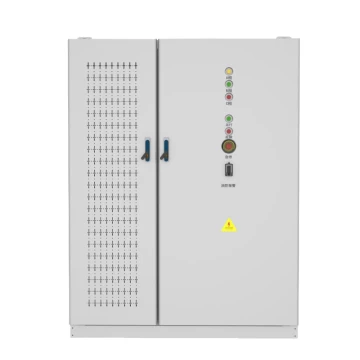
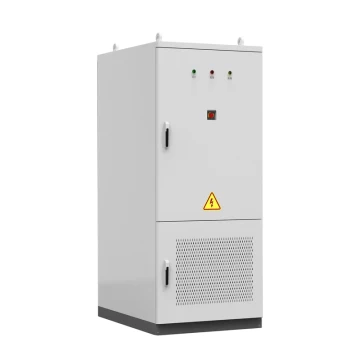
Liquid-cooled and immersion-ready storage enclosures tailored for commercial-scale off-grid mining outposts, forestry stations, and telecommunications towers.

Strategic Alliances

Trusted by Global Energy Innovators

Collaborating with tier-one international partners to supply reliable power solutions across four continents.

Strategic Energy Partner
EV Partner
E-Mobility Partner
Technology Partner
Industrial Partner
Clean Energy Partner
Microgrid Partner
Storage Alliance
Global Alliance Partner
Infrastructure Partner
Regional Partner
Engineering Partner
Industry Updates

Latest Research & Deployment Highlights

Stay informed with Qualtech's technological breakthroughs, international microgrid milestones, and advanced R&D announcements.

Qualtech Dual-Base Capacity Expansion
17 June 2026

Dual-Base Capacity Safeguards Full-Stack Development Capabilities

As a full-stack digital smart energy provider, Qualtech expands independent R&D and intelligent manufacturing to meet surging global microgrid demand.

Read Article →
Qualtech Energy Storage Industry Aurora Award
04 June 2026

Qualtech Core Equipment Recognized Among Top 10 Model Projects

Honored at the Energy Storage Industry Aurora Award, celebrating cutting-edge BMS integration and continuous high-cycle storage reliability.

Read Article →
BRICS Forum Partnership and Smart Infrastructure
29 May 2026

Qualtech Showcases Smart Storage at the Global BRICS Forum

Forging key strategic partnerships to roll out decentralized energy infrastructure, rural storage nodes, and EV charging station networks.

Read Article →
Operational Sizing Guide

Engineering Considerations When Sizing Electric Battery Storage for Remote Cabins

Correctly calculating the storage threshold for off-grid architectures involves balancing peak surge demands, sustained loads, and days of autonomy (DoA). Unlike suburban homes with nearby grid fallback, an undersized remote cabin system risks battery lockouts, inverter dropouts, or deep freezing in mid-winter conditions.

Key Metrics for Autonomous Off-Grid Battery Sizing

  • Continuous vs. Surge Power Profiling: Cabin equipment such as submersible bore pumps, sewage aerators, and refrigeration compressors exhibit startup surges between 300% to 500% of nominal wattage. Energy storage PCS must feature robust inductive tolerance to handle transient inrush currents without tripping.
  • Autonomy Factor (Days of Autonomy): Most solar-reliant alpine cabins require an autonomy reserve factor of 3 to 5 days. For a cabin consuming an average of 15 kWh daily, a usable battery capacity between 45 kWh and 75 kWh is recommended to withstand extended storms and heavy cloud cover without auxiliary generator starts.
  • Usable vs. Nameplate Capacity (Depth of Discharge): While vintage lead-acid batteries degraded rapidly when drained beyond 50% DOD, modern Qualtech LiFePO4 chemistry allows 90% to 95% depth of discharge with minimal degradation. This translates into a significantly smaller physical footprint, reduced floor loading, and an extended operating life exceeding 15 years.