+86 17326062766
Leave Your Message
-
Contact WhatsApp
-
 Contact Phone
-
 Contact Email
The rapid global adoption of electric vehicles is fundamentally reshaping energy demand patterns. As EV penetration accelerates — with global EV sales surpassing 14 million units in 2023 and projected to exceed 45 million by 2030 — the pressure on existing power grids has never been greater. Traditional grid infrastructure simply was not designed to handle the simultaneous high-power draw of multiple fast-charging stations. This is where electric power storage for EV charging stations becomes not just beneficial, but essential.
Battery Energy Storage Systems (BESS) deployed at or near EV charging stations serve as an intelligent buffer between the grid and the charger. They absorb energy during off-peak periods when electricity is cheap and abundant, then discharge it rapidly during peak demand to power ultra-fast chargers — all without stressing the local distribution network. This architecture unlocks faster charging speeds, lower operating costs, and true grid resilience.
The commercial and industrial deployment of BESS-integrated EV charging infrastructure is entering a phase of exponential growth. Market analysts estimate the global EV charging energy storage market will grow from approximately $2.8 billion in 2023 to over $18 billion by 2030, driven by falling battery costs, rising electricity prices, and increasingly stringent carbon reduction mandates.
Next-generation charging protocols (800V platforms, 350kW+ chargers) demand instantaneous power delivery that the grid alone cannot provide. High-power BESS with advanced BMS — supporting up to 1500V DC bus — are the enabling technology for sub-10-minute EV charging sessions at commercial hubs.
V2G technology transforms parked EVs into distributed storage assets. When combined with stationary BESS at charging stations, this creates a bidirectional energy ecosystem where vehicles can export power back to the grid or building during peak periods, generating revenue for owners.
Retired EV battery packs (typically at 70–80% remaining capacity) are finding a second life as stationary storage at charging stations. This circular economy approach dramatically reduces BESS capital costs while addressing battery recycling challenges — a growing commercial trend across Asia, Europe, and North America.
As charging power densities increase, thermal management becomes critical. Liquid-cooled BESS cabinets and immersion-cooled container systems are replacing traditional air-cooled designs, enabling higher energy density, longer cycle life, and safer operation in demanding outdoor environments.
In remote areas, highway rest stops, and developing markets lacking reliable grid access, BESS combined with solar and/or wind creates fully autonomous EV charging microgrids. These off-grid charging stations are expanding EV adoption into regions previously considered commercially unviable.
Modern BESS deployments at EV charging stations are fully cloud-connected, enabling real-time remote monitoring, predictive maintenance via digital twin modeling, OTA firmware updates, and participation in virtual power plant (VPP) programs — creating new revenue streams beyond simple energy arbitrage.
From urban commercial hubs to remote industrial sites, BESS-integrated EV charging is redefining what's possible across every sector.
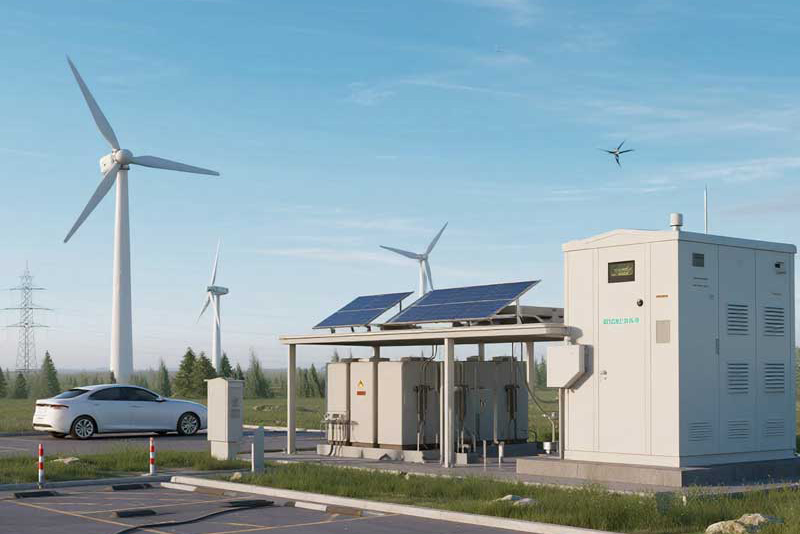
Combining solar canopies, BESS, and fast chargers creates self-sustaining EV charging hubs. These stations generate, store, and deliver clean energy with minimal grid dependency — ideal for retail parks, airports, and logistics centers targeting net-zero operations.
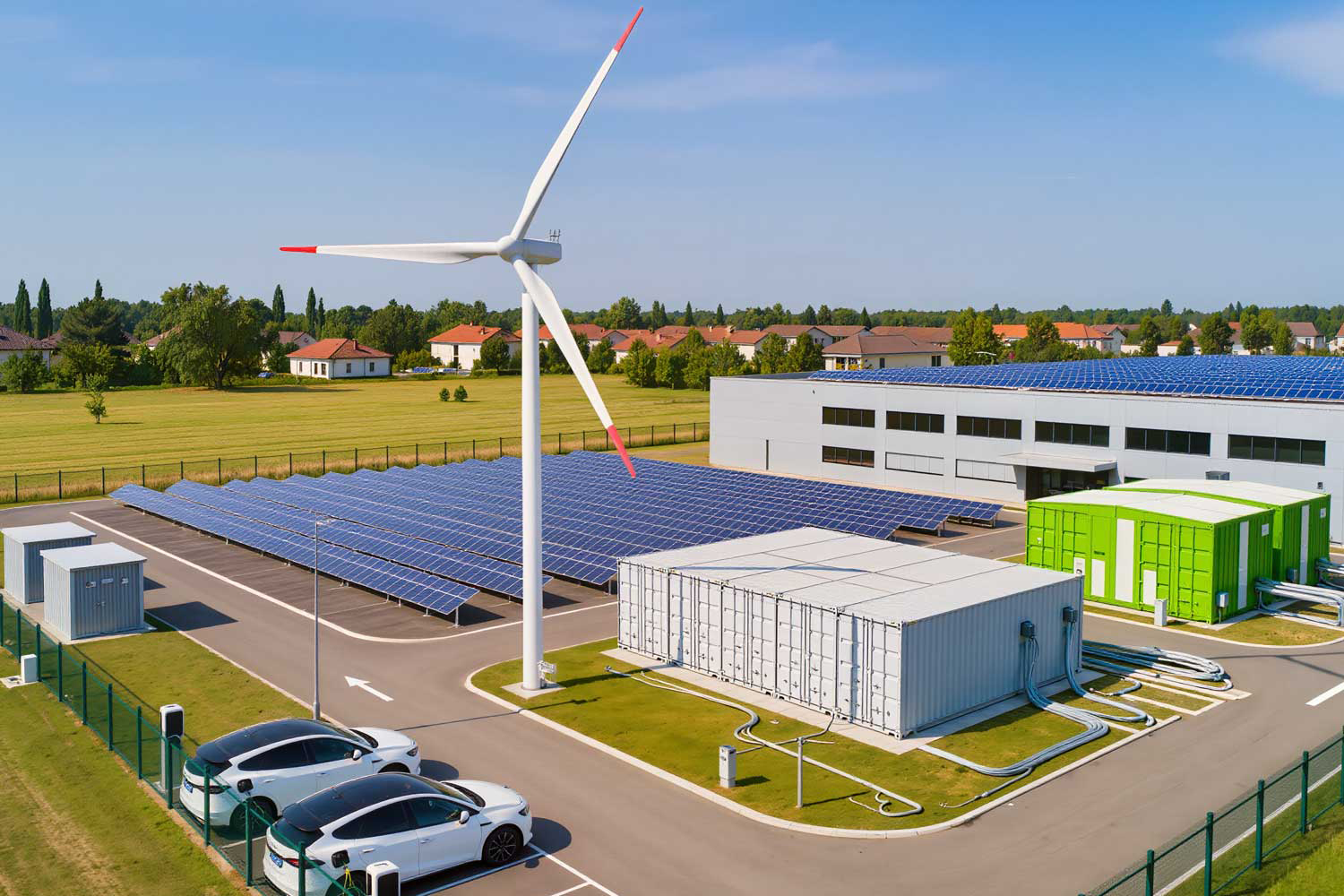
Industrial parks and campuses deploy BESS-based microgrids to serve fleets of electric forklifts, delivery vans, and company vehicles. The microgrid optimizes charge scheduling across dozens of vehicles simultaneously while providing backup power for critical operations.
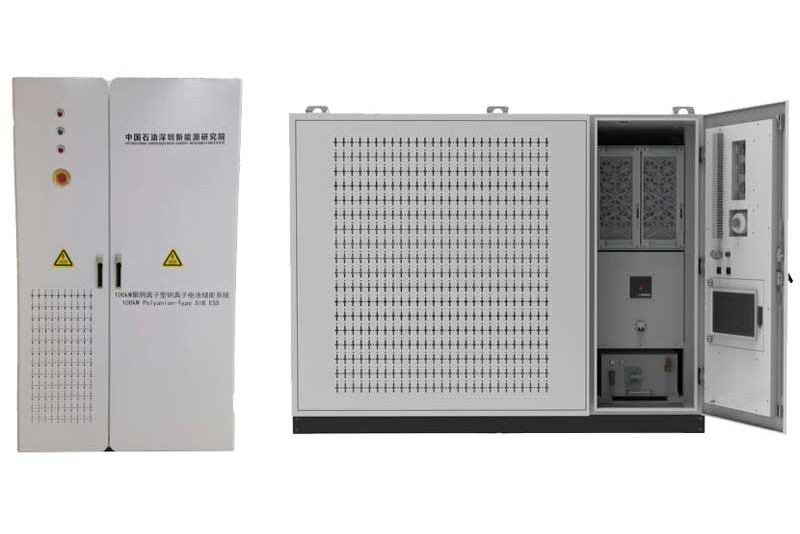
Long-distance EV travel requires reliable ultra-fast charging at highway rest stops. Container-scale BESS (1–4 MWh) enables 150–350 kW charging at locations where grid infrastructure is limited, making cross-country EV travel practical without multi-million dollar grid upgrades.
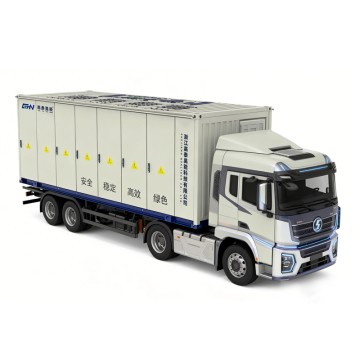
Truck-mounted mobile BESS units provide rapid-deployment EV charging at disaster sites, outdoor events, construction projects, and military operations. These self-contained units deliver megawatt-hours of charging capacity anywhere, anytime — without any grid connection.
Electric bus depots, last-mile delivery fleets, and ride-sharing operators use large-scale containerized BESS to overnight-charge hundreds of vehicles at low off-peak rates, then discharge stored energy for daytime fast-charging top-ups — dramatically cutting operational energy costs.
All-in-one liquid-cooled BESS cabinets integrate seamlessly into commercial buildings — office towers, shopping malls, hotels — providing tenant EV charging while simultaneously performing demand response and peak shaving to reduce the building's overall electricity bill.
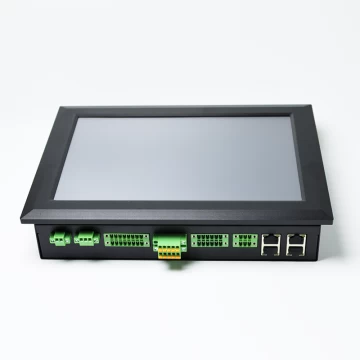
Advanced ESS BMS display and control unit for energy storage applications supporting EV charging infrastructure.
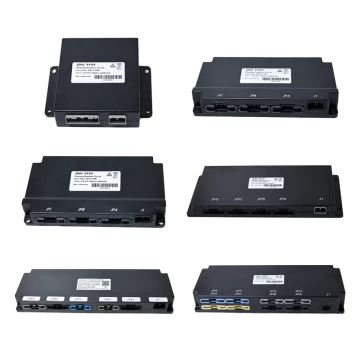
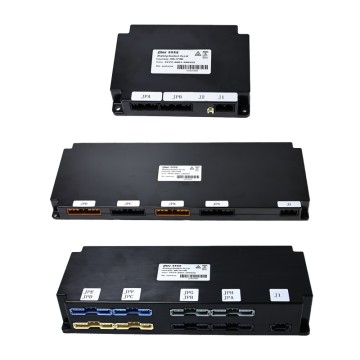
Reliable passive balancing BMS slave units designed for stationary energy storage systems at EV charging stations.
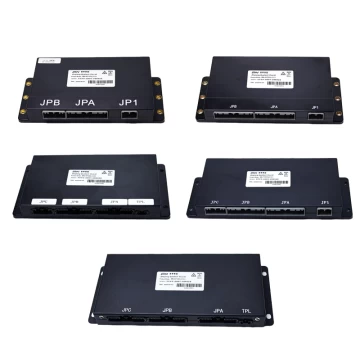
● MCU: S32K312/NXP, 120MHz, 2M Flash, ASIL B● AFE: Automotive-grade precision cell monitoring for high-reliability EV charging storage applications.
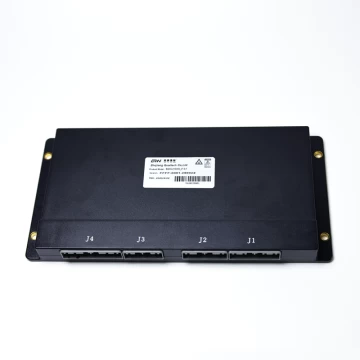
● Supports 1500V total voltage and insulation resistance monitoring — engineered for next-generation ultra-fast EV charging station power storage systems.

All-in-one BMS with voltage, temperature, current sensing. Supports over-charge, over-discharge, over-current, over-temp, under-temp, and short-circuit protection.
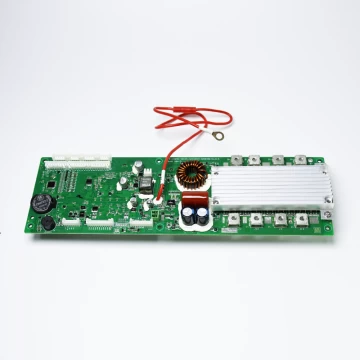
Intelligent LiFePO4 BMS delivering precise cell balancing and protection for residential and commercial EV charging energy storage applications.
Self-contained mobile BESS for rapid-deployment EV charging at any location — events, disaster response, remote sites, or temporary charging infrastructure.
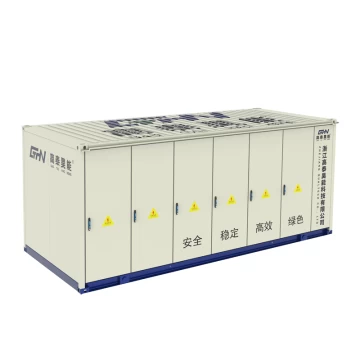
High-capacity containerized BESS with immersion cooling for grid-scale and commercial EV charging station deployments requiring maximum energy density and reliability.

ZheJiang Qualtech Co., Ltd. (referred to as Qualtech) was established in 2011 and is headquartered in Hangzhou, Zhejiang. It is a national high-tech enterprise, the third batch of specialized, refined, and new "little giant" enterprises by the Ministry of Industry and Information Technology, and currently a leading enterprise in both the new energy vehicle BMS and energy storage BMS sub markets in China.
Qualtech's full-stack self-development capabilities — spanning hardware design, embedded firmware, cloud EMS, and manufacturing — enable delivery of complete digital smart energy solutions for EV charging station power storage, from individual BMS units to multi-megawatt containerized systems.
More About QualtechDiscover how Qualtech's complete electric power storage solutions can transform your EV charging infrastructure — from BMS to containerized megawatt systems.
Get a Solution Consultation