
 +86 17326062766
Leave Your Message
-
Contact WhatsApp
-
 Contact Phone
-
 Contact Email
Engineered for sub-millisecond response, superior thermal stability, and maximum energy density across Tier III/IV data centers and industrial hubs.

Ultra-safe immersion liquid cooling architecture delivering non-propagating fire protection and optimal thermal equilibrium for hyperscale computing.
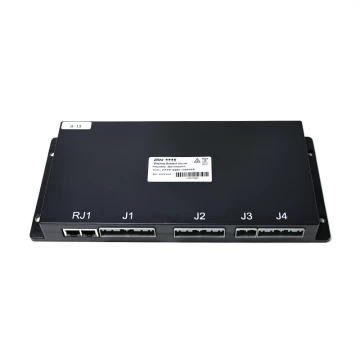
Master rack-level orchestrator ensuring real-time multi-string current equalization, high-voltage insulation detection, and microsecond fault isolation.

High-definition industrial telemetry interface providing deterministic local monitoring, protocol translation, and real-time cloud data gateway synchronization.

Precision voltage and multi-point temperature sampling unit ensuring millivolt-accurate cell balancing for high-density UPS battery strings.
Why Modern Hyperscale Facilities and Essential Infrastructure Are Replacing Legacy Lead-Acid Systems with Advanced Lithium-Ion Battery Energy Storage Systems (BESS).
The explosive proliferation of artificial intelligence (AI), machine learning compute clusters, and cloud-native digital ecosystems has precipitated an unprecedented surge in global electrical power demands. In contemporary hyperscale and enterprise colocation data centers, average rack power densities have escalated from traditional thresholds of 5–10 kW per rack to over 40–100 kW per rack. This drastic amplification in thermal and electrical loading challenges conventional power delivery and backup paradigms, mandating a fundamental evolution in how critical infrastructure secures continuous, resilient, and decarbonized power.
Historically, uninterruptible power supply (UPS) configurations relied heavily on Valve-Regulated Lead-Acid (VRLA) batteries. While VRLA served the sector for decades, its inherent vulnerabilities—including severe footprint limitations, excessive weight loads, short operational lifespans (3–5 years), acute sensitivity to ambient temperature swings, and prolonged recharge cycles—render it obsolete for mission-critical AI data centers. Advanced Lithium Iron Phosphate (LiFePO4 / LFP) battery energy storage systems, fortified by automotive-grade Battery Management Systems (BMS), have emerged as the definitive industrial standard, offering 3x the energy density, up to 15-year operational lifespans, and sub-second dynamic charge/discharge capabilities.
Direct-to-cell immersion and precision liquid cooling mitigate thermal runaway propagation, maintaining internal cell temperature variance within ±2°C across large 314Ah multi-megawatt battery enclosures.
Sub-millisecond transient response guarantees seamless bridge power during utility voltage sags, brownouts, or total grid collapse before auxiliary gas turbines or diesel generators synchronize.
Transforms idle standby capital into dynamic revenue streams via peak shaving, automated demand response (ADR), and synthetic inertia injection to support local electrical transmission grids.
Critical infrastructure encompasses far more than corporate data centers; it includes hospitals, emergency telecommunications backbones, air traffic control towers, rail electrification networks, and smart water treatment facilities. In these operating theatres, power interruption is not an economic inconvenience—it is a catastrophic risk to public safety and national security.
Modern GPU workloads exhibit extreme dynamic power swings (di/dt transients) when thousands of tensor cores simultaneously ramp from idle to peak utilization. Qualtech's high-C-rate immersion-cooled BESS acts as an active electrical shock absorber, dampening busbar voltage fluctuations, stabilizing DC bus inputs to modular UPS units, and shaving peak demand spikes to reduce utility demand charges by up to 35%.
Edge computing nodes deployed at the base of telecommunication towers and distributed metro switching centers require ultra-compact footprint and zero-maintenance operation. Using Qualtech's intelligent 16S–24S smart BMS platforms with integrated environmental telemetry, operators achieve autonomous state-of-health (SOH) tracking, remote thermal throttling, and over 6,000 deep discharge cycles in outdoor-rated enclosures.
Hospitals and medical research labs demand absolute power continuity for intensive care units, surgical theatres, and robotic diagnostic systems. Containerized BESS combined with active-balancing BMS eliminates micro-outages during switchgear transfers, providing deterministic emergency power bridges with zero localized exhaust emissions, compliance with strict hospital indoor air quality standards, and whisper-quiet acoustic profiles.
Electrified railways, high-speed rail switching signaling, and distribution substations encounter severe harmonic distortions and regenerative braking surges. Qualtech 1500V high-voltage containerized energy storage systems buffer these extreme cyclic loads, enabling smooth microgrid islanding, black-start capabilities during catastrophic regional blackouts, and bidirectional energy recuperation.
A full-stack hardware and digital intelligence ecosystem engineered to eliminate single points of failure in mission-critical deployments.
In high-capacity critical energy storage, system integrity hinges on the fidelity of the Battery Management System. Qualtech employs a three-tier distributed architecture comprising Cell Balancing Slave Units (SBMU/ABMU), Rack Cluster Controllers (SBCU-3131), and System-Level Master Control Display Units (QT-SEMU-5819B). This topology ensures localized fail-safe operation: even in the event of an upstream network communication interruption, slave units continue independent cell-level voltage, temperature, and current protection.
Equipped with automotive-grade NXP S32K microcontrollers with ASIL-B functional safety compliance, the system executes real-time State of Charge (SOC), State of Health (SOH), and State of Power (SOP) algorithms with an industry-leading estimation error margin of under ±2%. Insulation monitoring circuits continuously evaluate positive and negative bus-to-ground impedance up to 1500V DC, pre-emptively isolating ground faults before DC arcing can occur.
In data center UPS standby applications, batteries may sit float-charged for extended periods, leading to natural cell drift in open-circuit voltage and internal impedance. Qualtech's active balancing slave modules dynamically transfer charge from higher-voltage cells to lower-voltage cells via bidirectional buck-boost inductors with up to 5A balancing current. Unlike conventional passive balancing that dissipates excess energy as parasitic heat inside the battery module, active balancing recovers over 92% of transfer energy, keeps cell voltage delta strictly below 5mV, and extends the effective pack usable capacity across the entire 15-year lifecycle.
Thermal management is the single most critical factor in lithium battery safety within enclosed data center environments. Traditional forced-air cooling suffers from thermal gradients where cells nearest the fan intake operate significantly cooler than downstream cells, leading to uneven aging and premature string failure. Qualtech's 314Ah immersion-cooled container storage completely submerges battery modules in non-conductive dielectric fluid. This design delivers a 10x improvement in heat dissipation efficiency, restricts maximum operating temperature variations to within 1.5°C, and inherently quenches thermal runaway events at the individual cell level, satisfying rigorous NFPA 855 and UL 9540A safety protocols.






From modular microgrids to integrated PV-storage-charging hubs and heavy industrial backup systems.

Islanded and grid-connected microgrid architectures offering seamless black-start, localized power stability, and dynamic renewable integration for critical campuses.
View More Details

DC-coupled solar generation, high-density energy storage, and ultra-fast EV charging nodes designed for continuous operation without overloading municipal grid feeders.
View More Details

Outdoor distributed energy storage cabinets tailored for manufacturing plants, data centers, and critical telecommunication hubs requiring compact footprint and IP55 protection.
View More Details
Comprehensive product lineup including immersion containers, automotive-grade master controllers, active balance slaves, and smart modular inverters.
Megawatt-scale liquid immersion containerized BESS engineered for non-propagating fire safety and continuous high-density utility bridging.
High-voltage battery rack master controller managing real-time current collection, circuit breaker control, and millisecond fault protection.
Centralized data aggregation and local touchscreen interface with multi-protocol support for SCADA and Data Center Infrastructure Management (DCIM).
Ultra-accurate multi-channel cell voltage and temperature acquisition unit with robust EMI shielding for severe electrical switchroom environments.
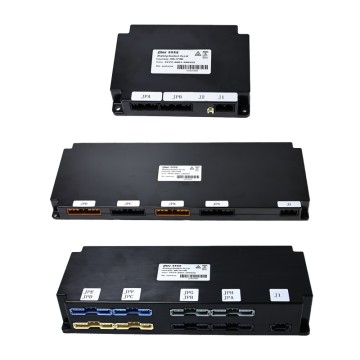
High-efficiency active energy transfer balancing maintaining strict cell consistency, eliminating hot spots, and extending battery bank lifespan.
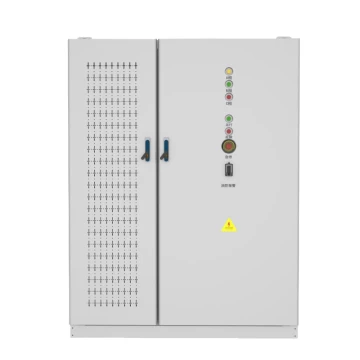
Unified power conversion architecture delivering seamless microgrid transition, bidirectional MPPT regulation, and critical backup support.
Compact rack-mount protection unit with CAN/RS485 communication, ideal for 48V telecom rectifiers and distributed edge computing power drawers.
High-mobility megawatt-class emergency power vehicle enabling swift restoration during severe grid outages and critical infrastructure maintenance.
Stay updated on Qualtech's technological advancements, major project deliveries, and global partnership initiatives.

As a full-stack digital smart energy system solution provider, Qualtech has always been anchored by independent R&D and in-house manufacturing, ensuring reliable delivery of mission-critical energy storage solutions.
Read Full Article →
The results of the prestigious industry award, the Energy Storage Industry Aurora Award (hosted by Energy Storage Talk), have officially recognized Qualtech for its pioneering core link solutions in large-scale storage.
Read Full Article →
The 2026 BRICS Partnership on New Industrial Revolution (BPNIR) Forum centered on industrial innovation, where Qualtech formed strategic alliances to deploy smart storage and charging station networks.
Read Full Article →










