
 +86 17326062766
Leave Your Message
-
Contact WhatsApp
-
 Contact Phone
-
 Contact Email

Designed for high-reliability marine battery packs, optimizing cell voltages and ensuring safety in humid yachting environments.
Learn More →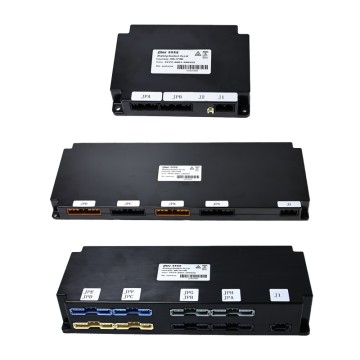
Highly efficient active balancing technology designed to maximize battery lifespan and system efficiency for electric vessels.
Learn More →
Automotive-grade 1500V master controller supporting high-voltage marine configurations, insulation monitoring, and cluster control.
Learn More →
NXP MCU based ASIL-B certified slave units built for robust performance, high accuracy temperature, and voltage sensing at sea.
Learn More →The global maritime sector is undergoing a profound energy transition. Driven by international decarbonization mandates, such as the International Maritime Organization (IMO) targets to reduce greenhouse gas emissions by at least 50% by 2050, shipbuilders and vessel operators are rapidly adopting electric and hybrid propulsion systems. From luxury electric yachts to commercial passenger ferries and offshore support vessels, the demand for high-capacity lithium-ion battery packs has surged.
However, electrifying a marine vessel is vastly different from electrifying a road vehicle. Marine environments present extreme challenges: high humidity, salt mist corrosion, heavy vibrations, and the absolute critical need for system redundancy. If an electric car experiences a battery fault, it can pull over to the side of the road. If a marine vessel experiences a propulsion failure due to a battery shutdown in heavy seas, it poses an immediate threat to the ship, cargo, and human life.
This is where a specialized EV BMS System for Marine Vessels and Yachting becomes indispensable. The Battery Management System (BMS) acts as the brain of the energy storage system, continuously monitoring cell voltage, pack temperature, state of charge (SoC), state of health (SoH), and insulation resistance. It ensures that the lithium-ion batteries operate within safe parameters, preventing thermal runaway and maximizing vessel uptime.
"Safety at sea is non-negotiable. Modern marine EV BMS architectures must incorporate multi-layered safety margins, active thermal management coordination, and fast-acting circuit isolation to meet the stringent standards of global classification societies."
Designing an EV BMS for marine vessels requires solving complex electro-chemical and mechanical engineering problems. Marine battery systems are typically massive, ranging from hundreds of kilowatt-hours (kWh) for private yachts to multiple megawatt-hours (MWh) for commercial ferries. Managing these large-scale systems requires a hierarchical BMS architecture.
A marine battery system is structured in three levels: the Cell Level (managed by Slave Units/BMUs), the Pack/Rack Level (managed by Cluster Controllers/BCUs), and the System Level (managed by a Master Controller/BMS Master). This multi-tier architecture ensures that data from thousands of individual cells is aggregated efficiently. The system must maintain real-time communication via robust industrial protocols such as CAN bus, Modbus, or Ethernet/IP to coordinate with the vessel's overall Energy Management System (EMS).
To minimize copper cabling weight and power transmission losses, marine drivetrains are moving toward high-voltage systems—often operating at 800V, 1000V, or even 1500V DC. At these voltages, insulation integrity is paramount. Saltwater ingress or condensation can cause severe ground faults. Marine EV BMS systems must feature continuous, high-precision insulation monitoring to detect impedance drops between the high-voltage bus and the vessel's hull, triggering preemptive warnings before a short circuit occurs.
Because marine batteries undergo deep discharge cycles and high-rate charging (especially during shore-power fast charging), cell imbalance naturally occurs over time. Passive balancing dissipates excess energy as heat, which adds to the thermal load of the battery room. Active balancing, utilizing units like the Qualtech ABMU Series, transfers charge from stronger cells to weaker ones, minimizing heat generation and reclaiming up to 10% of usable capacity over the battery's lifecycle.



Qualtech offers a complete stack of self-developed Battery Management Systems and Energy Storage Solutions. From automotive-grade master controllers to intelligent slave units, our products are engineered for the most demanding applications.
● MCU: S32K312/NXP, 120MHz, 2M Flash, ASIL B
● AFE: High-precision voltage and temperature sensing.
● Supports 1500V total voltage and insulation resistance monitoring.
● Designed for utility-scale energy storage and marine high-voltage packs.



ZheJiang Qualtech Co., Ltd. (referred to as Qualtech) was established in 2011 and is headquartered in Hangzhou, Zhejiang. It is a national high-tech enterprise, the third batch of specialized, refined, and new "little giant" enterprises by the Ministry of Industry and Information Technology, and currently a leading enterprise in both the new energy vehicle BMS and energy storage BMS sub markets in China.
More news
As maritime electrification scales up, the technologies governing battery safety and performance are evolving rapidly. Future marine EV BMS systems will integrate advanced digital twins, cloud-based predictive analytics, and wireless communication to deliver unprecedented reliability.
Traditional BMS systems calculate SoH using lookup tables and simple coulomb counting. In marine applications, where vessels operate under highly variable wave resistances and ambient temperatures, battery degradation is non-linear. Future BMS architectures leverage machine learning algorithms deployed at the edge or in the cloud. By analyzing historical operation profiles, temperature cycles, and internal resistance fluctuations, the system can predict cell failures weeks in advance, enabling ship operators to perform predictive maintenance during scheduled port stays.
Large battery rooms on electric ships require miles of low-voltage communication cabling. This wiring adds significant weight, introduces potential failure points due to terminal corrosion, and complicates installation. Wireless BMS (wBMS) technology replaces physical data buses with secure, redundant wireless mesh networks. This not only reduces the vessel's displacement but also allows for modular battery pack configurations that can be easily swapped or expanded.
The interaction between the ship's BMS and the port's charging infrastructure is becoming more integrated. High-power shore charging systems (often utilizing megawatt charging standards) require the vessel's BMS to communicate directly with the port's microgrid. By coordinating charging rates with the port's local energy storage systems and renewable generation, charging speeds can be optimized without overloading the local grid.













As a full-stack digital smart energy system solution provider, Qualtech has always been anchored by independent R&D and in-house manufacturing...
Read More →
The results of the prestigious industry award, the Energy Storage Industry Aurora Award, have recently been announced, recognizing Qualtech's core units...
Read More →
Qualtech forged a strategic partnership with an Argentinian counterpart to deploy EV charging station networks during the 2026 BRICS Forum...
Read More →Explore our full lineup of battery management system components, slave units, master controllers, and integrated energy storage options.
Reliable passive balancing units designed for cost-effective and precise voltage monitoring of individual cells.
View Details →
High-efficiency active balance units optimizing pack capacity and reducing system heat generation.
View Details →
Robust master controller supporting high-voltage clusters up to 1500V with insulation safety monitoring.
View Details →
Automotive-grade ASIL-B certified slave unit featuring advanced NXP MCU architectures.
View Details →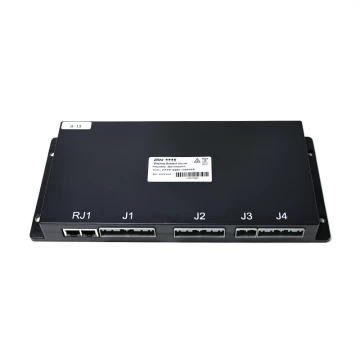
Managing multi-rack battery clusters, coordinating master-slave operations for large-scale maritime energy storage.
View Details →
Compact smart BMS system designed specifically for 16S LiFePO4 chemistry and auxiliary marine power banks.
View Details →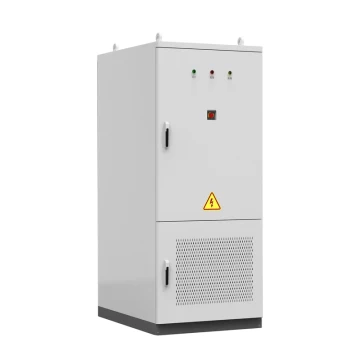
Fully integrated liquid-cooled cabinet incorporating BMS, PCS, EMS, and thermal management systems.
View Details →
Compact all-in-one BMS unit featuring comprehensive sensing and short circuit protection mechanisms.
View Details →