+86 17326062766
Leave Your Message
-
Contact WhatsApp
-
 Contact Phone
-
 Contact Email
Explore our flagship hybrid battery inverter products engineered for renewable energy integration, solar farms, and large-scale energy storage deployments.
A hybrid battery inverter is the technological cornerstone of modern renewable energy systems. Unlike conventional inverters that only convert DC solar power into AC electricity, a hybrid inverter simultaneously manages solar generation, battery charging and discharging, and grid interaction — all within a single intelligent unit.
For solar farms and large-scale renewable energy projects, hybrid battery inverters enable seamless energy dispatch, peak shaving, frequency regulation, and black-start capability. They represent the critical link between intermittent renewable generation and reliable, on-demand power delivery.
The global shift toward decarbonization has elevated the hybrid inverter from a residential convenience to an industrial necessity. Utility-scale solar farms, C&I (Commercial & Industrial) microgrids, and national grid operators now depend on advanced hybrid inverter technology to balance supply and demand in real time.
Traditional solar farms waste up to 30% of potential revenue due to curtailment — when the grid cannot absorb excess generation. Hybrid battery inverters with integrated BESS (Battery Energy Storage Systems) eliminate curtailment by storing surplus energy and releasing it during peak demand or grid stress events, dramatically improving the economic return of solar assets.
The global hybrid inverter market was valued at over USD 2.8 billion in 2023 and is projected to exceed USD 9.5 billion by 2030, growing at a CAGR of approximately 19.2%. Asia-Pacific leads adoption, with China, Australia, and India driving large-scale deployments. Europe's REPowerEU initiative and the US Inflation Reduction Act are accelerating commercial-scale BESS+solar hybrid installations at an unprecedented pace.
Key industry metrics highlighting the explosive growth of hybrid battery inverter adoption across renewable energy and solar farm sectors worldwide.
Modern hybrid inverters for solar farms integrate multiple intelligent functions that go far beyond simple power conversion.
Intelligently routes energy between solar PV arrays, battery storage banks, local loads, and the utility grid — optimizing every watt in real time.
Machine learning algorithms predict solar generation, load demand, and electricity prices to autonomously optimize charging and dispatch strategies.
Tightly coupled Battery Management Systems monitor cell-level voltage, temperature, and SOC to ensure safety, longevity, and peak performance.
Provides frequency regulation, reactive power compensation, and demand response services — turning solar farms into active grid assets.
Maintains critical loads during grid outages and can restart the local microgrid independently — essential for industrial and remote applications.
Cloud-connected dashboards and SCADA integration enable real-time visibility, predictive maintenance, and performance optimization across distributed sites.
The hybrid battery inverter sector is evolving rapidly, driven by policy mandates, cost reductions, and the growing complexity of modern energy systems.
DC-coupled PV-BESS systems are becoming the preferred architecture for utility-scale solar farms, offering higher round-trip efficiency (up to 98%) compared to AC-coupled designs. This topology allows battery charging directly from PV arrays without double conversion losses, making it the gold standard for new solar farm deployments above 1 MW.
The shift toward standardized, containerized energy storage units integrated with hybrid inverters is accelerating. Pre-assembled 20ft and 40ft BESS containers with embedded inverters reduce installation time by up to 60%, lower CAPEX, and enable modular capacity expansion — critical for solar farm developers managing tight project timelines.
The industry is rapidly migrating from 1000V to 1500V DC bus architectures. Higher voltage systems reduce string current, decrease cable losses, and allow larger string configurations — enabling solar farms to achieve lower levelized cost of energy (LCOE) and higher power density per inverter unit.
Leading manufacturers are embedding digital twin technology into hybrid inverter platforms. Virtual replicas of physical systems enable operators to simulate failure scenarios, optimize dispatch schedules, and extend battery cycle life through data-driven degradation modeling — reducing O&M costs by 20–35% over the asset lifetime.
From utility-scale solar farms to industrial microgrids, hybrid inverters are redefining how energy is generated, stored, and consumed.

Hybrid inverters form the backbone of solar-powered microgrids, enabling islanded operation for remote communities, industrial parks, and military bases. They coordinate multiple energy sources — PV, wind, diesel, and battery — ensuring uninterrupted power with zero grid dependency.
View More →
Solar carports and EV charging hubs equipped with hybrid inverters create self-sustaining energy ecosystems. PV generation charges both batteries and EVs simultaneously, while the hybrid inverter manages peak demand, prevents grid overload, and enables V2G revenue streams for facility operators.
View More →
Heavy industrial facilities — steel mills, data centers, chemical plants — deploy hybrid inverter-based BESS to eliminate demand charges, provide UPS-grade backup power, and participate in ancillary services markets. Systems can deliver multi-MW response within milliseconds, protecting sensitive processes from power quality events.
View More →One of the most exciting frontiers for hybrid battery inverters is agrivoltaics — the co-location of solar panels and agricultural production. Hybrid inverters in these settings must manage highly variable loads (irrigation pumps, cold storage, processing equipment) while simultaneously optimizing solar export. Advanced energy management algorithms enable farmers to minimize electricity costs while maximizing both crop yields and solar revenues, creating a new paradigm for rural energy independence.
Qualtech's comprehensive product portfolio spans ESS BMS, EV BMS, Intelligent BMS, and complete Energy Storage Systems for every application scale.

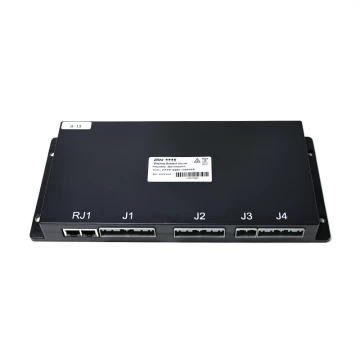
Advanced display and control unit for solar farm energy storage BMS applications.

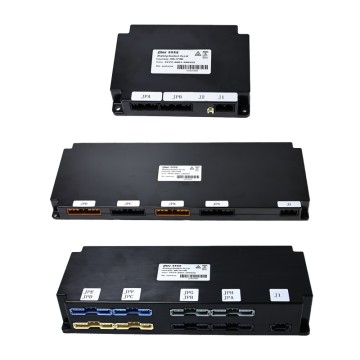
Precision passive balancing BMS slave units for renewable energy storage systems.

● MCU: S32K312/NXP, 120MHz, 2M Flash, ASIL B ● AFE: High-precision cell monitoring for EV applications

● Supports 1500V total voltage and insulation resistance monitoring for next-generation EV platforms

All-in-one BMS with voltage, temperature, and current sensing for intelligent light electric vehicles.

Intelligent LiFePO4 BMS optimized for residential solar storage and home energy management systems.

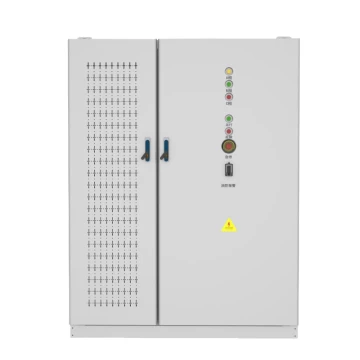
Deployable hybrid inverter BESS solution for solar farm construction sites, disaster response, and temporary grid support.

Utility-scale containerized BESS with immersion cooling, designed for solar farm grid integration and C&I peak shaving.
ZheJiang Qualtech Co., Ltd. (referred to as Qualtech) was established in 2011 and is headquartered in Hangzhou, Zhejiang. It is a national high-tech enterprise, the third batch of specialized, refined, and new "little giant" enterprises by the Ministry of Industry and Information Technology, and currently a leading enterprise in both the new energy vehicle BMS and energy storage BMS sub markets in China.
Qualtech's full-stack capabilities span hardware design, firmware development, cloud-based energy management software, and system integration — enabling end-to-end hybrid battery inverter and BESS solutions for solar farms, microgrids, EV infrastructure, and industrial energy storage globally.
 More About Us
Qualtech's hybrid battery inverter and BMS solutions power projects for globally recognized energy, automotive, and industrial partners.













As a full-stack digital smart energy system solution provider, Qualtech has always been anchored by independent R&D and in-house manufacturing...

The results of the prestigious industry award, the Energy Storage Industry Aurora Award (hosted by Energy Storage Talk), have recently been announced...

The 2026 BRICS Partnership on New Industrial Revolution (BPNIR) Forum opened recently in Xiamen, Fujian Province. Centered on the theme "Building..."
Qualtech's full portfolio of hybrid inverter-compatible BMS and energy storage solutions for solar farms, renewable energy, and industrial applications.