+86 17326062766
Leave Your Message
-
Contact WhatsApp
-
 Contact Phone
-
 Contact Email
Explore our flagship product lineup engineered specifically for commercial and industrial energy storage demands — from intelligent BMS to fully integrated cabinet systems.


The global commercial and industrial energy storage market is undergoing a structural transformation. Rising electricity prices, increasingly frequent grid disruptions, and tightening carbon regulations are compelling businesses to rethink their energy strategies at a fundamental level.
The global C&I battery energy storage market is projected to surpass $45 billion by 2030, growing at a CAGR exceeding 28%. Asia-Pacific leads adoption, driven by China, Japan, and Southeast Asian industrial hubs, while North America and Europe accelerate through policy incentives such as the US Inflation Reduction Act and EU Green Deal mandates.
Industrial facilities in major economies now face electricity costs 40–80% higher than a decade ago. Demand charges alone can account for up to 50% of a commercial facility's energy bill. Hybrid energy storage systems directly address this by enabling peak shaving, demand response participation, and time-of-use arbitrage — delivering ROI within 3–6 years in most markets.
Over 90 countries have committed to net-zero targets. Scope 2 emissions reductions are now a boardroom priority. Hybrid BESS paired with on-site renewables enables measurable carbon footprint reduction, supports ESG reporting, and qualifies facilities for green financing instruments and carbon credit schemes.
Extreme weather events and aging grid infrastructure have increased commercial power outage frequency by over 60% in the past decade. For manufacturers, data centers, and healthcare facilities, a single hour of downtime can cost millions. Hybrid ESS provides seamless UPS-grade backup, ensuring operational continuity without diesel generator dependency.
Corporate PPA deals and rooftop solar deployments are accelerating. However, solar intermittency creates grid stability challenges. Hybrid energy storage systems act as the critical buffer — absorbing excess generation, smoothing output curves, and enabling self-consumption rates above 90%, dramatically improving renewable investment returns.
Next-generation HESS platforms integrate AI-powered energy management systems (EMS) that predict load patterns, optimize charge/discharge cycles, and autonomously respond to real-time grid signals. Cloud connectivity enables remote monitoring, predictive maintenance, and continuous performance optimization — turning energy storage into a smart digital asset.
Unlike single-technology systems, hybrid energy storage combines multiple storage technologies and energy sources under one intelligent management platform — delivering superior performance across all operational scenarios.
A true Hybrid Energy Storage System (HESS) integrates lithium-ion batteries, supercapacitors, and/or flow batteries with solar PV, grid connection, and backup generation — all orchestrated by an intelligent EMS. This architecture delivers 10–35% greater efficiency and 2–3x longer system lifespan compared to single-source storage, while providing the flexibility to respond to multiple revenue streams simultaneously.
Automatically discharge stored energy during peak tariff periods and high-demand windows. Industrial facilities typically achieve 20–40% reduction in monthly demand charges, with payback periods under 5 years in most markets.
Millisecond-level switchover to battery backup ensures zero-interruption power continuity. Critical manufacturing lines, server rooms, and cold-chain facilities maintain operations during grid outages without manual intervention.
Store surplus PV generation for use during evening peak hours or cloudy periods. HESS with DC-coupling achieves conversion efficiency above 97%, maximizing every kilowatt-hour generated by on-site solar assets.
Participate in frequency regulation, voltage support, and demand response programs. Industrial HESS assets can generate ancillary service revenues of $50,000–$200,000 annually depending on market and system size.
Shift consumption to periods of high renewable grid penetration. Pair with on-site solar and wind to achieve Scope 2 emission reductions of 60–100%, supporting corporate sustainability commitments and ESG ratings.
AI-driven BMS continuously monitors cell-level health, temperature, and state-of-charge. Predictive algorithms extend battery cycle life by 15–25% and provide early fault warnings, minimizing unplanned downtime and replacement costs.
From energy capture to intelligent dispatch, a modern hybrid energy storage system operates as a fully automated energy management ecosystem.
Solar PV, wind, and grid power are simultaneously captured and routed through the Power Conversion System (PCS). DC-coupling maximizes conversion efficiency and minimizes energy losses at the point of generation.
The Battery Management System (BMS) manages cell-level charging with passive or active balancing, thermal management via liquid or immersion cooling, and real-time state-of-health monitoring across all battery modules.
The Energy Management System (EMS) uses AI forecasting of load profiles, weather patterns, and electricity prices to autonomously schedule charge/discharge cycles for maximum economic and operational benefit.
Real-time data streams to cloud platforms enable remote performance monitoring, OTA firmware updates, anomaly detection, and continuous optimization — ensuring peak system performance throughout the asset lifecycle.
The commercial and industrial energy storage landscape is evolving rapidly. These six macro-trends are defining the next generation of HESS deployment strategies.
As energy density increases, thermal management becomes critical. Liquid-cooled and immersion-cooled BESS achieve 30–50% better thermal uniformity than air-cooled systems, extending cell life and enabling higher charge/discharge rates in compact footprints — essential for space-constrained industrial sites.
EMS platforms are evolving from rule-based controllers to AI-native systems that learn facility-specific patterns. Machine learning models now predict demand spikes 24–48 hours ahead with over 92% accuracy, enabling proactive optimization that static systems cannot achieve.
Industrial facilities with EV fleets are increasingly integrating V2G capabilities, using parked vehicles as distributed storage assets. This bidirectional charging capability adds flexible capacity without additional battery investment, transforming fleet management into an energy asset strategy.
Retired EV batteries with 70–80% remaining capacity are finding a second life in stationary C&I storage applications. With procurement costs 40–60% below new cells, second-life BESS is rapidly emerging as a cost-competitive option for facilities with moderate cycling requirements.
Increasingly, C&I facilities are deploying HESS with full microgrid capability — able to island from the main grid during emergencies and operate autonomously. This is particularly critical for manufacturing plants in regions with grid instability and for facilities with stringent uptime SLAs.
Modern HESS platforms adopt modular designs that allow capacity expansion without system replacement. Starting from 100kWh and scaling to multi-MWh in standardized increments, businesses can right-size initial investment and expand as energy needs grow — reducing financial risk and accelerating deployment timelines.
Hybrid energy storage systems are transforming operations across diverse commercial and industrial verticals. Here are the most impactful deployment scenarios driving adoption today.



Mission-critical facilities deploy HESS as UPS replacement and demand charge management tool. Lithium-iron phosphate chemistry offers 10+ year lifespan with zero maintenance — eliminating lead-acid battery room requirements and reducing total cost of ownership by 45%.
Steel mills, cement plants, and chemical facilities face extreme demand spikes during motor startups and process changes. HESS with supercapacitor hybridization absorbs these transients, preventing costly demand charge spikes and protecting sensitive equipment from voltage fluctuations.
Shopping malls, office towers, and hotel complexes use HESS to flatten load profiles, participate in utility demand response programs, and achieve LEED/BREEAM green building certifications — enhancing property value and attracting ESG-conscious tenants.
Off-grid and remote industrial sites replace diesel gensets with solar-BESS hybrid systems, reducing fuel costs by 60–80% and cutting CO₂ emissions dramatically. Mobile energy storage vehicles provide flexible backup capacity for temporary operations and emergency response.
Temperature-sensitive operations require uninterrupted power with zero tolerance for outages. HESS provides seamless backup while enabling participation in grid frequency regulation markets — turning a pure cost center into a revenue-generating asset.
Container ports and logistics hubs deploy shore power HESS to electrify vessel berthing, crane operations, and fleet charging — achieving port decarbonization goals while managing the massive power demand variability inherent in port operations.
Advanced display and control interface for commercial and industrial battery management systems.
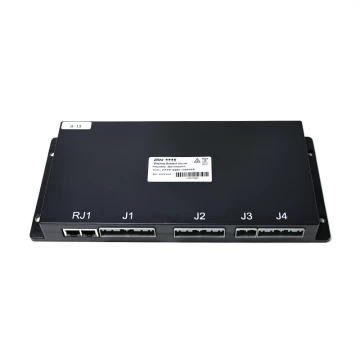
Precision passive balancing slave units designed for large-scale commercial energy storage systems.

MCU: S32K312/NXP, 120MHz, 2M Flash, ASIL B • AFE: High-precision cell monitoring for EV applications.

Supports 1500V total voltage and insulation resistance monitoring. Designed for next-generation high-voltage EV platforms.

All-in-one BMS with voltage, temperature, and current sensing. Supports over-charge, over-discharge, over-current, over-temp, under-temp, and short-circuit protection.

Smart BMS for 16S LiFePO4 configurations. Ideal for home and light commercial storage with full protection suite and communication interfaces.

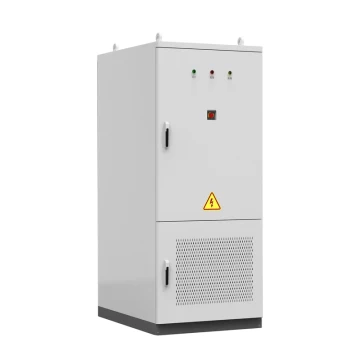
Deployable mobile BESS platform for temporary power supply, emergency response, and off-grid industrial operations.

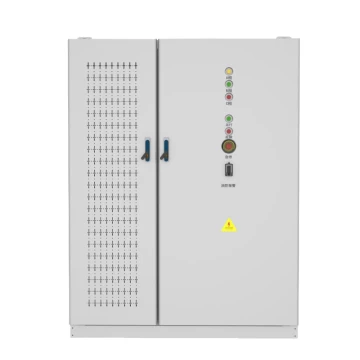
High-density containerized BESS with immersion cooling technology for grid-scale and large commercial & industrial deployments.
ZheJiang Qualtech Co., Ltd. (referred to as Qualtech) was established in 2011 and is headquartered in Hangzhou, Zhejiang. It is a national high-tech enterprise, the third batch of specialized, refined, and new "little giant" enterprises by the Ministry of Industry and Information Technology, and currently a leading enterprise in both the new energy vehicle BMS and energy storage BMS sub markets in China.
As a full-stack digital smart energy system solution provider, Qualtech delivers end-to-end hybrid energy storage solutions for commercial and industrial facilities — from cell-level BMS hardware to cloud-connected EMS platforms. With over 130 intellectual property rights and partnerships with 1,000+ global customers, Qualtech stands at the forefront of the energy storage revolution.
 More About Us
Qualtech's hybrid energy storage solutions power commercial and industrial facilities across the globe, trusted by leading enterprises in automotive, energy, manufacturing, and infrastructure sectors.












Stay updated with Qualtech's latest innovations, partnerships, and industry achievements in hybrid energy storage for commercial and industrial applications.

As a full-stack digital smart energy system solution provider, Qualtech has always been anchored by independent R&D and in-house manufacturing.

The results of the prestigious industry award, the Energy Storage Industry Aurora Award (hosted by Energy Storage Talk), have recently been announced.

The 2026 BRICS Partnership on New Industrial Revolution (BPNIR) Forum opened recently in Xiamen, Fujian Province, centered on "Building an Open, Inclusive and Interconnected World."
From intelligent BMS components to fully integrated containerized systems — Qualtech's complete product range covers every layer of the commercial and industrial hybrid energy storage stack.