+86 17326062766
Leave Your Message
-
Contact WhatsApp
-
 Contact Phone
-
 Contact Email
Purpose-built hybrid energy storage systems and intelligent BMS for first responders, mobile command, and disaster recovery operations.
Understanding the technology that powers modern emergency response and disaster relief operations worldwide.
A Hybrid Energy Storage System (HESS) integrates two or more complementary energy storage technologies — most commonly high-energy-density lithium-ion (LiFePO4) batteries combined with supercapacitors, fuel cells, or renewable energy sources such as solar PV — to deliver power that is simultaneously high in energy capacity, rapid in response, and resilient under extreme conditions. Unlike single-technology systems, HESS architectures leverage the strengths of each component: batteries provide sustained energy delivery over hours, while supercapacitors or fuel cells handle instantaneous peak demand surges. This synergy is precisely what emergency operations require, where power demand is unpredictable, infrastructure is absent, and failure is not an option.
In disaster scenarios — earthquakes, floods, wildfires, hurricanes — the utility grid is often the first casualty. A well-designed HESS provides autonomous, off-grid power to hospitals, command centers, communication nodes, and rescue equipment within minutes of deployment, bridging the critical gap between disaster onset and infrastructure restoration.
The intelligent core of any HESS is its Battery Management System (BMS) — the digital brain that monitors cell voltages, temperatures, state-of-charge, state-of-health, and balances energy flows in real time. Advanced BMS platforms, such as those developed by Qualtech, integrate multi-layer protection algorithms, cloud connectivity, and predictive diagnostics to ensure maximum uptime in the field, even when ambient conditions are harsh and maintenance is impossible.
Six core advantages that make hybrid energy storage the standard of choice for mission-critical power.
Containerized and truck-mounted HESS units can be transported by road, rail, or air and operational within 30 minutes of arrival at a disaster site, providing immediate power to life-safety equipment.
By combining solar PV, diesel generators, and battery storage, HESS ensures continuous power even if one source fails — critical when fuel resupply chains are disrupted during major disasters.
Immersion-cooled and ruggedized HESS designs operate across -20°C to +55°C ambient temperatures, with IP65+ enclosures resistant to dust, water ingress, and physical shock from debris or aftershocks.
Cloud-based BMS platforms enable incident commanders to monitor energy status, predict remaining runtime, and dispatch resupply before power is exhausted — all from a mobile device in the field.
Solar-charged HESS units produce no exhaust fumes or noise — essential for indoor medical triage, confined rescue spaces, and residential neighborhoods where diesel generator operation is hazardous.
From portable 5kWh first-responder packs to 1MWh+ containerized grid-support systems, modular HESS designs scale to match the exact power requirements of any emergency scenario without overprovisioning.
A rapidly expanding global market driven by climate events, grid fragility, and first-responder modernization programs.
The global market for emergency and backup energy storage systems is undergoing a structural transformation. According to industry analysts, the emergency power and resilience storage segment is projected to exceed USD 18 billion by 2030, growing at a CAGR of over 14%, driven by the increasing frequency of climate-related disasters, aging grid infrastructure in developed economies, and accelerating government mandates for critical facility resilience.
Governments across the US, EU, Japan, and Australia have dramatically increased procurement budgets for mobile HESS units following high-profile disaster events. FEMA's resilience framework, the EU's Civil Protection Mechanism, and Japan's National Resilience Plan all now include provisions for pre-positioned hybrid energy storage assets at regional emergency depots.
On the commercial side, hospitals, data centers, telecommunications providers, and water treatment facilities are the fastest-growing adopters of HESS for emergency backup. These sectors cannot tolerate even milliseconds of power interruption, and traditional diesel UPS systems are increasingly being replaced by cleaner, faster-responding lithium-based hybrid systems with solar charging capability.
China's domestic HESS market, where Qualtech operates as a leading BMS supplier, has grown at over 35% annually since 2021, with emergency and mobile storage applications representing one of the fastest-growing sub-segments.
The next generation of disaster-response energy systems is being defined by six transformative technology trends.
Machine learning algorithms embedded in next-generation BMS platforms predict load demand, optimize charge-discharge cycles, and preemptively alert operators to battery degradation — extending system life by up to 30% in field conditions.
DC-coupled PV-BESS integration eliminates AC conversion losses, improving round-trip efficiency to over 95%. This architecture allows emergency units to self-recharge from portable solar arrays even in remote off-grid locations.
Emergency response fleets equipped with bidirectional EV chargers can use vehicle batteries as distributed storage nodes, creating a mobile microgrid that supplements fixed HESS capacity during extended disaster operations.
Liquid immersion cooling technology, already proven in data centers, is being adapted for field-deployable HESS units, enabling safe high-rate charging and discharging in tropical heat or arctic cold without thermal runaway risk.
Integration of 5G and satellite IoT modules into BMS units allows real-time energy data transmission from disaster zones where terrestrial networks are destroyed, enabling centralized emergency energy management at national scale.
Standardized battery module interfaces allow responders to rapidly stack and connect additional capacity units in the field without tools or specialized training, scaling from 10kWh to 500kWh in under two hours.
How hybrid energy storage systems are deployed across the full spectrum of disaster response and first-responder operations.
Field hospitals deployed in earthquake or flood zones require stable, clean power for ventilators, surgical lighting, imaging equipment, and refrigerated medication storage. HESS units with UPS-grade power quality (less than 10ms switchover) ensure zero interruption to life-critical equipment. Solar charging extends autonomous operation beyond 72 hours without resupply, while silent battery operation prevents interference with sensitive medical instruments.
Satellite uplinks, radio relay stations, and mobile command vehicles are the nervous system of disaster response. HESS provides uninterrupted power to these nodes with multi-day autonomy. Intelligent BMS monitoring allows communications officers to prioritize power allocation — maintaining radio links even when total available capacity is reduced — ensuring coordination between field teams, hospitals, and national emergency management agencies.
Modern firefighting and urban search-and-rescue operations rely on electric-powered tools: hydraulic cutters, thermal imaging cameras, drone fleets, and LED lighting arrays. Truck-mounted BESS units integrated into fire apparatus provide on-demand power for all these tools simultaneously, while solar panels on apparatus roofs maintain charge during extended operations. Explosion-proof HESS designs are certified for use in gas-leak and chemical hazard environments.
Flood scenarios present unique power challenges: submersion risk, high humidity, and the need to power water pumps, dewatering equipment, and emergency lighting across large areas. IP67-rated HESS units with waterproof connectors and corrosion-resistant enclosures are deployed on elevated platforms or floating barges, providing power to rescue teams working in inundated areas where conventional power infrastructure is completely non-functional.
When major grid failures affect urban areas, containerized HESS units — like Qualtech's 314Ah immersion-cooled container systems — can be rapidly deployed to substations or distribution points to provide temporary grid support, stabilize voltage, and prioritize power delivery to hospitals, water treatment plants, and emergency shelters while permanent repairs are completed.
SAR operations in mountains, forests, or deserts require portable HESS solutions that can be helicopter-lifted or carried by teams on foot. Lightweight LiFePO4 battery packs with integrated solar charging provide multi-day power for GPS tracking systems, drone base stations, thermal cameras, and medical equipment at remote rescue camps far beyond the reach of any power infrastructure.
From microgrid systems to integrated light-storage-charging — Qualtech's HESS solutions power every layer of emergency infrastructure.



Explore Qualtech's full range of BMS and energy storage solutions for emergency and disaster relief applications.

Advanced ESS BMS display and control unit for emergency energy storage monitoring and management.

Reliable passive balancing slave units designed for large-scale ESS deployments in disaster relief infrastructure.

MCU: S32K312/NXP, 120MHz, 2M Flash, ASIL B · AFE: precision multi-cell monitoring for EV first-responder fleets.

Supports 1500V total voltage and insulation resistance monitoring — engineered for high-voltage emergency response EV platforms.

All-in-one BMS with voltage, temperature, and current sensing; supports over-charge, over-discharge, over-current, and short-circuit protection.

Intelligent 16S LiFePO4 BMS with multi-layer protection for residential emergency backup and disaster relief home storage applications.

Rapid-deployment truck-mounted BESS for temporary and emergency power delivery at disaster sites and first-responder staging areas.

Industrial-grade containerized BESS with immersion cooling for grid stabilization and commercial emergency backup during disaster events.
ZheJiang Qualtech Co., Ltd. (referred to as Qualtech) was established in 2011 and is headquartered in Hangzhou, Zhejiang. It is a national high-tech enterprise, the third batch of specialized, refined, and new "little giant" enterprises by the Ministry of Industry and Information Technology, and currently a leading enterprise in both the new energy vehicle BMS and energy storage BMS sub markets in China.
Qualtech's mission extends beyond commercial markets — the company's BMS and HESS technologies are deployed in mobile emergency power systems, disaster relief microgrids, and first-responder vehicle platforms across Asia and internationally. With over 130 intellectual property rights and a dedicated R&D team, Qualtech continues to push the boundaries of what is possible in field-deployable energy storage technology.

Collaborating with global leaders in energy, automotive, and emergency infrastructure to deliver world-class HESS solutions.












From intelligent BMS controllers to mobile truck-mounted BESS — every product engineered for reliability when lives depend on power.
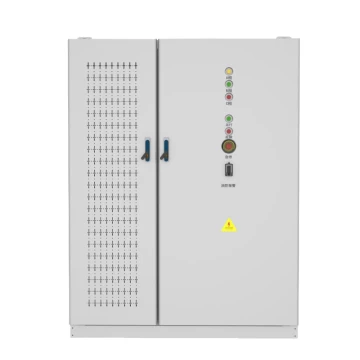 All-in-One Solar Storage Inverter – PV-BESS DC-Coupled for Emergency Relief
Qualtech QT-SEMU-5819B Battery Management System Display and Control Unit
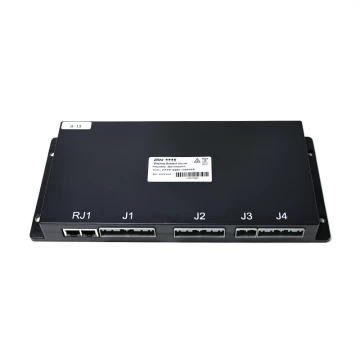 Qualtech SBCU-3131 Battery Management System Cluster Controller
Standard Container Energy Storage – 314Ah Immersion-Cooled for Emergency Grid
PBMS-48100 Smart Li-ion BMS – 16S LiFePO4 for Emergency Home Storage
Qualtech SBMU Series Passive Balancing Battery Management System Slave Units
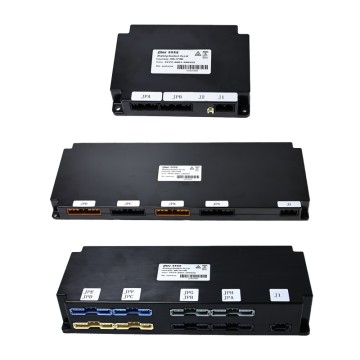 Qualtech ABMU Series Active Balance Battery Management System Slave Units for Energy Storage
Mobile Energy Storage Vehicle – Truck-Mounted BESS for Emergency Disaster Relief