+86 17326062766
Leave Your Message
-
Contact WhatsApp
-
 Contact Phone
-
 Contact Email
Purpose-engineered battery management and energy storage systems designed to meet the demanding requirements of marine vessels and yachting environments — reliable, scalable, and intelligent.


A Hybrid Energy Storage System (HESS) for marine vessels combines two or more complementary energy sources — most commonly lithium-ion battery banks paired with diesel generators, fuel cells, or supercapacitors — into a unified, intelligently managed power architecture. The system dynamically distributes power loads, recovers regenerative energy, and minimizes fuel consumption while maintaining operational reliability at sea.
Unlike conventional marine power setups that rely solely on diesel engines, HESS platforms introduce a layered approach: the battery pack handles peak loads and transient demands, while the primary generator or fuel cell operates at its optimal efficiency point. The result is dramatically lower fuel costs, reduced emissions, quieter operation, and extended equipment life.
Modern HESS solutions for marine environments integrate advanced Battery Management Systems (BMS), Power Conversion Systems (PCS), Energy Management Systems (EMS), and Thermal Management Systems (TMS) — forming a complete digital intelligence layer over the physical energy assets aboard.
Hybrid Energy Storage Systems deliver a transformational upgrade over conventional marine power — combining environmental compliance, operational efficiency, and intelligent automation into a single integrated platform.
HESS absorbs sudden power spikes during maneuvering, anchoring, or equipment startups, allowing the primary generator to run at a steady, efficient load point — extending engine life and reducing maintenance intervals significantly.
Vessels can operate entirely on battery power within emission-controlled areas (ECAs), ports, and marinas — meeting increasingly strict IMO and EU maritime environmental regulations without sacrificing performance or comfort.
For luxury yachts and passenger ferries, battery-only operation eliminates generator noise and vibration — delivering an unparalleled onboard experience while reducing acoustic pollution in sensitive marine ecosystems.
Advanced EMS algorithms continuously optimize power distribution between sources, predict demand patterns, and adapt to weather and sea conditions — maximizing range and minimizing operational costs in real time.
Multi-layer BMS protection monitors cell voltage, temperature, current, and insulation resistance at millisecond intervals. In the event of primary power failure, battery reserves provide emergency propulsion and hotel loads.
HESS architectures seamlessly integrate solar panels, wind turbines, and shore power charging — enabling vessels to harvest clean energy at anchor or in port, further reducing fuel dependency across multi-day voyages.
The marine HESS sector is experiencing rapid commercial acceleration, driven by tightening environmental regulations, volatile fuel prices, and the broader electrification of transportation infrastructure worldwide.
Across Scandinavia, Japan, and the Pacific Northwest, hybrid-electric and fully electric ferry operations have demonstrated 50–70% reductions in fuel costs on short-to-medium routes. Norway's fjord ferry network — widely regarded as the global benchmark — operates over 70 hybrid and electric vessels, with dozens more on order. Commercial operators cite payback periods of 4–7 years on HESS retrofit investments.
The superyacht market is increasingly specifying HESS as a standard feature rather than an option. Owners demand silent anchorage, zero-emission port entry, and the ability to run hotel systems — air conditioning, lighting, entertainment — from battery banks overnight without starting generators. Leading European shipyards now offer HESS as a core design element in vessels from 30 to 100+ meters.
Dynamic positioning (DP) operations — where vessels must hold precise station against wind and current — benefit enormously from HESS. Battery systems respond to power demand changes in milliseconds, far faster than diesel generators, improving DP accuracy and reducing the risk of blackouts. Offshore wind farm support vessels are among the fastest-growing adopters of marine hybrid technology.
China's Yangtze River, Europe's Rhine and Danube corridors, and Southeast Asian river networks are seeing rapid deployment of hybrid and electric cargo vessels. Regulatory pressure from port authorities — particularly in major Chinese cities — is accelerating the transition, with government subsidies available for HESS retrofits on existing inland fleet vessels.
From luxury cruising to commercial logistics, hybrid energy storage systems unlock new operational paradigms across the full spectrum of marine applications.



The marine hybrid energy storage landscape is evolving rapidly. These are the defining technological and commercial trends shaping the next decade of maritime electrification.
Next-generation solid-state battery cells promise 2–3x the energy density of current LiFePO4 chemistry, dramatically reducing the weight and volume of marine HESS installations — a critical factor for weight-sensitive yacht and vessel applications where every kilogram matters for performance and stability.
Machine learning algorithms trained on route data, weather forecasts, sea state information, and historical consumption patterns are enabling EMS platforms to predict energy demand hours in advance — pre-charging batteries before high-demand periods and optimizing generator runtime scheduling with unprecedented precision.
Hydrogen fuel cells are emerging as the range-extender of choice for zero-emission long-range vessels. Combined with lithium battery banks in a tri-hybrid architecture, fuel cells provide steady baseload power while batteries handle transient peaks — enabling true zero-emission ocean crossings for the first time.
IoT-enabled BMS platforms with cloud connectivity allow fleet operators to monitor battery health, energy consumption, and system performance across entire vessel fleets from a single dashboard — enabling predictive maintenance, remote diagnostics, and continuous optimization of energy strategies across geographically dispersed operations.
IMO's Carbon Intensity Indicator (CII) regulations, the EU's FuelEU Maritime initiative, and increasingly stringent Emission Control Area (ECA) requirements are creating powerful commercial incentives for HESS adoption. Vessels failing to meet CII ratings face port surcharges and chartering restrictions — making HESS investment a regulatory compliance necessity, not merely an efficiency option.
The industry is moving away from bespoke, vessel-specific designs toward standardized modular HESS building blocks — containerized battery modules, plug-and-play BMS units, and standardized communication protocols — that dramatically reduce installation time, cost, and complexity while enabling easy capacity expansion as vessel energy needs evolve.
Qualtech's comprehensive range of BMS, EMS, and energy storage solutions — engineered for the rigorous demands of marine vessel and yachting applications.

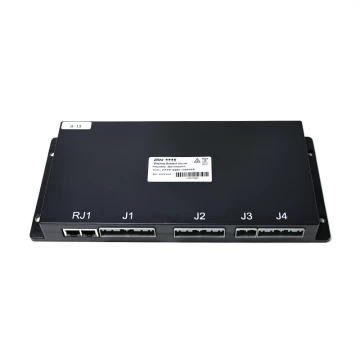
Advanced display and control unit for ESS battery management — ideal for marine monitoring applications requiring real-time data visualization and system control.

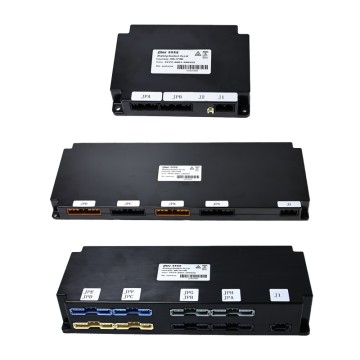
Reliable passive balancing slave units providing precise cell-level monitoring and protection for large-format marine energy storage battery packs.

● MCU: S32K312/NXP, 120MHz, 2M Flash, ASIL B ● AFE: Advanced cell monitoring with automotive-grade reliability — adaptable for marine electric propulsion systems requiring highest safety standards.

● Supports 1500V total voltage and insulation resistance monitoring ● Designed for high-voltage marine hybrid propulsion architectures requiring maximum safety and performance.

Integrated voltage, temperature, and current sensing with comprehensive protection suite — ideal for marine auxiliary power and onboard equipment energy management.
Smart 16S LiFePO4 BMS delivering intelligent cell balancing and protection — perfectly suited for yacht hotel load battery banks requiring reliable overnight energy storage.
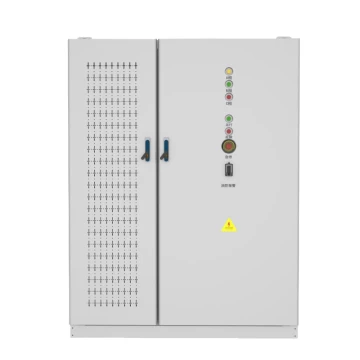
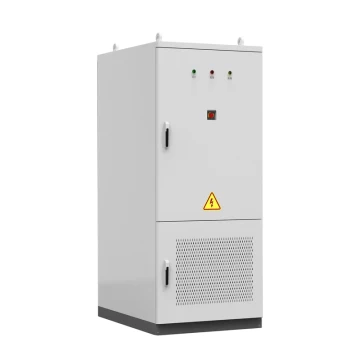
Deployable mobile BESS platform providing rapid emergency power support for vessels in port — a critical backup solution for marine facilities and shipyard operations.

Containerized 314Ah immersion-cooled BESS delivering high-density energy storage for marine grid connection, shore power infrastructure, and large vessel hybrid systems.
Qualtech's integrated energy solutions power a diverse range of marine and industrial applications — from autonomous microgrid systems to integrated light-storage-charging platforms for yachts and vessels.
 View More
View More
ZheJiang Qualtech Co., Ltd. (referred to as Qualtech) was established in 2011 and is headquartered in Hangzhou, Zhejiang. It is a national high-tech enterprise, the third batch of specialized, refined, and new "little giant" enterprises by the Ministry of Industry and Information Technology, and currently a leading enterprise in both the new energy vehicle BMS and energy storage BMS sub markets in China.
With over a decade of R&D expertise in battery management technology, Qualtech delivers intelligent, full-stack energy solutions for marine vessels, yachts, electric vehicles, commercial energy storage, and grid-scale applications — backed by 130+ intellectual property rights and a global customer base exceeding 1,000 partners.
 More news
Qualtech collaborates with world-leading automotive, marine, and energy industry partners to deliver proven, certified hybrid energy storage solutions across global markets.













As a full-stack digital smart energy system solution provider, Qualtech has always been anchored by independent R&D and in-house manufacturing...

The results of the prestigious industry award, the Energy Storage Industry Aurora Award (hosted by Energy Storage Talk), have recently been announced...

The 2026 BRICS Partnership on New Industrial Revolution (BPNIR) Forum opened recently in Xiamen, Fujian Province. Centered on the theme "Building..."
Explore Qualtech's complete portfolio of battery management systems, energy storage cabinets, and intelligent power solutions designed for marine, yachting, and commercial energy applications.