
 +86 17326062766
Leave Your Message
-
Contact WhatsApp
-
 Contact Phone
-
 Contact Email
Explore our industrial-tier hybrid conversion units, intelligent master controllers, and DC-coupled battery energy systems built for mission-critical industrial continuous operation.
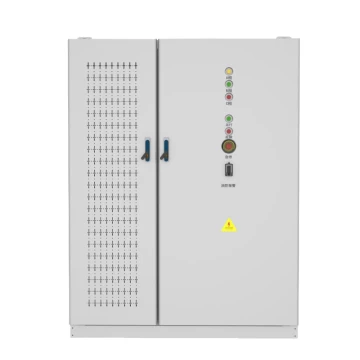
High-efficiency DC-coupled bi-directional hybrid inverter integrating high-voltage solar MPPT and industrial energy storage battery conversion into a single unit.
Explore Specifications →
Centralized Human-Machine Interface and system supervisory controller delivering real-time telemetry, thermal tracing, and state-of-health tracking for industrial racks.
Explore Specifications →
Powered by NXP S32K312 MCU (120MHz, 2M Flash), automotive-grade AFE delivering sub-millivolt balancing accuracy and instantaneous over-current micro-second reaction.
Explore Specifications →
Purpose-engineered for high-voltage C&I containers, providing continuous insulation impedance tracking, multi-bus CAN/Modbus bridging, and grid synchrony.
Explore Specifications →Global industrial operating environments are undergoing an unprecedented structural transition. Volatile wholesale electricity pricing, punitive peak-demand capacity charges, strict corporate ESG decarbonization mandates, and frequent transmission-level outages have turned power reliability into a strategic business risk. Historically, commercial facilities relied on rudimentary grid-tied string inverters coupled with diesel generators for emergency backup. Today, this configuration fails both economically and environmentally.
The adoption of modern hybrid inverters for commercial and industrial (C&I) facilities represents a tectonic paradigm shift. A hybrid inverter serves as an integrated energetic brain—combining multi-channel maximum power point tracking (MPPT) solar converters, bi-directional AC/DC battery storage chargers, and a millisecond-speed automated transfer switch (ATS) into a single unified topology. In contrast to separate solar inverters and battery conversion systems (PCS), C&I hybrid platforms eliminate redundant conversion stages, reduce equipment footprint by up to 35%, and yield round-trip efficiency (RTE) metrics exceeding 97.5%.
In many industrial utilities across North America, Europe, and Asia-Pacific, maximum demand charges can represent up to 40% to 60% of an enterprise’s total monthly energy expenditure. A commercial hybrid inverter dynamically monitors boundary meters; the moment factory loads or heavy manufacturing machinery spikes toward a contracted demand threshold, the hybrid inverter injects stored battery energy in less than 10 milliseconds, clipping expensive demand peaks without interrupting plant throughput.
The commercial sector is rapidly migrating away from legacy low-voltage 400V battery configurations toward high-voltage architectures operating at 1000V to 1500V DC. Operating at higher bus voltages drastically reduces the current (Amperes) traversing the system, allowing electrical engineers to deploy thinner copper cabling, minimize heat dissipation, and reduce balance-of-system (BOS) capital costs. When paired with advanced automotive-grade Battery Management Systems (BMS) with high insulation detection, high-voltage hybrid inverters enable massive 100kW to 2MW centralized industrial energy storage blocks.
Seamlessly transitions critical factory machinery, data centers, and cleanrooms from on-grid to off-grid islanding mode during voltage sags or complete blackouts.
Integrated algorithms charge the high-capacity battery bank during super-off-peak valley rates and discharge during peak retail pricing periods for maximal IRR.
Full integration with remote edge EMS via Modbus TCP, CAN, and 4G/5G protocols, enabling automated aggregation into regional Virtual Power Plants (VPP).
Discover how hybrid inverters solve energy bottlenecks, thermal challenges, and power quality variances across distinct commercial topologies.

Designed for remote industrial operations, mining sites, and processing hubs. The hybrid inverter functions as a grid-forming voltage master, harmonizing rooftop PV arrays, battery storage banks, and auxiliary gensets into a resilient autonomous energy microgrid.
View Architecture →
Commercial fleet yards and logistics depots face major transformer capacity limits when installing 120kW+ DC fast chargers. Hybrid inverters buffer charging spikes by supplementing local grid draw directly from battery reserves and solar canopies.
View Architecture →
Pharmaceuticals, semiconductor testing facilities, and precision CNC fabrication lines cannot tolerate even sub-cycle voltage sags. Our hybrid inverter architecture supplies clean, pure-sinewave conditioned AC with THD <2%, shielding sensitive robotics from transients.
View Architecture →When planning commercial energy storage installations, systems engineers must evaluate whether a DC-coupled or AC-coupled topology yields the highest economic return. In a DC-coupled hybrid inverter setup, solar arrays feed their high-voltage direct current through MPPT controllers straight into the common DC bus that charges the battery. The energy is converted from DC to AC only once when exported to the facility load or the local distribution grid.
Conversely, AC-coupled systems require the solar inverter to invert DC to AC, and an independent battery PCS to invert AC back to DC for storage, before converting back to AC during discharge. This triple-conversion cycle induces thermal losses of 6% to 11%. For new installations, all-in-one DC-coupled hybrid inverters provide significantly superior thermodynamic and financial returns.
| Technical Characteristic | Standard AC-Coupled System | Qualtech All-in-One DC-Coupled Hybrid |
|---|---|---|
| Conversion Efficiency (PV to Battery) | 89.0% - 91.5% (Multiple Inversion Stages) | 97.2% - 98.4% (Direct DC Bus Charging) |
| Switching Time to Island Mode | 50ms - 200ms (External ATS Required) | < 10ms (Seamless True-UPS Grade) |
| Footprint & Interconnection Cabling | High (Separate PCS, Inverter, Switchgear) | Compact Modular Enclosure (-35% Footprint) |
| Battery Management Interactivity | External Third-Party Protocol Mappings | Deep Native Automotive ASIL-B CAN Integration |
| Total Harmonic Distortion (THDi) | < 3% to 5% at nominal load | < 1.5% with Active Power Conditioning |
| Grid Services / Black Start Capability | Optional, complex relay coordination | Built-in Black Start & Synthetic Inertia Support |
Modern commercial hybrid inverters are moving rapidly from traditional Silicon IGBTs to Wide Bandgap Silicon Carbide (SiC) MOSFET semiconductors. SiC devices permit switching frequencies 3 to 5 times higher than legacy silicon components while cutting thermal switching losses by more than 50%. This enables smaller inductors, lighter magnetic components, and silent, maintenance-free forced-air or liquid-cooling manifolds that survive harsh industrial environments ranging from -30°C to +60°C.
ZheJiang Qualtech Co., Ltd. (referred to as Qualtech) was established in 2011 and is headquartered in Hangzhou, Zhejiang. It is a national high-tech enterprise, selected for the third batch of specialized, refined, and new "little giant" enterprises by the Ministry of Industry and Information Technology, and currently stands as a leading enterprise in both the new energy vehicle BMS and energy storage BMS sub-markets in China.
Anchored by independent full-stack R&D and advanced in-house manufacturing lines, Qualtech engineers complete digital energy solutions, ranging from cell-level automotive ASIL-B monitoring and 1500V high-voltage master controllers to commercial containerized storage systems and hybrid inverters.
Learn More About Our Team












Comprehensive portfolio of high-voltage industrial battery systems, smart microgrid management units, and mobile emergency storage containers.
Industrial touch-panel display and rack-level controller for seamless hybrid inverter telemetry integration and multi-point temperature analytics.
View Details →
Designed for multi-module lithium racks, ensuring exact sub-cell equalization, voltage sensing, and extended life cycles under demanding peak duty cycles.
View Details →
Engineered with NXP 120MHz processing core, offering microsecond response against short-circuit, over-temp, and cell over-voltage anomalies.
View Details →
Advanced high-voltage master controller orchestrating large-scale utility and industrial megawatt containers paired with centralized hybrid PCS.
View Details →
Integrated temperature, voltage, and current sensing module with comprehensive multi-tier overcharge, discharge, and thermal run-away protection.
View Details →
Engineered for 48V/100Ah commercial telecom backup and modular storage units, delivering seamless closed-loop communication with hybrid inverters.
View Details →
Heavy-duty vehicular emergency energy storage container for grid resilience events, industrial substation maintenance, and temporary power supply.
View Details →
Industry-leading 314Ah immersion liquid-cooled containerized BESS delivering exceptional volumetric energy density and unmatched thermal uniformity.
View Details →Stay informed about Qualtech’s core technological breakthroughs, global deployments, and international partnerships in clean energy infrastructure.

As a full-stack digital smart energy system solution provider, Qualtech has always been anchored by independent R&D and in-house manufacturing, ensuring reliable hardware delivery.
Read Article →
The results of the Energy Storage Industry Aurora Award have been announced. Qualtech's core storage and inverter conversion equipment was officially named among the Top 10 Model Projects.
Read Article →
Qualtech appeared at the BRICS Partnership on New Industrial Revolution Forum, forging strategic alliances to deploy nationwide hybrid solar-storage-charging infrastructure across South America.
Read Article →