
 +86 17326062766
Leave Your Message
-
Contact WhatsApp
-
 Contact Phone
-
 Contact Email
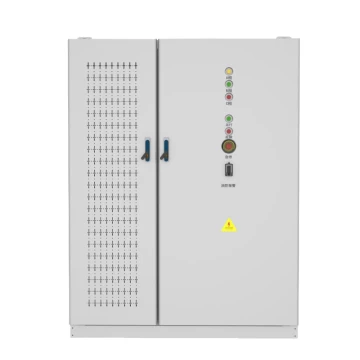
High-capacity DC-coupled inverter system optimized for commercial data centers and critical power backup applications.
View Details
Engineered for seamless transition and grid-forming capability in microgrid configurations.
View Details
Advanced multi-channel MPPT integration with battery energy storage system (BESS) compatibility.
View Details
Intelligent energy management system with real-time diagnostics and automatic grid isolation features.
View DetailsThe global digital transformation has accelerated exponentially, driving massive investments in data centers, telecommunications, and mission-critical infrastructure. As cloud computing, artificial intelligence (AI), and machine learning (ML) workloads proliferate, the demand for uninterrupted electricity is reaching unprecedented levels. Historically, these facilities relied on fossil-fuel-powered diesel generators and lead-acid battery uninterruptible power supplies (UPS). However, the modern industrial landscape demands a transition to green, sustainable, and highly efficient energy systems. Enter the hybrid solar inverter integrated with PV-BESS (Photovoltaic-Battery Energy Storage System) DC-coupled architectures.
By combining solar generation, battery energy storage, and grid interaction into a single cohesive platform, hybrid solar inverters are redefining how critical infrastructure manages power. These systems ensure that facilities remain operational during grid outages, optimize utility costs through peak shaving, and significantly reduce carbon footprints without compromising reliability.
Data centers currently consume nearly 1% to 2% of global electricity, and this figure is projected to rise dramatically. To mitigate environmental impacts and meet strict ESG (Environmental, Social, and Governance) targets, operators are actively seeking alternatives to conventional grid power. Grid instability caused by extreme weather events and aging utility networks further complicates operational security. In this challenging environment, hybrid solar inverters serve as the brain of modern industrial microgrids.
In addition to sustainability, the commercial benefits of deploying hybrid solar inverters in critical infrastructure are substantial. By utilizing solar PV and localized battery storage, operators can avoid peak demand charges—often the most expensive component of industrial electricity bills. Through dynamic load shifting, the hybrid inverter intelligently draws power from the battery bank or solar array during peak rate hours and recharges the batteries during off-peak periods or directly from excess solar production. This financial optimization, coupled with grid-stability services like frequency regulation, transforms energy management from a cost center into a strategic asset.
Unlike traditional AC-coupled systems that require multiple conversions (DC from solar to AC via solar inverter, then AC to DC to charge the batteries, and finally DC to AC to power the load), a DC-coupled hybrid inverter routes DC power directly from the PV array to the battery storage. This eliminates unnecessary conversion steps, boosting round-trip efficiency by up to 5-8%, reducing heat generation, and simplifying the overall system architecture.
The deployment of hybrid solar inverters spans various high-stakes scenarios where even a millisecond of power loss can result in catastrophic data loss, financial ruin, or compromised public safety.
Edge data centers are deployed closer to end-users to reduce latency for applications like autonomous driving and IoT. These hubs are frequently situated in areas with unreliable grid connections or remote locations. A hybrid solar inverter, paired with a robust Battery Management System (BMS), creates an autonomous energy island. It dynamically balances local solar production, battery storage levels, and auxiliary generator inputs to guarantee continuous runtime, even during prolonged grid failures.
Hyperscale facilities require megawatts of power. While solar panels on-site cannot satisfy 100% of their energy needs, they can significantly offset baseline loads. Hybrid inverters act as buffer zones, smoothing out solar intermittency and injecting stored clean energy into the facility's power distribution unit (PDU) when demand spikes. This reduces the stress on standby diesel generators, minimizing maintenance costs and startup wear-and-tear.
Hospitals, water treatment plants, and emergency response centers require absolute power continuity. Hybrid solar inverters with zero-transfer-time capability switch from grid to battery power seamlessly, ensuring medical equipment, communication networks, and critical pumps remain online. The integration of intelligent BMS controllers allows real-time health monitoring of the battery storage system, ensuring the backup power source is always primed for action.
A hybrid solar inverter is only as reliable as the battery storage system it manages. In industrial and critical infrastructure applications, lithium-ion battery chemistries (such as LiFePO4) require precise monitoring, balancing, and protection to prevent thermal runaway and ensure long operational lifespans. This is where high-performance Battery Management Systems (BMS) become indispensable.
Advanced BMS master controllers, such as those engineered for 1500V systems, monitor voltage, temperature, and current at the individual cell and pack levels. They communicate directly with the hybrid inverter via high-speed industrial protocols (such as CAN or Modbus), allowing the inverter to adjust its charging and discharging parameters dynamically. This tight integration ensures optimal cell balancing, prevents overcharging or deep discharging, and maximizes the energy yield of the entire system. In high-voltage installations, robust insulation monitoring and automotive-grade MCU components safeguard the system against electrical faults, ensuring the highest standards of operational safety.
A National High-Tech Enterprise & Leader in Energy Storage & BMS Technology
ZheJiang Qualtech Co., Ltd. (referred to as Qualtech) was established in 2011 and is headquartered in Hangzhou, Zhejiang. It is a national high-tech enterprise, the third batch of specialized, refined, and new "little giant" enterprises by the Ministry of Industry and Information Technology, and currently a leading enterprise in both the new energy vehicle BMS and energy storage BMS sub markets in China.
With a strong focus on independent research and development and in-house manufacturing, Qualtech delivers full-stack digital smart energy solutions. Our products are widely used in microgrid systems, integrated solar-storage-charging stations, and heavy industrial energy storage applications, providing the core technology that drives the reliability of hybrid solar inverter systems.
Learn More About UsExplore how our integrated hybrid storage and control technologies power critical industries.

Providing independent, self-healing grid capabilities for remote facilities, factories, and military installations using hybrid solar-storage technology.

Smart EV charging infrastructure integrated with PV generation and localized battery storage to reduce grid peak demand stress.
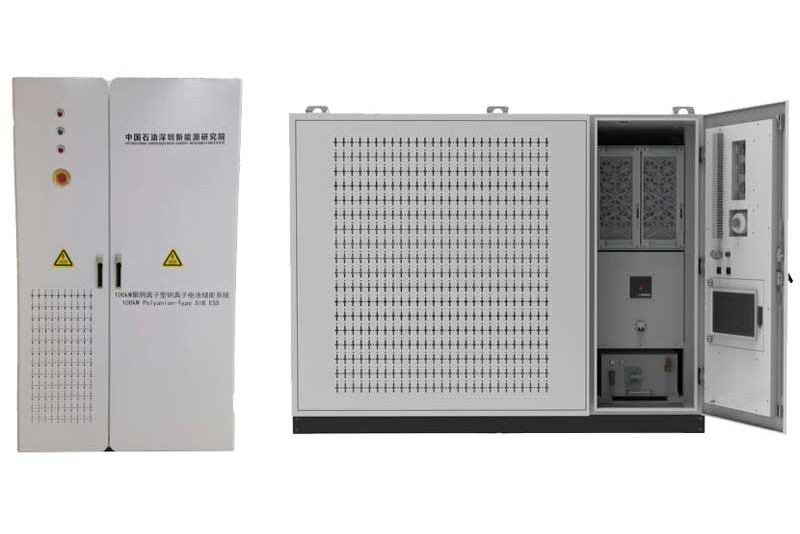
High-density, liquid-cooled or air-cooled energy storage cabinets designed for peak shaving, backup power, and grid ancillary services.
Collaborating with global industry leaders to build a sustainable and resilient energy future.












Keep up with the latest advancements in smart energy, EV charging, and energy storage technologies.

As a full-stack digital smart energy system solution provider, Qualtech has always been anchored by independent R&D and in-house manufacturing...

The results of the prestigious industry award, the Energy Storage Industry Aurora Award, have recently been announced, honoring Qualtech's core project equipment...

Centering on the theme of new industrial revolutions, Qualtech has signed a landmark partnership with Argentinian counterparts to deploy robust EV charging networks...
High-precision battery management systems and industrial storage hardware optimized for hybrid inverter integration.
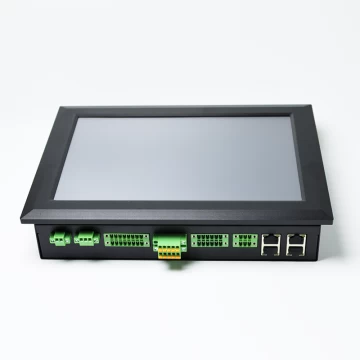
Industrial-grade display and control unit designed for real-time monitoring of multi-tier battery racks.
View Product
High-efficiency cell balancing slave units to maintain voltage consistency and prolong battery pack life.
View Product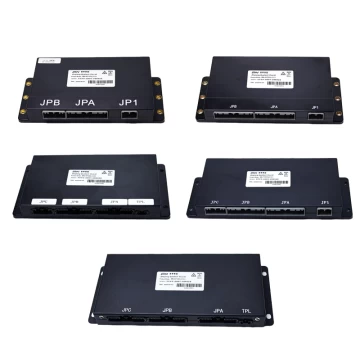
Equipped with S32K312/NXP MCU, 120MHz, 2M Flash, ASIL B compliance for high-reliability applications.
View Product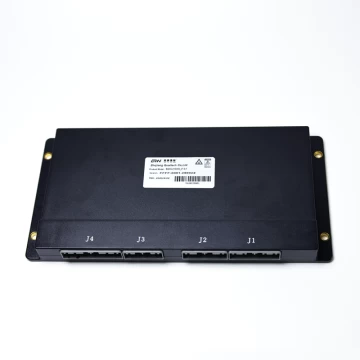
Supports 1500V total voltage systems and insulation resistance detection for utility-scale applications.
View Product
All-in-one BMS with voltage, temp, and current sensing. Supports over-charge and short-circuit protection.
View Product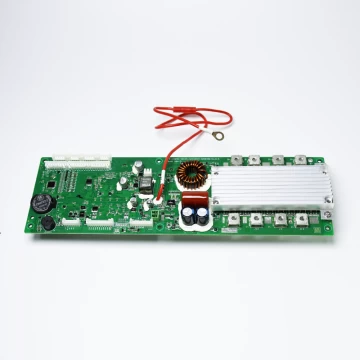
16S LiFePO4 battery management system optimized for home storage and small-scale critical backups.
View Product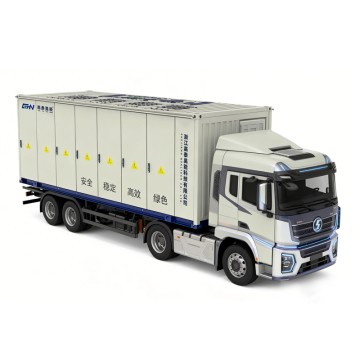
Truck-mounted BESS designed for temporary emergency power and grid support during peak events.
View Product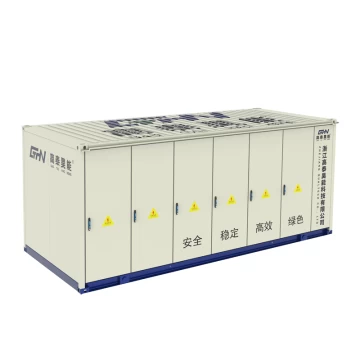
Standard containerized energy storage system optimized for grid-level stabilization and large C&I facilities.
View Product