
 +86 17326062766
Leave Your Message
-
Contact WhatsApp
-
 Contact Phone
-
 Contact Email
Modular, liquid-cooled, and high-density energy storage architectures engineered specifically for Tier III & Tier IV data centers, telecommunications hubs, and sensitive industrial infrastructure.

Rapid-response mobile MW-scale power system for instantaneous emergency blackout bridging and remote grid recovery.
Explore Specification →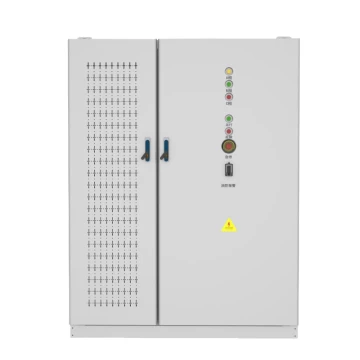
Seamless hybrid renewable integration with ultra-fast switching, high conversion efficiency, and multi-mode power dispatching.
Explore Specification →
High-density 314Ah cell containerized system featuring advanced immersion liquid cooling for strict thermal uniformity and zero thermal propagation.
Explore Specification →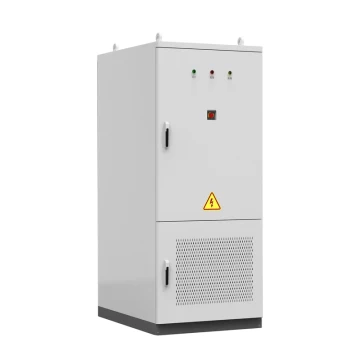
Factory pre-commissioned, all-in-one distributed cabinet integrating BMS, bidirectional PCS, EMS, and intelligent thermal management.
Explore Specification →The relentless expansion of hyperscale cloud computing, artificial intelligence (AI) model training clusters, and ubiquitous edge computing has triggered an unprecedented surge in global electrical power density. Modern hyperscale facilities housing high-density GPU accelerators routinely encounter server rack densities soaring from 10 kW to beyond 100 kW per rack. This exponential leap in load concentration creates formidable electrical challenges: severe micro-transients, rapid step-load variations during deep learning convergence, and high vulnerability to utility grid disturbances. Under these operating conditions, legacy standby diesel generators and conventional lead-acid battery backup solutions (VRLA) can no longer fulfill the stringent reliability, latency, sustainability, and space constraints imposed by modern mission-critical infrastructure.
Industrial Battery Energy Storage Systems (BESS) based on high-voltage Lithium Iron Phosphate (LiFePO4) chemistry and managed by advanced Battery Management Systems (BMS) have fundamentally altered the critical power ecosystem. Rather than serving purely as passive, short-duration Uninterruptible Power Supply (UPS) assets designed to bridge the 15-to-30 second gap until diesel generators synchronize, modern industrial energy storage functions as an active, dynamic power hub. Industrial power storage systems perform millisecond-level synthetic inertia injection, peak-load shaving, power factor correction, harmonic mitigation, and multi-hour black-start autonomy. Furthermore, by coupling with on-site renewable generation and engaging in grid-interactive frequency response markets, industrial BESS turns cost-heavy data center backup infrastructure into a revenue-generating, decarbonized energy asset.
Advanced bidirectional PCS and high-speed BMS controllers capture microsecond load variations caused by computational spikes, eliminating voltage sags and safeguarding high-performance AI silicon from sudden power dips.
Compliant with ASIL-B and 1500V high-voltage isolation standards, integrating cell-level electrochemical modeling, gas detection, and multi-tier active balancing to guarantee zero-fire risk and eliminate single points of failure.
Facilitates automated Time-of-Use (ToU) arbitrage, demand-charge mitigation, and participation in Virtual Power Plant (VPP) demand-response networks, accelerating capital payback within commercial and industrial facilities.
The convergence of power electronics, battery chemistry, and artificial intelligence is reshaping the technical blueprint of industrial power storage for data centers and critical public utilities. Key technological vectors include:
Industrial data centers are aggressively transitioning to 1500V DC bus architectures. Elevating string voltage directly reduces copper cabling volume, minimizes I²R transmission losses, and increases the volumetric power density of energy storage cabinets by more than 35%. However, operating at 1500V requires high-voltage insulation monitoring, precise master-slave BMS communication, and automotive-grade galvanic isolation capable of suppressing common-mode electromagnetic interference (EMI) generated by high-frequency switching semiconductors.
Traditional forced-air cooling in battery enclosures suffers from significant internal temperature gradients (often ΔT > 6°C), which accelerates cell capacity divergence and drastically reduces overall battery pack lifespan. Next-generation industrial container storage systems utilize direct liquid cooling with ethylene-glycol mixtures or dielectric immersion cooling. By maintaining a cell-to-cell temperature differential within ≤ 2°C, liquid cooling prevents localized thermal runaway triggers, extends battery cycle life beyond 8,000 to 10,000 cycles, and reduces parasitic auxiliary cooling consumption by over 40%.
Passive balancing dissipates excess energy as heat through shunt resistors, an approach that is inefficient and thermally burdensome in enclosed infrastructure environments. Qualtech's active balancing BMS platforms transfer energy dynamically between adjacent cells during both charging and discharging states with high transfer current (up to 5A). Coupled with cloud-based digital twin models and AI algorithms, the system continuously analyzes electrochemical impedance spectroscopy (EIS) trends, identifying micro short-circuits and dendrite formation weeks before any observable temperature or voltage abnormalities occur.
Lead-acid batteries (VRLA) require replacement every 3 to 5 years, possess low energy density (30–50 Wh/kg), require heavy floor reinforcement, and demand intensive HVAC maintenance. In contrast, modern LiFePO4 industrial BESS offers >150 Wh/kg, a 15-year operational lifecycle, 70% floor space savings, and higher operating temperature thresholds. This drastic reduction in footprint allows hyperscalers to deploy more compute compute racks within the same physical white space footprint.
Examining how high-performance energy storage units and intelligent BMS controllers empower continuous uptime across diverse high-reliability sectors.
Large language model (LLM) training iterations cause abrupt, multi-megawatt step changes in power consumption within milliseconds. When hundreds of thousands of tensor cores simultaneously start or stop matrix multiplication passes, the utility grid connection experiences severe harmonic distortion and voltage fluctuations. Industrial containerized BESS operating in tandem with fast-acting PCS acts as an electrical shock absorber. By injecting power during step-up transients and soaking up excess energy during step-down phases, the storage system maintains a stable upstream voltage envelope, safeguarding utility transformers and eliminating grid penalty surcharges.
Hospitals, surgical suites, and intensive care units require absolute power continuity. While diesel generators take between 10 to 15 seconds to start and synchronize, medical telemetry, robotic surgery suites, and life support systems cannot tolerate even a single half-cycle outage. Industrial all-in-one energy storage cabinets provide seamless zero-transfer-time power delivery while eliminating noise and local particulate emissions associated with fossil fuel test-runs, all while functioning within compact indoor basements or rooftop mechanical yards.
5G macro base stations consume up to 3 times more power than 4G LTE installations. Distributed throughout urban and remote rural topographies, telecommunication switching hubs require modular, smart lithium-ion BMS solutions capable of handling wide ambient temperature fluctuations (-30°C to +60°C) and unstable utility grids. Qualtech's smart 48V/100Ah and 24S high-reliability BMS units provide real-time telemetry, remote cloud control, and automated battery cell heating/cooling to ensure uninterrupted connectivity during regional grid collapse.
In advanced semiconductor wafer fabrication plants, a momentary voltage sag lasting just 50 milliseconds can ruin thousands of silicon wafers worth millions of dollars. Industrial power storage systems provide sub-cycle voltage ride-through capabilities and active harmonic cancellation, shielding sensitive photolithography and chemical vapor deposition (CVD) equipment from external transmission line transients.

Autonomous islanding and grid-forming BESS architecture enabling isolated critical facilities to operate self-sufficiently with localized renewable microturbines and PV arrays.


Unified solar photovoltaic, high-capacity BESS, and ultra-fast fleet charging infrastructure designed for mission-critical logistics hubs and emergency response fleets.

Tailored high-voltage energy storage cabinet systems equipped with ASIL-B master BMS controllers, automatic aerosol fire suppression, and intelligent cloud monitoring.
ZheJiang Qualtech Co., Ltd. (referred to as Qualtech) was established in 2011 and is headquartered in Hangzhou, Zhejiang. It is a national high-tech enterprise, the third batch of specialized, refined, and new "little giant" enterprises recognized by the Ministry of Industry and Information Technology, and currently a benchmark leader in both the new energy vehicle BMS and energy storage BMS sub-markets across global industrial applications.
With full-stack in-house R&D spanning high-voltage hardware architecture, ASIL-D functional safety firmware, and AI-driven cloud energy management platforms (EMS), Qualtech delivers end-to-end industrial power storage solutions engineered to meet the stringent uptime and safety requirements of Tier IV hyperscale data centers, utility grids, and mission-critical infrastructure worldwide.
Discover Our Technology & Facility
Stay updated on the latest breakthroughs in digital smart energy solutions, global energy storage awards, and international infrastructure deployments.

As a full-stack digital smart energy system solution provider, Qualtech expands dual-base manufacturing capacity to ensure agile delivery of customized data center BESS.

Recognized for industry-leading 1500V active balance BMS controllers deployed across utility-scale grid stabilization and high-availability enterprise applications.

Showcasing cutting-edge microgrid storage systems and signing bilateral agreements to deploy intelligent EV charging networks and industrial storage grids across Latin America.












Comprehensive range of intelligent Battery Management Systems, high-voltage controllers, slave balancing units, and containerized systems for data centers, microgrids, and industrial infrastructure.

Centralized HMI display and high-speed telemetry coordinator for multi-cluster industrial battery arrays.
View Details →
Ultra-accurate cell voltage and temperature monitoring unit designed for high-density rack-mounted energy modules.
View Details →
Powered by NXP S32K312 120MHz MCU with 2M Flash. Compliant with stringent ASIL-B functional safety for zero-fault data centers.
View Details →
Supports up to 1500V DC system bus, high-voltage insulation detection, CAN-FD communication, and integrated SOX health algorithms.
View Details →
Full sensing coverage for over-voltage, over-current, extreme temperature, and short-circuit protection in edge infrastructure.
View Details →
High-precision 48V/100Ah modular lithium battery BMS engineered for standard 19-inch server rack UPS battery backup units.
View Details →
Complete heavy-duty truck-mounted mobile power station offering zero-delay emergency power dispatch for substation outages.
View Details →
Ultra-large scale 314Ah cell containerized system featuring immersion cooling for superior fire containment and thermal safety.
View Details →