
 +86 17326062766
Leave Your Message
-
Contact WhatsApp
-
 Contact Phone
-
 Contact Email
Engineered for harsh maritime environments: IP67-sealed modular cabinets, DC bus integration, active balancing BMS, and ultra-safe immersion cooling technologies.
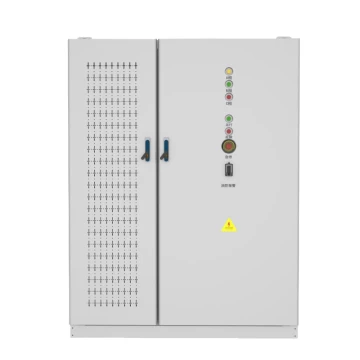
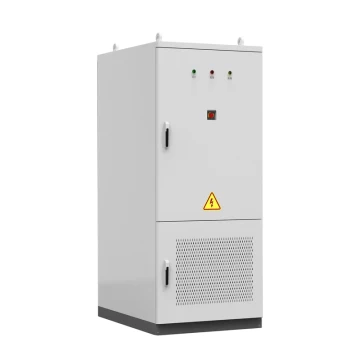
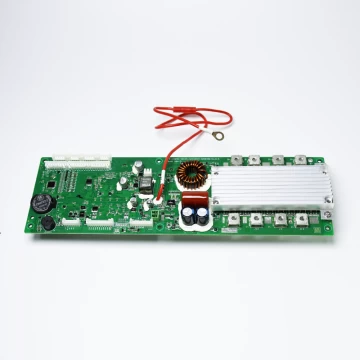
Stringent IMO 2030/2050 greenhouse gas targets, European Union Emissions Trading System (EU ETS) expansion, and stricter harbor emissions regulations are forcing a paradigm shift across commercial shipping and luxury yachting.
The global shipping industry accounts for nearly 3% of worldwide greenhouse gas emissions. In response, the International Maritime Organization (IMO) has implemented rigorous benchmarks under the Carbon Intensity Indicator (CII) and Energy Efficiency Existing Ship Index (EEXI). Shipowners face acute penalties if their operational carbon intensity ratings degrade into D or E bands. Consequently, auxiliary diesel generator sets are rapidly being supplemented or supplanted by Industrial Battery Energy Storage Systems (BESS).
In parallel, the superyacht sector has undergone an ideological revolution. Modern yacht owners demand "silent cruising," enabling emission-free, vibration-free, and fume-free voyages through environmentally sensitive marine sanctuaries, Norwegian fjords, and coastal heritage zones where internal combustion machinery is strictly prohibited during anchoring.
Analyzing the electrical demand profiles, mechanical shock resistance, and duty cycles across diverse operational marine environments.
Yachts consume vast amounts of electrical power even when moored or at anchor, operating air conditioning chillers, stabilization gyroscopes, galley induction appliances, and AV systems. Lithium Iron Phosphate (LiFePO4) storage systems absorb daytime photovoltaic generation and charge from main engines during navigation, delivering up to 14 consecutive hours of silent, zero-emission hotel load power overnight without running noisy generators.
Tug operations are defined by rapid spikes in bollard pull requirement followed by prolonged idling. Diesel engines operating under these conditions run at low thermal efficiency with high soot output. An industrial marine BESS buffers transient torque loads via hybrid DC-bus coupling, providing instant megawatt-level burst power during ship-assist maneuvers while keeping diesel engines in their optimal fuel-burn sweet spot.
Short-sea passenger ferries operate on tight scheduling windows. Megawatt-hour containerized marine battery banks interface with high-power automatic shore connection ramps. By cycling energy at 2C to 3C charging rates during rapid 10-minute passenger boarding intervals, short-haul vessels can execute 100% electric daily voyages with zero direct carbon emissions.
In offshore wind turbine installation and deep-sea platform support, vessels operate in Dynamic Positioning mode (DP2/DP3) where thrusters fire continuously to maintain coordinates within centimeters despite heavy currents. Traditionally, operators had to run multiple spinning diesel engines simply to satisfy redundancy safety requirements in case one failed. By integrating certified marine industrial BESS as an instant spinning reserve, operators eliminate the requirement to keep idle engines running, immediately reducing offshore vessel fuel consumption by 20% to 35% and drastically slashing engine maintenance intervals.
Qualtech delivers turnkey intelligent energy architectures combining solar generation, containerized storage cabinets, and DC fast-charging ports for maritime hubs.

Autonomous microgrid management stabilizing remote marina dock power, combining offshore renewables, diesel synchronization, and containerized battery buffers.
View More Solution Details →
Photovoltaic canopies coupled with high-capacity BESS cabinets to provide ultra-fast DC shore charging for electric tenders, speedboats, and recreational yachts.
View More Solution Details →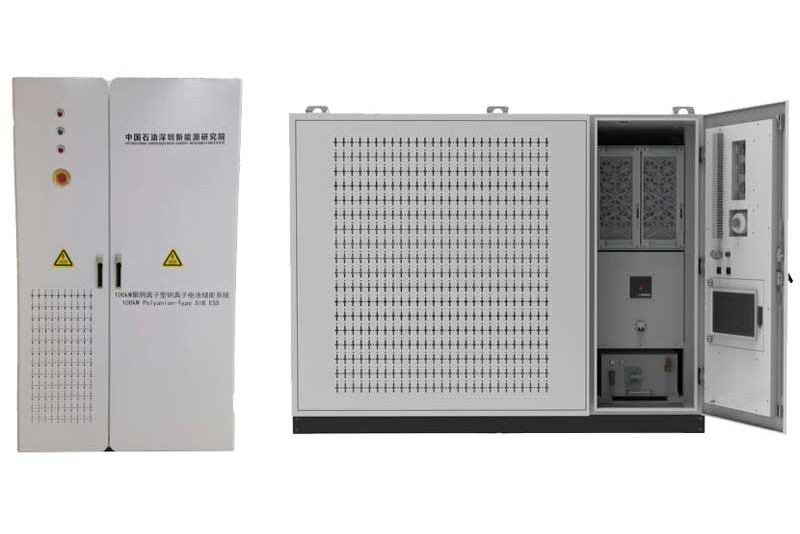
Liquid-cooled, high-density C&I battery racks custom-configured for tight marine engine room envelopes with modular multi-tier fail-safe isolation barriers.
View More Solution Details →Navigating the extreme demands of saline fog, continuous hull vibration, pitch and roll motions, and strict thermal runaway prevention standards.
Operating lithium battery systems aboard ocean vessels presents distinct thermodynamic challenges compared to stationary land-based storage. Sea conditions expose equipment to high atmospheric humidity, salt aerosol corrosion, and confined machine spaces with poor natural ventilation. Air-cooled systems often fail prematurely in marine settings due to salt bridging and inconsistent thermal dissipation across large battery packs.
Advanced maritime installations now employ direct liquid cooling and dielectric immersion cooling. In immersion-cooled systems, high-capacity cells (such as 314Ah prismatics) are enveloped in non-conductive, fire-retardant hydrocarbon or synthetic fluids. This architecture maintains thermal equilibrium within ±1.5°C across thousands of cells, eliminates the risk of cell-to-cell thermal runaway cascading, and prevents condensation or salt deposit accumulation inside electronic assemblies.
Modern naval architecture is rapidly migrating towards central Direct Current (DC) distribution buses. Unlike conventional Alternating Current (AC) switchboards that require heavy synchronizing gear and fixed engine speeds, DC-bus networks allow propulsion inverters, variable-speed gensets, fuel cells, and battery banks to feed directly into a shared power link with significantly higher round-trip efficiency.
To control high-voltage DC maritime battery arrays, Qualtech deploys automotive-grade 1500V master controllers paired with active and passive balancing slave units. Powered by automotive-grade NXP processors and compliant with ASIL-B / ASIL-D functional safety thresholds, this BMS infrastructure features millisecond-level insulation monitoring, multi-level contactor sequencing, integrated pyro-fuses, and intelligent arc detection to prevent electrical faults in high-salinity nautical environments.
A vessel hundreds of nautical miles offshore cannot afford unexpected power failure. By integrating AI-driven edge computing with cloud marine telemetry, the BMS continuously analyzes electrochemical impedance variations, temperature gradients, and charge-discharge curves. Predictive algorithms provide yacht captains and fleet technical directors with sub-1% accurate State of Charge (SoC), State of Power (SoP), and remaining useful life (RUL) projections, enabling scheduled predictive maintenance before critical cell degradation occurs.
ZheJiang Qualtech Co., Ltd. (referred to as Qualtech) was established in 2011 and is headquartered in Hangzhou, Zhejiang. It is a national high-tech enterprise, the third batch of specialized, refined, and new "little giant" enterprises by the Ministry of Industry and Information Technology, and currently a leading enterprise in both the new energy vehicle BMS and energy storage BMS sub markets in China.
Leveraging deep full-stack in-house R&D across power electronics, thermal simulation, BMS controllers, and cloud telemetry, Qualtech empowers marine vessel retrofits, superyacht shipyards, and commercial port authorities worldwide with turnkey energy storage excellence.
Explore Qualtech Heritage & Technology
Partnering with premier automotive manufacturers, shipyards, electrical integrators, and port infrastructure developers around the world.











Tracking the vanguard of high-capacity storage manufacturing, digital energy management systems, and cross-border commercial deployments.

As a full-stack digital smart energy system solution provider, Qualtech has always been anchored by independent R&D and in-house manufacturing, ensuring reliable marine battery control delivery.
Read Full Article →
The prestigious Energy Storage Industry Aurora Award recognized Qualtech's breakthrough modular control architecture for its unmatched safety and system efficiency.
Read Full Article →
Centering on industrial green revolution initiatives, Qualtech signs landmark strategic deals expanding advanced energy storage and high-speed port electrification networks.
Read Full Article →The specialized battery management units, automotive-grade controllers, and modular storage blocks powering the next era of vessel and yacht electrification.
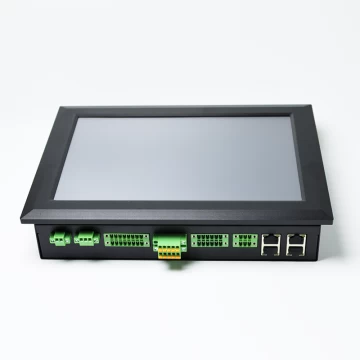
Centralized helm HMI touch display providing real-time string voltage, thermal distribution, and diagnostic alerts.

Ultra-precise cell voltage and temperature acquisition with high-durability passive balancing circuits for vessel packs.
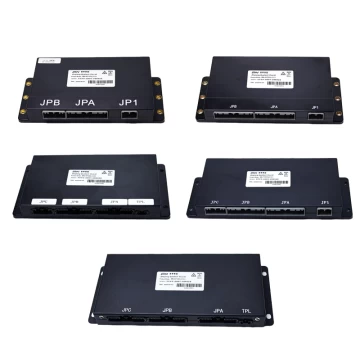
Powered by MCU S32K312/NXP at 120MHz with 2M Flash, ASIL B compliance, built to endure continuous naval hull vibrations.
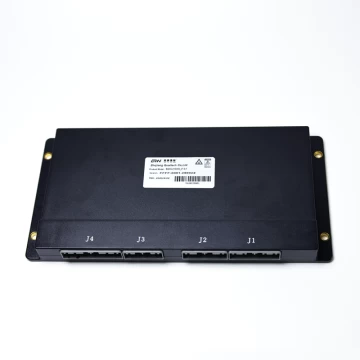
Supports total system voltage up to 1500V, advanced insulation resistance monitoring, and master-slave ring redundancy.

All-in-one voltage, current, and temperature protection module safeguarding high-rate electric outboards and jet tenders.
Compact 48V battery controller offering RS485/CAN connectivity, perfect for vessel emergency backup and radar banks.
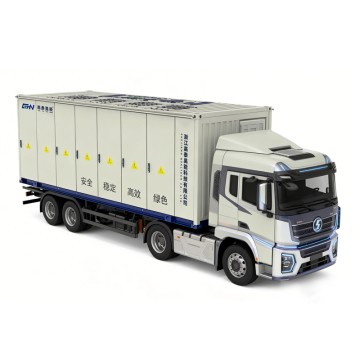
Rapid-deployment mobile BESS vehicle delivering temporary high-voltage shore power during vessel berth maintenance.
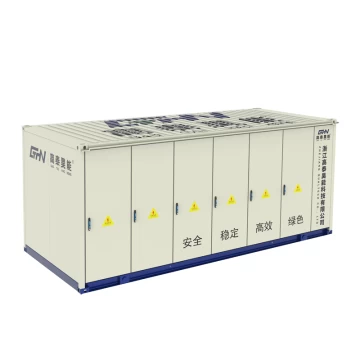
Utility-scale immersion cooling container offering 5MWh+ per 20ft enclosure for commercial harbor shore-to-ship charging.