+86 17326062766
Leave Your Message
-
Contact WhatsApp
-
 Contact Phone
-
 Contact Email
Purpose-built energy storage systems for commercial and industrial facilities — from intelligent BMS to turnkey containerized BESS.
The commercial and industrial power storage sector is undergoing a fundamental transformation driven by rising energy costs, decarbonization mandates, and the rapid maturation of battery technology.
The global C&I energy storage market surpassed USD 12 billion in 2023 and is projected to exceed USD 60 billion by 2032, growing at a CAGR of over 19%. Driven by soaring electricity tariffs and net-zero commitments, factories, data centers, hospitals, and logistics hubs are racing to deploy behind-the-meter BESS at unprecedented scale.
Heavy industries — steel mills, chemical plants, semiconductor fabs — face peak-demand charges that can account for 30–40% of their electricity bills. Power storage systems that perform peak shaving and load shifting deliver verified ROI within 3–5 years, making them a top capital priority for plant managers globally.
Governments across the EU, US, China, and Southeast Asia are offering investment tax credits, feed-in tariffs, and mandatory renewable integration policies. These regulatory tailwinds are accelerating adoption of commercial energy storage beyond early adopters into mainstream industrial deployment.
No longer a niche technology, commercial and industrial power storage systems have become essential infrastructure — as fundamental as HVAC or fire suppression. Facilities without storage are increasingly exposed to grid volatility, carbon penalties, and competitive disadvantage. The question is no longer whether to deploy, but how fast and at what scale.
Six critical technology and market trends are redefining what commercial and industrial energy storage systems must deliver in the next decade.
Next-generation EMS platforms leverage machine learning to forecast load profiles, spot price arbitrage windows, and grid frequency events with millisecond precision. AI-optimized dispatch can improve asset revenue by 15–25% versus rule-based systems, turning storage into an active profit center rather than a passive backup.
As energy density increases, thermal management becomes the critical differentiator. Liquid-cooled and immersion-cooled battery systems maintain cell temperatures within ±2°C across the entire pack, extending cycle life beyond 8,000 cycles and dramatically reducing fire risk — a non-negotiable requirement for indoor industrial deployments.
Enterprises demand systems that grow with their needs. Modular BESS designs allow facilities to start with 100 kWh and scale to multi-MWh without replacing core infrastructure. Plug-and-play cabinet designs with standardized DC bus architecture reduce installation time by up to 60% compared to legacy custom systems.
Aggregated C&I storage assets are being enrolled in utility VPP programs, allowing individual facilities to earn ancillary service revenue by providing frequency regulation, spinning reserve, and demand response. A single 500 kWh industrial system can generate USD 20,000–50,000 annually in grid services income.
Retired EV battery packs with 70–80% remaining capacity are finding a second life in stationary C&I storage, cutting system capex by 30–40%. Advanced BMS platforms with cell-level state-of-health monitoring are essential to safely integrating heterogeneous second-life cells into commercial applications.
Industrial operators expect 99.9% uptime from their power storage assets. Cloud-connected BMS platforms with IoT telemetry enable predictive fault detection — identifying cell degradation, thermal anomalies, and connection resistance increases weeks before they cause failures, reducing unplanned downtime by over 80%.
Power storage systems deliver distinct value across six high-impact commercial and industrial use cases — each with unique technical requirements and economic models.

Industrial parks and campuses deploy BESS as the backbone of private microgrids. During grid outages, the storage system seamlessly islands the facility within 20ms, maintaining critical production lines, cold chains, and data systems without interruption. Qualtech's containerized 314Ah immersion-cooled systems are purpose-designed for this mission-critical role.
 View More

Commercial properties — shopping malls, logistics centers, office campuses — are deploying integrated PV-BESS-EV charging stations as a unified energy ecosystem. The all-in-one DC-coupled architecture eliminates double conversion losses, delivering 15–20% higher system efficiency and enabling facilities to offer EV charging as a revenue service without grid capacity upgrades.
View More

Manufacturing facilities with high-power equipment — CNC machines, arc furnaces, injection molding presses — generate sharp demand spikes that trigger expensive utility demand charges. An all-in-one liquid-cooled energy storage cabinet with integrated BMS, PCS, EMS, and TMS can reduce peak demand by 30–50%, delivering payback periods under 4 years in high-tariff markets.
View More
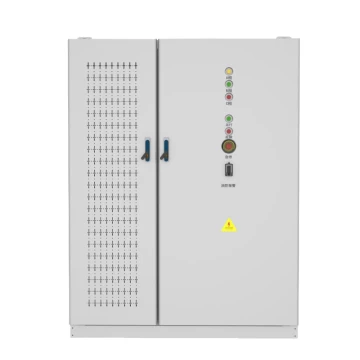
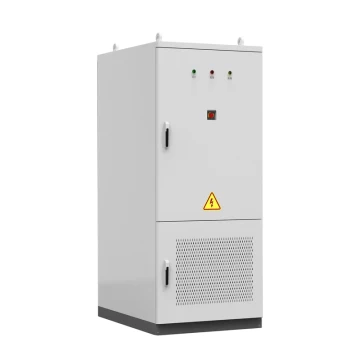
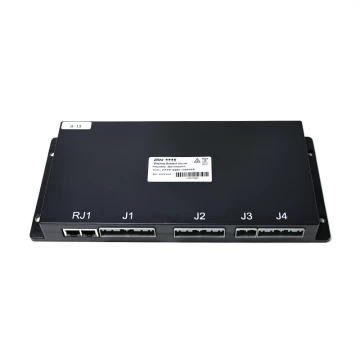
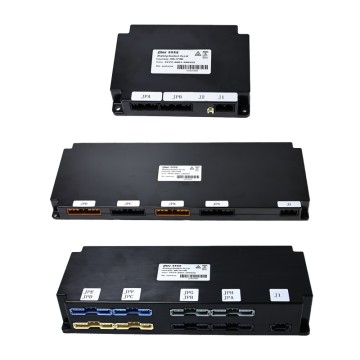
Explore Qualtech's full range of energy storage and battery management systems for C&I and grid applications.








ZheJiang Qualtech Co., Ltd. (referred to as Qualtech) was established in 2011 and is headquartered in Hangzhou, Zhejiang. It is a national high-tech enterprise, the third batch of specialized, refined, and new "little giant" enterprises by the Ministry of Industry and Information Technology, and currently a leading enterprise in both the new energy vehicle BMS and energy storage BMS sub markets in China.
With over 130 intellectual property rights, 300+ dedicated professionals, and more than 1,000 global customers, Qualtech delivers full-stack digital smart energy solutions — from chip-level BMS firmware to turnkey containerized energy storage systems — for commercial, industrial, and grid-scale applications worldwide.

From microgrid systems to integrated light-storage-charging hubs, Qualtech delivers end-to-end power storage solutions for every commercial and industrial scenario.
Qualtech collaborates with leading enterprises across the energy, automotive, and industrial sectors worldwide.












From intelligent BMS controllers to full containerized energy storage systems — Qualtech's complete lineup for commercial and industrial facilities.