+86 17326062766
Leave Your Message
-
Contact WhatsApp
-
 Contact Phone
-
 Contact Email
In the immediate aftermath of a natural disaster—be it a hurricane, earthquake, or wildfire—the most critical infrastructure failure is often the power grid. For first responders and emergency medical teams, electricity isn't just a convenience; it is a lifeline. A Power Storage System For Emergency Disaster Relief And First Responders serves as the backbone of modern humanitarian efforts, providing the energy needed for field hospitals, communication hubs, and search-and-rescue equipment.
Historically, emergency power relied heavily on diesel generators. However, the industrial status is shifting rapidly. Fossil fuel logistics are often compromised during disasters, making fuel delivery impossible. This is where advanced Battery Energy Storage Systems (BESS) step in. Integrated with renewable sources like solar panels, these systems create resilient microgrids that can operate indefinitely without external fuel supplies.
The global market for emergency power storage is experiencing a compound annual growth rate (CAGR) of over 12%. Governments and NGOs are increasingly prioritizing "Energy Resilience." The trend is moving toward modular, mobile, and intelligent systems. These aren't just batteries; they are smart units equipped with AI-driven Battery Management Systems (BMS) that can predict energy needs and optimize discharge patterns in extreme temperatures.

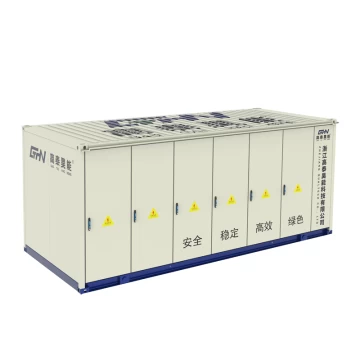
When the main grid collapses, first responders can deploy containerized energy storage units to establish a local microgrid. This powers essential services like water purification plants and emergency shelters, ensuring that life-saving operations continue without interruption.
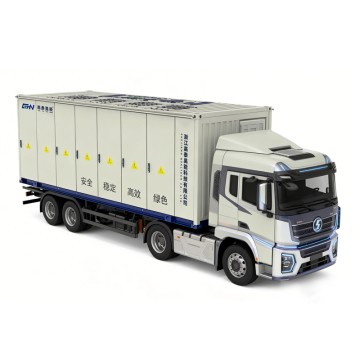
First responders require high-tech communication equipment, drones for aerial surveys, and satellite links. A mobile power storage vehicle, equipped with high-performance BMS, ensures that these sensitive electronics receive stable, "clean" power, protected from surges and fluctuations common in disaster zones.

With the rise of electric emergency vehicles, the need for field-deployable EV charging is paramount. Integrated solar-storage-charging units allow rescue fleets to recharge in the field, utilizing solar energy during the day to power night-time operations.
In emergency scenarios, battery failure is not an option. This is why the Battery Management System (BMS) is the most critical component. Qualtech’s automotive-grade BMS solutions provide real-time monitoring of voltage, temperature, and State of Charge (SoC). For first responders, this means having absolute certainty about how much energy is available.
Advanced features like active balancing ensure that every cell in a large-scale storage unit is used efficiently, extending the life of the system and preventing overheating. In harsh environments—ranging from freezing floods to scorching wildfires—Qualtech’s liquid-cooled and immersion-cooled technologies maintain optimal battery health, ensuring the Power Storage System performs at 100% capacity when it's needed most.
Designed to withstand transport over rugged terrain and operation in high-humidity or dust-heavy disaster zones.
Remote teams can monitor the energy status of multiple disaster sites via cloud-integrated EMS (Energy Management Systems), allowing for better resource allocation.
ZheJiang Qualtech Co., Ltd. (referred to as Qualtech) was established in 2011 and is headquartered in Hangzhou, Zhejiang. It is a national high-tech enterprise, the third batch of specialized, refined, and new "little giant" enterprises by the Ministry of Industry and Information Technology, and currently a leading enterprise in both the new energy vehicle BMS and energy storage BMS sub markets in China.
With a focus on innovation and reliability, Qualtech has become a cornerstone supplier for critical energy infrastructure, particularly in the demanding sectors of emergency relief and industrial power storage.

Qualtech continues to lead with digital smart energy solutions, anchored by independent R&D and in-house manufacturing.
Read More
Our core equipment was named among the top 10 model projects in new energy storage by the Industry Aurora Award.
Read More
Forging strategic partnerships to deploy EV charging station networks and industrial revolution solutions.
Read More
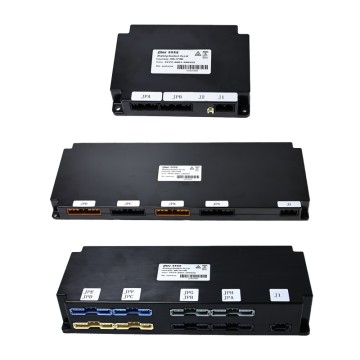
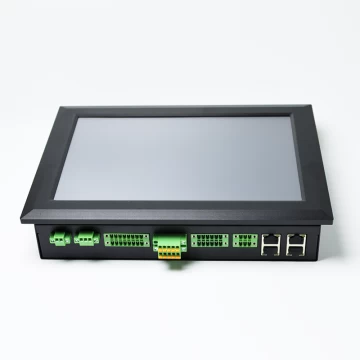


The future of Power Storage Systems for Emergency Disaster Relief is inextricably linked with Artificial Intelligence. We are entering an era where energy storage units are not passive "buckets" of power, but active participants in disaster mitigation. Predictive AI can now analyze weather patterns to pre-charge systems before a storm hits, or automatically partition energy to prioritize medical equipment over lighting when battery levels are low.
Furthermore, the integration of Solid-State Battery technology promises even higher energy densities and enhanced safety—critical for first responders who often operate in volatile environments where traditional lithium-ion batteries might pose a fire risk. Qualtech is at the forefront of these developments, ensuring that our BMS solutions are compatible with next-generation chemistries.
In conclusion, the transition from fossil-fuel-dependent relief to solar-plus-storage models is the most significant advancement in humanitarian logistics in decades. By providing stable, clean, and portable energy, these systems empower first responders to focus on what matters most: saving lives. Zhejiang Qualtech Co., Ltd. remains committed to engineering the most reliable "brain" for these systems, ensuring that when the world goes dark, the light of relief stays on.