+86 17326062766
Leave Your Message
-
Contact WhatsApp
-
 Contact Phone
-
 Contact Email
Explore our leading smart hybrid inverter and BMS solutions purpose-built for marine vessels, yachting, and offshore energy systems.
The maritime industry is undergoing a profound energy transformation. As global shipping regulations tighten and yacht owners demand greater autonomy, the smart hybrid inverter for marine vessels and yachting has emerged as the cornerstone technology enabling cleaner, smarter, and more efficient power management at sea. Unlike conventional diesel-only generators, a smart hybrid inverter intelligently integrates multiple energy sources — diesel generators, shore power, solar PV arrays, and lithium battery energy storage systems (BESS) — into a single, seamlessly managed power architecture.
🚢 A smart hybrid inverter enables marine vessels to reduce fuel consumption by up to 40%, cut emissions significantly, and deliver uninterrupted power to critical onboard systems — even in the most demanding offshore conditions.
At its core, a marine smart hybrid inverter performs real-time power flow optimization. It monitors load demand, battery state-of-charge (SOC), available renewable energy, and generator status simultaneously, then automatically routes power via the most efficient and cost-effective path. For luxury yachts, this means silent anchorage nights running purely on battery power. For commercial vessels, it translates to measurable fuel savings and compliance with increasingly strict IMO emission regulations.
The intelligence layer of these systems — driven by advanced BMS (Battery Management Systems), AI-based energy algorithms, and cloud-connected monitoring platforms — is what separates a true smart hybrid inverter from a basic inverter-charger. Real-time data analytics, predictive maintenance alerts, and remote fleet management capabilities are now standard expectations in the marine sector's most demanding deployments.
Engineered to withstand the harshest marine environments while delivering intelligent energy management.
Seamlessly combines diesel generators, shore power, solar PV, wind, and lithium BESS into one unified power bus with automatic source switching.
Machine learning algorithms predict load patterns and optimize generator run-time, extending engine life while minimizing fuel burn and emissions.
IP65+ enclosures, corrosion-resistant materials, vibration damping, and wide operating temperature ranges ensure reliable performance at sea.
Cloud-connected dashboards provide real-time vessel energy data, predictive maintenance alerts, and remote configuration for entire fleets.
The global marine hybrid power market is experiencing accelerated growth driven by regulatory pressure, fuel economics, and sustainability commitments.
According to industry analysis, the global marine hybrid propulsion and power management market was valued at over USD 4.2 billion in 2023 and is projected to reach USD 9.8 billion by 2030, growing at a CAGR of approximately 12.7%. This growth is driven by a convergence of factors: the International Maritime Organization's (IMO) 2030 and 2050 emission reduction targets, rising bunker fuel costs, and the rapid cost decline of lithium iron phosphate (LiFePO4) battery technology.
Commercial ferry operators across Scandinavia, Japan, and the Asia-Pacific region have been among the earliest large-scale adopters of hybrid inverter systems. Norwegian ferry routes now operate with fully electric and hybrid vessels as standard, with battery capacity per vessel ranging from 1 MWh to over 10 MWh. In China, the Yangtze River cruise sector and coastal ro-ro ferry networks are undergoing rapid electrification, with smart hybrid inverter systems at the heart of these retrofits.
🌊 The IMO's Carbon Intensity Indicator (CII) regulations, effective from 2023, are compelling ship operators worldwide to integrate smart energy management systems — making the hybrid inverter not just a performance upgrade, but a regulatory necessity.
In the superyacht and luxury yacht segment, the market dynamics are equally compelling. Yacht owners and charter operators increasingly demand "silent ship" capability — the ability to operate at anchor or in marina berths with zero generator noise and zero exhaust emissions. Smart hybrid inverters with large-format lithium battery banks (typically 100–500 kWh) enable 8–24 hours of silent operation, dramatically enhancing the onboard experience while meeting strict marina emission regulations in sensitive ecosystems like the Mediterranean and Caribbean.
The commercial workboat sector — including offshore support vessels (OSVs), patrol boats, research vessels, and port tugs — represents another high-growth segment. These vessels typically operate in dynamic positioning (DP) modes with highly variable power demands, making intelligent load management and instant power availability from battery systems critically important for both operational efficiency and safety.
Six key technology and market forces are defining the next generation of smart hybrid inverters for marine applications.
Advances in LiFePO4 cell technology are delivering energy densities exceeding 200 Wh/kg at the pack level, enabling larger onboard energy storage without sacrificing payload or stability — a critical constraint in yacht and vessel design.
Flexible solar panels integrated into yacht superstructures and vessel deck surfaces are increasingly paired with smart hybrid inverters, creating self-sustaining power loops that reduce generator dependency by 30–60% on favorable-weather passages.
Next-generation marine hybrid systems incorporate digital twin models of the vessel's entire power architecture, enabling predictive simulation of energy needs, proactive fault detection, and optimized maintenance scheduling via cloud platforms.
Smart hybrid inverters are increasingly designed with advanced shore power integration (cold ironing) capabilities, enabling vessels to connect to port grid power with automatic frequency and voltage matching, eliminating at-berth generator operation.
As autonomous and remotely operated vessels become commercial realities, smart hybrid inverters with self-optimizing AI energy management become essential infrastructure, managing power with zero human intervention across multi-day voyages.
Forward-looking smart hybrid inverter architectures are being designed with hydrogen fuel cell integration pathways, positioning vessels for the post-fossil-fuel era while maintaining full backward compatibility with existing diesel infrastructure.
From luxury superyachts to commercial ferries and offshore platforms, smart hybrid inverters are redefining what's possible in marine power management.

A 45m superyacht equipped with a 250 kWh LiFePO4 battery bank and smart hybrid inverter achieves 18+ hours of silent anchorage operation, powering full hotel loads including air conditioning, galley, entertainment, and navigation systems without generator noise or exhaust.

Short-sea ferry operators deploy smart hybrid inverters to capture regenerative braking energy during deceleration, recharging battery banks that supplement main engines during acceleration peaks — reducing fuel consumption by 25–35% per voyage cycle.

Offshore support vessels (OSVs) operating in DP mode use smart hybrid inverters with large battery buffers to absorb sudden load spikes from thrusters, preventing generator overload trips that could compromise positioning safety during critical subsea operations.
Beyond these primary scenarios, smart hybrid inverter technology is also transforming river cruise vessels operating in UNESCO-protected waterways, where zero-emission operation zones are mandated. Research and expedition vessels benefit from extended silent operation for acoustic-sensitive scientific work. Fishing vessels in regulated marine protected areas are adopting hybrid systems to comply with emission restrictions while maintaining operational economics.
The integration of smart hybrid inverters with integrated light storage and charging (ILSC) infrastructure at marinas is creating a complete green energy ecosystem. Yachts and vessels can charge their battery banks from marina-side solar and grid storage systems, completing a fully renewable energy cycle from port to sea and back.
Qualtech's comprehensive range of BMS and energy storage solutions for marine, EV, and industrial applications.

Advanced display and control unit for ESS battery management, supporting real-time monitoring and intelligent control for marine and industrial energy storage systems.

Precision passive balancing BMS slave units for large-scale energy storage systems, ensuring cell-level voltage equalization and extended battery life in marine BESS deployments.

● MCU: S32K312/NXP, 120MHz, 2M Flash, ASIL B ● AFE: High-precision analog front-end for cell monitoring — ideal for marine electric propulsion and hybrid vessel battery systems.

● Supports 1500V total voltage and insulation resistance monitoring — purpose-built for high-voltage marine hybrid inverter and electric vessel propulsion architectures.

All-in-one BMS with voltage, temperature & current sensing. Supports over-charge, over-discharge, over-current, over-temp, under-temp, and short-circuit protection for marine applications.

Intelligent 16S LiFePO4 BMS designed for vessel energy storage systems, providing comprehensive cell protection, SOC/SOH estimation, and CAN/RS485 communication for hybrid inverter integration.

Deployable mobile BESS unit for port emergency power, vessel maintenance support, and temporary shore power supply during hybrid inverter commissioning or grid outage scenarios.

High-capacity containerized BESS with immersion cooling technology for port-side grid storage and commercial & industrial marine facility energy management.
From marine microgrid systems to integrated light-storage-charging and full industry system solutions, Qualtech delivers end-to-end smart energy architectures.
Intelligent microgrid architectures integrating smart hybrid inverters, battery storage, and renewable energy sources for island vessels, offshore platforms, and remote marine installations requiring grid-independent operation.
Solar-powered marina charging infrastructure combining PV generation, battery energy storage, and smart EV/vessel charging stations — creating zero-carbon port ecosystems for electric and hybrid yachts.
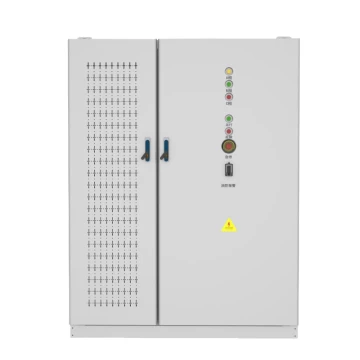
Comprehensive energy storage cabinet and system solutions for commercial shipyards, offshore facilities, and large vessel operators requiring scalable, modular power management infrastructure.
ZheJiang Qualtech Co., Ltd. (referred to as Qualtech) was established in 2011 and is headquartered in Hangzhou, Zhejiang. It is a national high-tech enterprise, the third batch of specialized, refined, and new "little giant" enterprises by the Ministry of Industry and Information Technology, and currently a leading enterprise in both the new energy vehicle BMS and energy storage BMS sub markets in China.
As a full-stack digital smart energy system solution provider, Qualtech delivers intelligent BMS, smart hybrid inverters, and complete energy storage systems to marine, automotive, industrial, and grid-scale applications worldwide. Our independent R&D capabilities and in-house manufacturing ensure every solution meets the highest standards of reliability, safety, and performance — critical attributes for demanding marine environments.
More About Us →Trusted by leading organizations across the marine, EV, and energy storage industries worldwide.













As a full-stack digital smart energy system solution provider, Qualtech has always been anchored by independent R&D and in-house manufacturing...

The results of the prestigious industry award, the Energy Storage Industry Aurora Award (hosted by Energy Storage Talk), have recently been announced...

The 2026 BRICS Partnership on New Industrial Revolution (BPNIR) Forum opened recently in Xiamen, Fujian Province. Centered on the theme "Building..."
Explore the full range of Qualtech intelligent BMS and energy storage products for marine vessels, yachting, and beyond.