+86 17326062766
Leave Your Message
-
Contact WhatsApp
-
 Contact Phone
-
 Contact Email
Featured EV Charging Station Products
Explore our core product lineup engineered specifically for three-phase hybrid inverter applications in electric vehicle charging infrastructure.
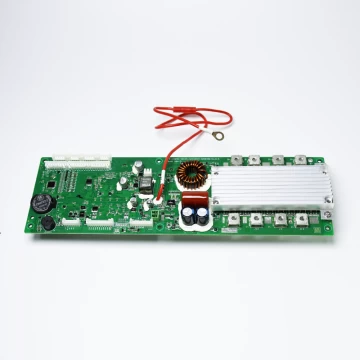
A three phase hybrid inverter is the intelligent heart of any modern electric vehicle charging station. Unlike conventional single-phase inverters, it simultaneously manages three distinct power sources — the utility grid, on-site solar photovoltaic generation, and battery energy storage systems (BESS) — distributing balanced, high-quality AC power across all three phases to EV chargers.
This multi-source orchestration enables charging stations to operate with unprecedented resilience: drawing solar energy when available, tapping battery reserves during peak-tariff periods, and seamlessly switching to grid power when needed — all without interrupting active charging sessions.
For commercial and industrial EV charging deployments — fleet depots, highway corridors, urban supercharging hubs — three-phase hybrid inverters are no longer optional. They are the foundational infrastructure layer that makes economically viable, grid-friendly, high-throughput EV charging possible.
Six engineering pillars that make three-phase hybrid inverters the definitive choice for next-generation EV charging infrastructure.
Supports V2G (Vehicle-to-Grid) and V2B (Vehicle-to-Building) protocols. EVs connected to the station can feed energy back to the grid or building during peak demand, creating a dynamic distributed energy resource network.
Intelligent energy routing algorithm continuously optimizes the dispatch ratio between solar generation, battery storage, and grid import — minimizing electricity costs while maximizing renewable self-consumption rates above 85%.
Sub-20ms islanding detection and automatic transfer ensures uninterrupted EV charging during grid outages. Critical for fleet operators and emergency vehicle depots where charging continuity is non-negotiable.
Real-time current monitoring across all three phases prevents overloading and ensures symmetrical power distribution. Smart charging algorithms dynamically allocate available power among multiple simultaneous EV sessions.
Built-in active harmonic filtering maintains THD below 3%. Compliant with IEEE 1547, IEC 62109, and UL 1741-SA standards. Reactive power compensation capability supports grid voltage stabilization in weak-grid environments.
Native OCPP 1.6/2.0 protocol support enables seamless integration with EV charging network management platforms. Real-time cloud monitoring, remote diagnostics, OTA firmware updates, and AI-driven predictive maintenance.
The three-phase hybrid inverter market for EV charging is experiencing explosive growth, driven by converging forces: accelerating EV adoption, corporate net-zero commitments, and the urgent need to upgrade aging grid infrastructure.
Global EV sales surpassed 14 million units in 2023, with projections exceeding 45 million annually by 2030. This trajectory demands a parallel expansion of charging infrastructure — and three-phase hybrid inverters are the enabling technology that makes large-scale deployment economically viable.
Commercial fleet operators, logistics companies, and municipal transit authorities are the fastest-growing customer segments, driven by predictable duty cycles, centralized charging management needs, and compelling total cost of ownership (TCO) advantages when solar and storage are integrated.
In Europe, the Alternative Fuels Infrastructure Regulation (AFIR) mandates 400W of charging capacity per registered EV by 2026 — creating a massive infrastructure investment wave. In North America, the NEVI Formula Program is deploying $5 billion for highway charging corridors. China continues to lead globally with over 2.7 million public charging points and aggressive grid-interactive charging mandates.
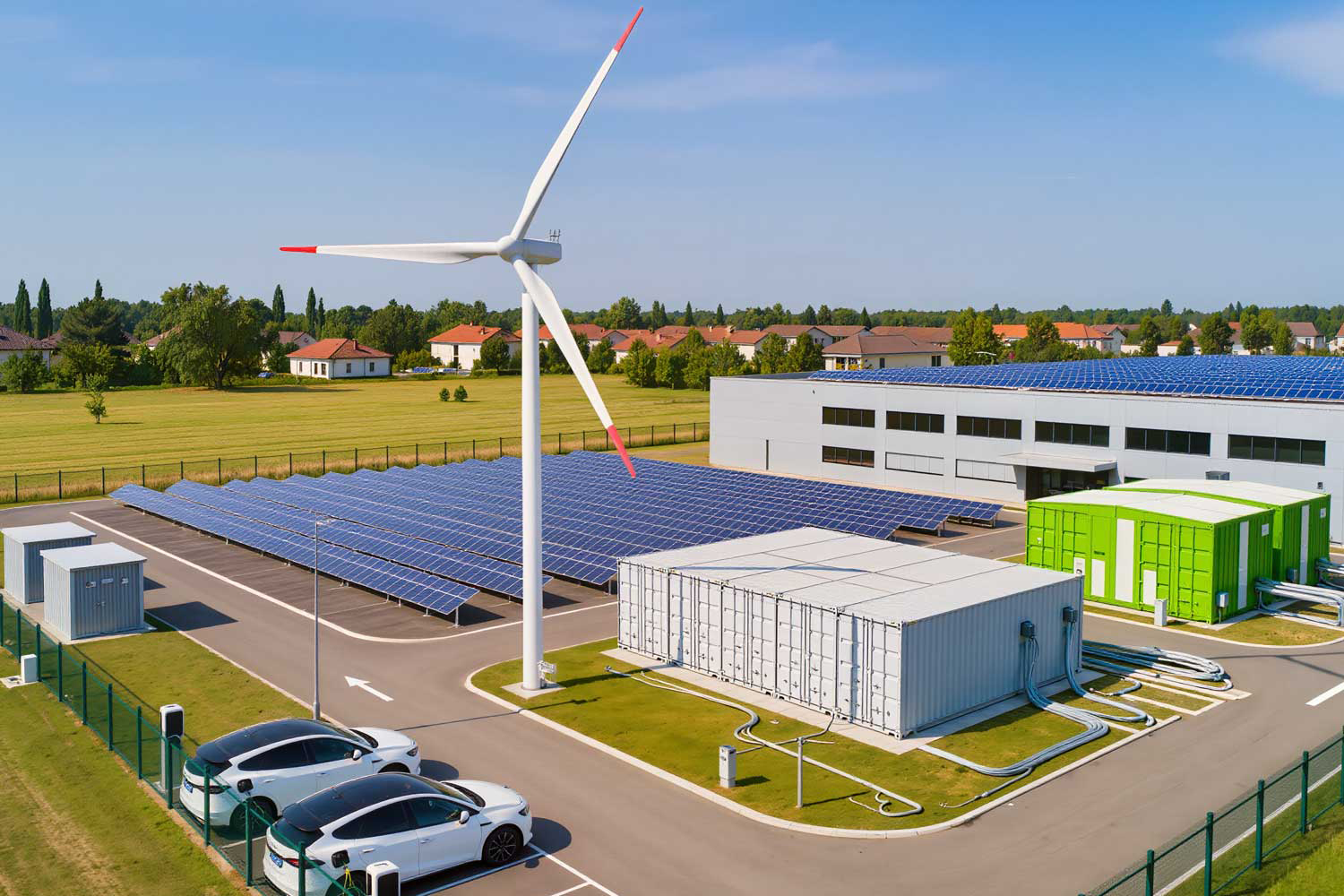
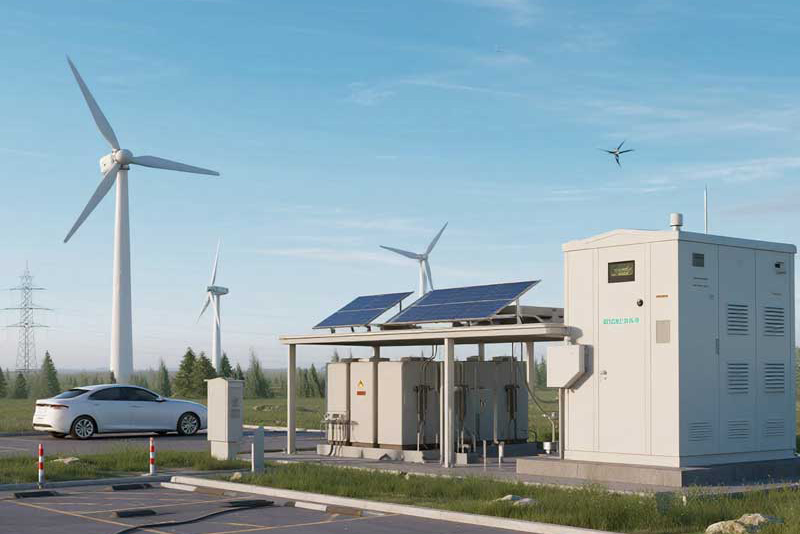
Three-phase hybrid inverters unlock transformative capabilities across diverse EV charging deployment contexts. Here are the six most impactful application scenarios.
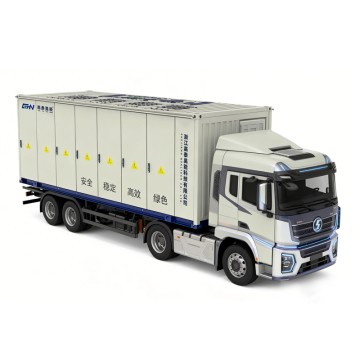
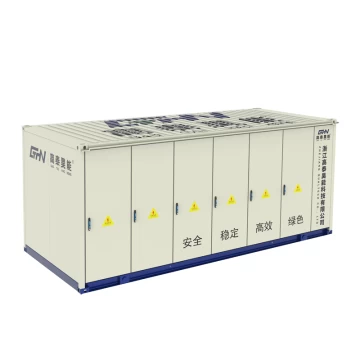
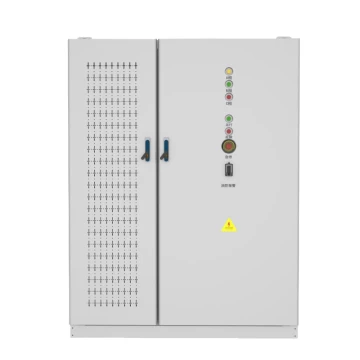
The next generation of three-phase hybrid inverters for EV charging is being shaped by five transformative technology and market trends.
Three-phase hybrid inverters are evolving into fully bidirectional grid interfaces. By 2027, V2G-capable inverters will enable EV batteries to collectively form a virtual power plant (VPP) capable of delivering gigawatts of grid balancing services. This transforms every parked EV into a revenue-generating distributed energy asset, fundamentally changing the economics of EV ownership and charging station operation.
Next-generation inverter controllers integrate machine learning models that predict solar generation, EV arrival patterns, electricity tariff fluctuations, and grid demand signals. This enables proactive energy dispatch decisions that reduce charging costs by 30–45% compared to static scheduling — a critical competitive differentiator for commercial charging network operators.
Silicon carbide (SiC) and gallium nitride (GaN) switching devices are replacing conventional IGBT modules in three-phase hybrid inverters, enabling switching frequencies above 100kHz. The result: inverter efficiency exceeding 99%, dramatic size and weight reduction (enabling compact wall-mount form factors), and extended operational lifespan in harsh outdoor EV charging environments.
Ultra-fast charging (UFC) at 350kW–1MW per stall is emerging for commercial trucking and high-throughput passenger EV hubs. Modular three-phase hybrid inverter architectures allow operators to scale from 50kW to 1MW by adding inverter modules — protecting capital investment and enabling phased deployment aligned with actual charging demand growth.
Three-phase hybrid inverters are becoming the metering and settlement layer for peer-to-peer renewable energy trading at charging stations. Blockchain integration enables real-time issuance of verified green energy certificates (RECs) for each kWh of solar-generated power delivered to EVs — unlocking premium pricing and ESG compliance value for charging station operators and corporate fleet managers.
 View More
View More
ZheJiang Qualtech Co., Ltd. (referred to as Qualtech) was established in 2011 and is headquartered in Hangzhou, Zhejiang. It is a national high-tech enterprise, the third batch of specialized, refined, and new "little giant" enterprises by the Ministry of Industry and Information Technology, and currently a leading enterprise in both the new energy vehicle BMS and energy storage BMS sub markets in China.
As a full-stack digital smart energy system solution provider, Qualtech delivers end-to-end capabilities spanning BMS hardware design, embedded software development, cloud energy management platforms, and complete EV charging station system integration — making it the ideal partner for three-phase hybrid inverter deployments in complex commercial and industrial charging environments.
 More about Qualtech
Collaborating with industry leaders across EV, energy storage, and smart grid sectors to deliver world-class three-phase hybrid inverter solutions.












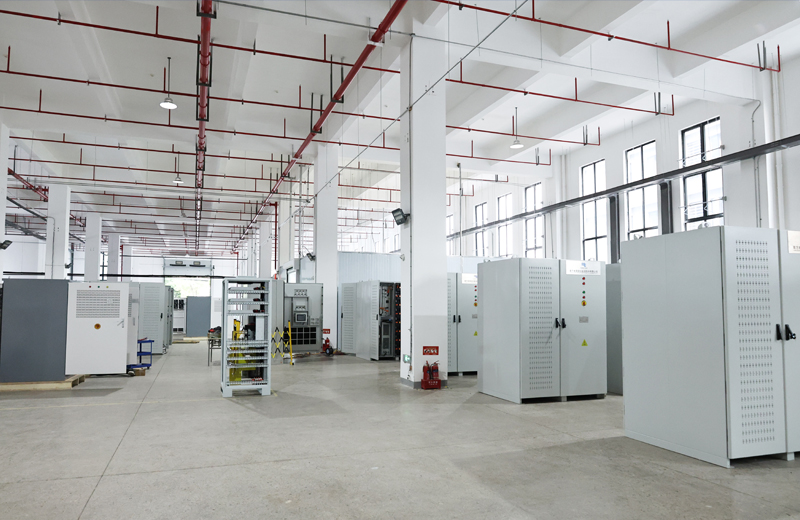
As a full-stack digital smart energy system solution provider, Qualtech has always been anchored by independent R&D and in-house manufacturing.
Read more →
The results of the prestigious industry award, the Energy Storage Industry Aurora Award (hosted by Energy Storage Talk), have recently been announced.
Read more →
The 2026 BRICS Partnership on New Industrial Revolution (BPNIR) Forum opened recently in Xiamen, Fujian Province, centered on building clean energy partnerships.
Read more →Our full product ecosystem — from intelligent BMS modules to containerized energy storage systems — engineered for three-phase hybrid inverter EV charging deployments.